
What Causes Shoulder, Hip and Knee Pain
The conditions Allied Spine Institute treats fall into three broad groups:
- Injuries: strains, sprains and fractures, soft tissue damage and, in the knee, meniscus tears and cartilage damage. These often follow a car crash, a fall or an accident on the job.
- Overuse: repetitive motion at work or in sports, along with bursitis and tendonitis.
- Degenerative and inflammatory conditions: osteoarthritis, rheumatoid arthritis, chronic joint inflammation and early cartilage wear.
Hip pain can be misleading. It may show up in the groin, the buttock or down the leg, and sometimes the real culprit is a compressed nerve, as in sciatica. That is why a proper workup starts with a physical exam and, when needed, X-rays, an MRI or an ultrasound.
Non-Surgical Options: Injections, Nerve Blocks and Ablation
The practice focuses on conservative and minimally invasive treatments matched to the source of the pain. Options for each joint include:
- Shoulder: subacromial injection, glenohumeral joint injection and suprascapular nerve block.
- Hip: physical therapy, corticosteroid injections (often image-guided), acupuncture, at-home RICE therapy (rest, ice, compression, elevation) and nerve blocks.
- Knee: corticosteroid joint injections, hyaluronic acid injections (viscosupplementation) and genicular nerve block.
For chronic pain in any of these joints, radiofrequency ablation (RFA) uses heat to interrupt the nerve signals that carry pain. Surgery, such as arthroscopy or hip replacement, remains an option when conservative care is not enough.
Genicular Nerve Block, Trigger Point Injections and PRP
A genicular (also spelled geniculate) nerve block is a minimally invasive procedure for chronic knee pain caused by arthritis, injury or other conditions. An anesthetic is injected around the genicular nerves, which carry pain signals from the knee joint. Relief is temporary, but the block also works as a test: if the pain eases, those nerves are likely the source. That can point toward radiofrequency ablation of the same nerves, performed under local anesthesia with fluoroscopy or CT guidance. Results vary from patient to patient.
Trigger point injections target tight muscle knots that limit movement and can send pain to other areas, including the shoulders, hips and thighs. A small amount of anesthetic, sometimes with a corticosteroid, is injected directly into the knot. Each site usually takes less than 15 minutes, and most people return to normal activity the same day. These injections are often paired with physical therapy or massage.
Platelet-rich plasma (PRP) injections also appear among the knee treatments the practice lists. Some patients may benefit, and we cover PRP in a separate article.
Rehabilitation After Surgery and Physical Therapy
“Recovering from surgery is not the end of your treatment,” the practice notes. It is the start of getting back to full function. The post-surgical rehabilitation program serves patients after spine procedures, joint repair and replacement, and nerve decompression, including people hurt in car crashes and on the job. It combines targeted physical therapy, interventional pain management, mobility retraining and functional capacity evaluations. The goals are to rebuild strength, range of motion, balance and endurance while lowering the risk of re-injury and chronic pain.
For knee pain, procedures are paired with physical therapy, weight management, home exercise education and posture and mobility coaching. For the hip, strengthening exercises and low-impact activity such as swimming and stretching are recommended. In workers’ compensation and personal injury cases, the team helps prepare the medical documentation.
How to Prepare for Your Visit
- Bring imaging studies (X-ray, MRI, ultrasound) with their reports, plus any ER or hospital records.
- List your current medications and past treatments, including physical therapy and earlier injections.
- Note when the pain started, what makes it worse, whether it radiates and whether it wakes you at night.
- After an accident or work injury, have the date of the incident, your claim number and your insurer or employer contact details ready.
- If you had surgery, bring your discharge summary and your surgeon’s instructions.
Dr. Dariusz Nasiek’s Practice in New Jersey and New York
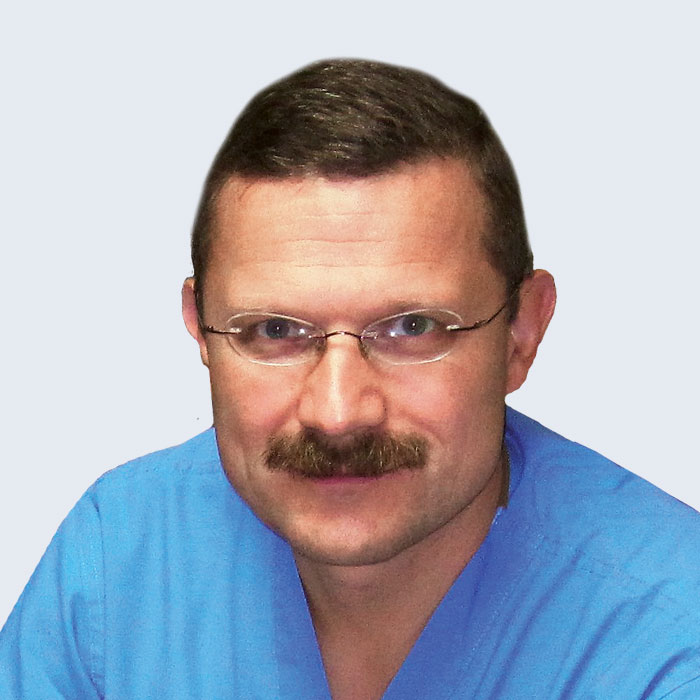
Dariusz Nasiek, MD, is a Board-Certified Anesthesiologist, Board-Certified in Pain Medicine and a Board-Certified Interventional Pain Physician with more than 35 years of experience. He leads Allied Neurology & Interventional Pain Practice, P.C., known as Allied Spine Institute, a Center of Excellence since 2006. Patients with shoulder, hip and knee pain can be seen at six locations: Englewood, Garfield, East Orange and Elizabeth in New Jersey, and Rego Park (Queens) and Washington Heights (Manhattan) in New York. Polish-speaking staff are available.
Read also: Pain Treatment After an Accident in New York and New Jersey: Dr. Dariusz Nasiek on Why Every Moment Counts · Early Detection of Brain Injuries After Accidents: Why a Normal CT Scan Isn’t Enough in NY and NJ · Migraines wearing you down? There’s a way — without pills and without waiting months for an appointment
For details and contact information, see the Allied Spine Institute profile in the PolishPages directory. To book an appointment, call 201-894-1313 or 973-773-7730 (call or text, Polish-speaking staff).
This article is for general information only and is not a substitute for medical advice or legal advice. In an emergency, call 911.