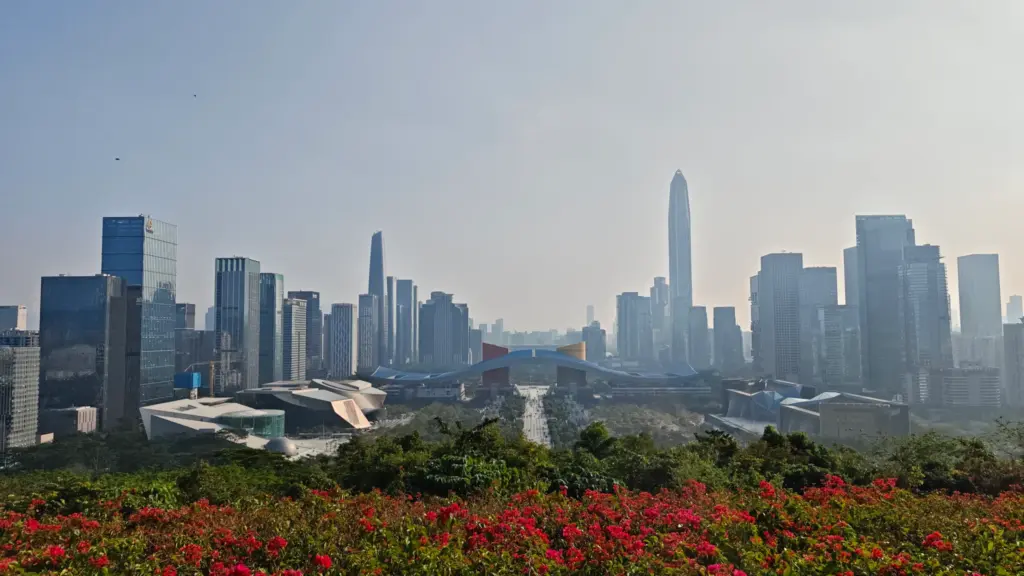
The talks took place on the afternoon of November 19, local time. According to China’s Foreign Ministry, the theme was safeguarding world peace and promoting strategic stability in relations among major countries. Xi Jinping hosted the meeting; Cai Qi and Wang Yi also attended on the Chinese side.
What the declaration says
The White House published the text, titled the “U.S.-Russia-China Heads of State Declaration toward Peace.” In it, the three leaders “committed to maintaining strategic stability and international security.” The declaration has four points:
- As permanent members of the UN Security Council, the United States, Russia and China committed to reforming the United Nations so it can respond more effectively to global challenges.
- The three countries plan to increase the production and supply of refined petroleum products, and they reaffirmed the importance of stable energy flows.
- The leaders called the principle of state consent and respect for the immunities of state officials “of paramount importance” and agreed that the International Criminal Court and similar bodies “must not abuse their jurisdiction.”
- They reaffirmed that “a nuclear war cannot be won and must never be fought” and said they will hold a dialogue on reducing nuclear risks and preventing the proliferation of nuclear weapons.
The declaration does not mention the war in Ukraine. According to the Chinese Foreign Ministry, however, the leaders discussed the Ukraine crisis, nuclear non-proliferation, the Middle East and the Korean Peninsula.
What the leaders said, according to Beijing
Xi set out four principles for major-power relations: mutual respect, peaceful coexistence, win-win cooperation, and dialogue and consultation. According to the Chinese readout, Vladimir Putin said Russia is ready to work with China and the United States on issues including energy and food security and the governance of artificial intelligence. Donald Trump, as summarized by the Chinese side, said the three nuclear-weapon states bear a special responsibility for world peace and that all problems should be resolved through dialogue.
Reactions in Poland
Polish Prime Minister Donald Tusk posted on X on November 19: “God, protect us from such friends.” According to the Polish Press Agency (PAP) and polsatnews.pl, he was responding to remarks by President Trump, who called Putin his friend during an informal meeting on the sidelines of the APEC summit in Shenzhen.
Foreign Minister Radosław Sikorski, quoted by PAP, said Trump’s words were hard to assess for now, but that the optics of the U.S. president calling Putin a friend and embracing him cause some concern in Poland. Marcin Przydacz, a minister in the Polish president’s office, told Polish Radio’s Program 3 that he is not a supporter of such images and meetings, though in his view Trump’s gesture was diplomatic courtesy. He added that any talks on Europe’s security architecture held over the heads of Europeans, including Poland, are bound to provoke objection and dissatisfaction.
Key points
- On November 19, 2026, Shenzhen hosted a summit of the leaders of the U.S., Russia and China – the first ever, according to China’s Foreign Ministry.
- The declaration covers UN reform, fuel supplies, the International Criminal Court and nuclear risk.
- Ukraine is not mentioned in the declaration; China’s Foreign Ministry says it was discussed.
- Tusk, Sikorski and Przydacz commented on Trump’s meeting with Putin.
Sources: U.S.-Russia-China Heads of State Declaration toward Peace (whitehouse.gov, Nov. 19, 2026), Ministry of Foreign Affairs of the People’s Republic of China (fmprc.gov.cn, Nov. 19, 2026), Donald Tusk on X (Nov. 19, 2026), polsatnews.pl / PAP (Nov. 19, 2026, in Polish).
Download the PolishPages app:
App Store
Google Play