
Vatican News / Beatrice Guarrera, Artur Hanula
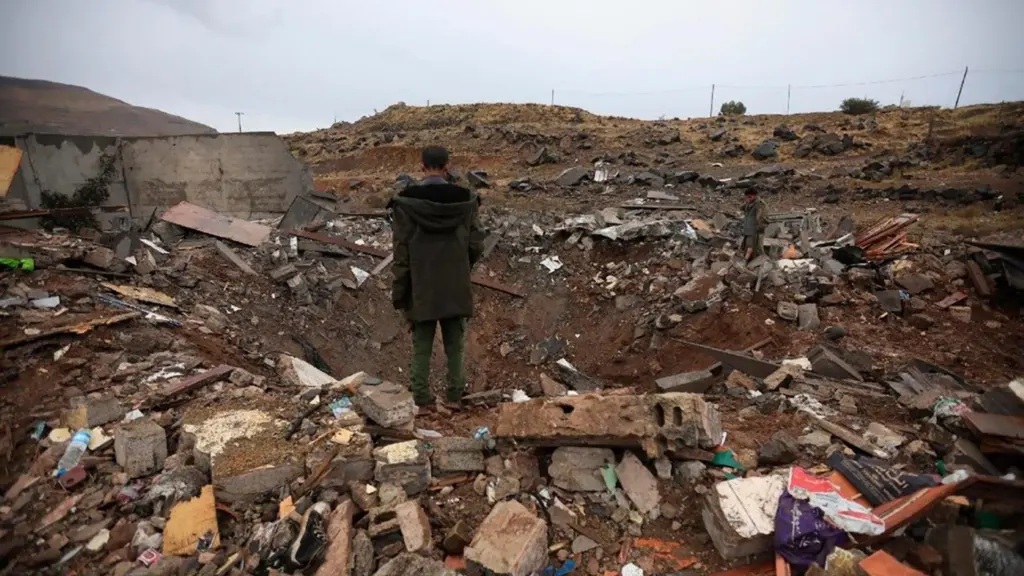
The offensive of the Houthi movement against the city of Taiz, which is the last urban bastion of government forces fighting this armed group, is ongoing. The city is under siege and attacked daily in order to take control of it.
Appeal of Leo XIV
In his message after the Angelus prayer on Sunday, October 25, the Pope confessed that he has been following with concern “the serious humanitarian situation in Yemen, especially in the city of Taiz, where the population is suffering from a lack of food, water, and medical care.” He directed “an ardent appeal to cease military actions and guarantee the people of Yemen and all the nations of this region the opportunity to live in peace.”
Over 20 days cut off from the world
“Taiz has already been isolated for 20 days,” said Jens Laerke last Friday. “The fighting in practice makes it impossible for us to enter the city, and for residents to leave it.”
Humanitarian agencies in a statement published on October 23 sounded the alarm about the rapidly deepening humanitarian crisis in Taiz.
800 thousand people cut off from aid
Since the beginning of September, clashes between Yemeni government forces and Houthi fighters have intensified again, despite the truce concluded in 2022.
According to the UN World Food Programme (WFP), over 800 thousand people in Taiz have been deprived of access to humanitarian aid. Among them are 200 thousand women and children.
“We are desperately trying to restore access to Taiz, while at the same time continuing to support broader relief efforts throughout Yemen,” emphasized Azfar Deen, WFP Regional Communications Director for East and Southern Africa.
Lack of water
Meanwhile, concerns are growing regarding the gradual depletion of water supplies in Taiz. “Due to blocked roads and a severe shortage of diesel needed to power trucks, the amount of available water in the city has decreased by half. Furthermore, the price of water delivered by tankers has almost tripled. It is easy to imagine what this means for people trapped in the city,” explained OCHA spokesperson Jens Laerke during a press briefing in Geneva.
He also reported that the majority of residents depend on water deliveries via tankers.
In recent days, growing concern over the spread of hunger throughout Yemen was also expressed by UNICEF, the United Nations Children’s Fund. According to the agency, over 52 thousand children in Taiz are suffering from acute malnutrition, of which over 11.5 thousand are struggling with its severe form.
About 260 thousand displaced people
Alarming data was also recorded by the International Organization for Migration (IOM), the UN migration agency. Between June 7 and October 19, approximately 258,679 internally displaced persons were registered, the majority of whom are staying in the Taiz and Lahij governorates.
Many families are forced to move repeatedly in search of shelter, ending up in places that were already overcrowded.
Additionally, by October 17, 3,836 Yemeni citizens seeking shelter had arrived in Djibouti.
Over 1,800 cases of crimes and violations since September 1
According to the Yemeni Network for Rights and Freedoms, between September 1 and October 22 in Taiz province, 1,891 cases of “crimes and violations” were recorded, including extrajudicial executions.
During the same period, nearly 9,900 cases of “indiscriminate” shelling from mortars, howitzers, and artillery guns, as well as attacks using rockets, drones, and ballistic missiles, were registered. Most of them targeted residential neighborhoods.
The NGO also reported that the Houthis converted five schools in the province into “military operations centers, arms depots, and prisons.” According to the organization, they also allegedly targeted ambulances and hospitals.
To this day, 26 checkpoints and military barricades remain in place, blocking the main road connection with the neighboring Lahij governorate and with Aden, where the seat of the Yemeni government is located.