

Women’s protest
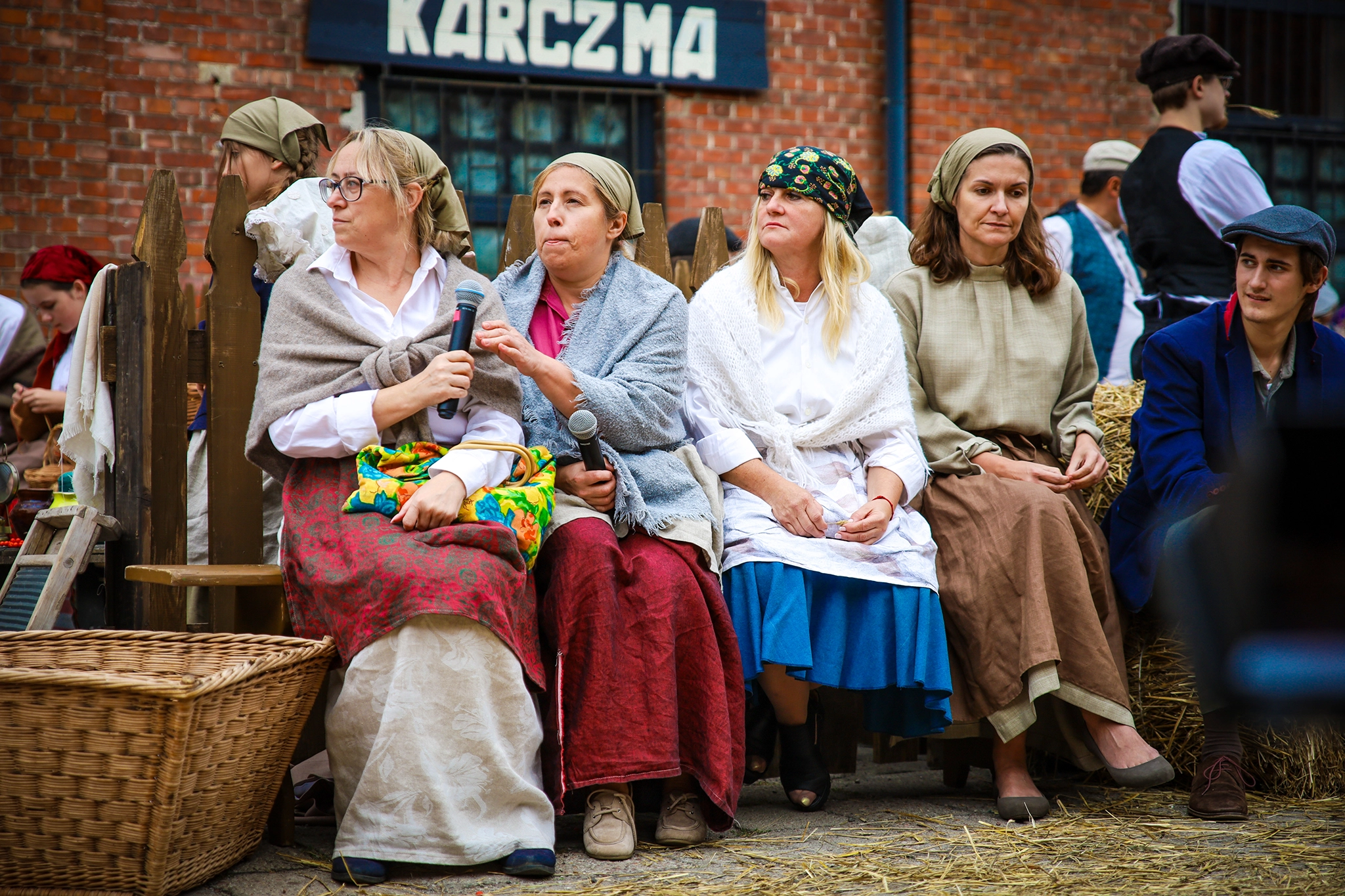
The strike of the spoolers in Żyrardów is a special event that resulted in violent clashes with the Russian military. This event took place in 1883, when Poland was under partitions. Workers of Żyrardów factories were murdered during the aforementioned strike. Fighting for their rights, they became the “Polish victims” who gave their lives during the struggles against the hated Russian partitioner. It was the workers of Żyrardów who protested to demand a better living and higher financial resources for the growing needs of their families.





In April 1883
In April 1883, the management of the Żyrardów linen factory “Hielle and Dittrich”, in order to acquire more funds for themselves, decided to lower the daily wage for some of the female workers employed there. We are talking about seventy women, but as many as 120 female workers employed in the department responsible for preparing the entire assembly-line production went on strike in solidarity with them. This department was called the spooling room, and the women working there were commonly referred to as “spoolers” (“szpularki”). One of the owners of this plant, Dittrich, was even ready to abandon the established wage cut plan payments. He was aware that the paralysis of the spooling room created in this way could result in the suspension of work in the entire factory. Dittrich presented the proposal for an agreement with the female workers to the entire board, which, of course, firmly rejected it. Thus, the spoolers’ protest began. Initially, a doctor well-liked by all the workers, the sympathetic Aleksander Jawurek, was sent to the protesting female workers to convince them to change their stance. Unfortunately, he failed completely.



In the beginning, there were threats
In response to this situation, the factory owners resorted to threats. Several spoolers were immediately fired, along with their husbands and fathers. As we know, this threat was serious enough to quickly influence a wider scope of the protest. At the same time, the police made the first arrests of the striking women. As we know, a crowd quickly surrounded the detention center, demanding the release of the women fighting for their rights. Shortly after, the husbands and fiancés of the detained women even pelted the guards of the detention center with stones. In retaliation, a Russian non-commissioned officer ordered two warning shots to be fired into the air, which only drove the gathered crowd into a rage. In response to this situation, shots were subsequently fired at the workers. Two workers, aged seventeen and nineteen, were killed at that time. A third worker, aged fifteen, was shot in the chest and died the next day. There were many more wounded. As you can easily guess, they were treated at home because from hospitals they could have been immediately dragged off to custody.
In the given situation
In such an extraordinarily unfavorable situation, the deputy governor Martynov, who commanded the operation, ordered the women held in custody to be released. However, this fact did not satisfy the protesters. A few days later, the protest initiated by the spoolers took on a widespread character, and a crowd of workers in Żyrardów flooded the city streets. There were also frequent incidents of destroying factory machinery. The police and the army did not intervene in this situation. The protest actions gained strength by the minute, and this was especially true during the funeral of the shot boys.

Early in the morning
As is known, the funeral took place in the early morning hours. As a form of protest, several thousand people took part in the funeral procession, and surprisingly, Dittrich’s family also participated. Immediately after the funeral, a pacification operation against the protesters began. The city was divided into several zones, which were densely cordoned off by police along with armed Cossacks on horses. A state of emergency was introduced in the city, and the wave of arrests started rolling again. At the same time, the management of the Żyrardów linen factory announced its readiness to fulfill most of the workers’ demands. The spoolers’ strike achieved its goal.
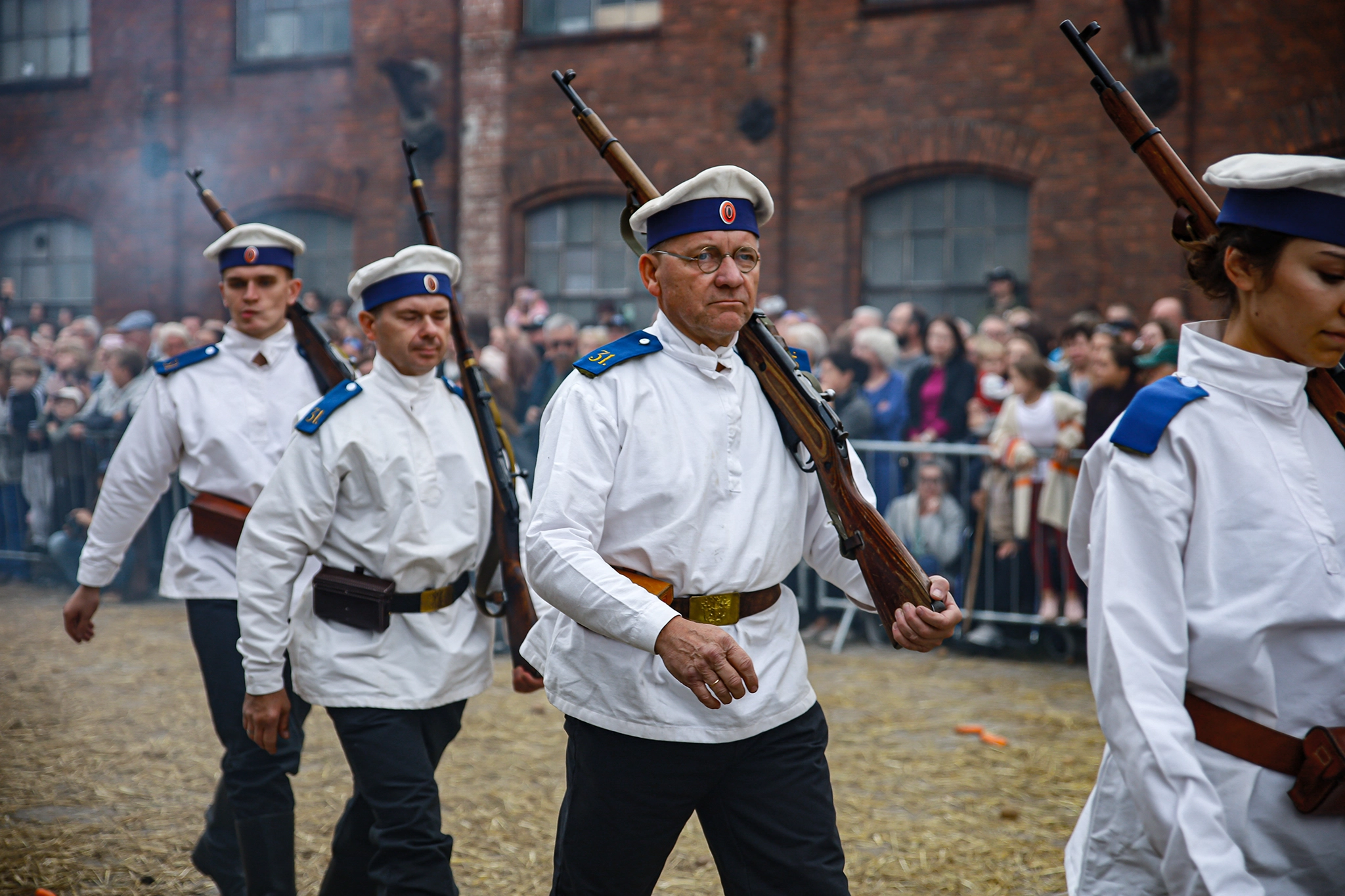


The editorial office of “Dziennik Polonijny” thanks Mr. Jacek Czubak for the invitation to the reconstruction of the Spoolers’ Protest in Żyrardów.