Fr. Łukasz Bańkowski – Vatican City
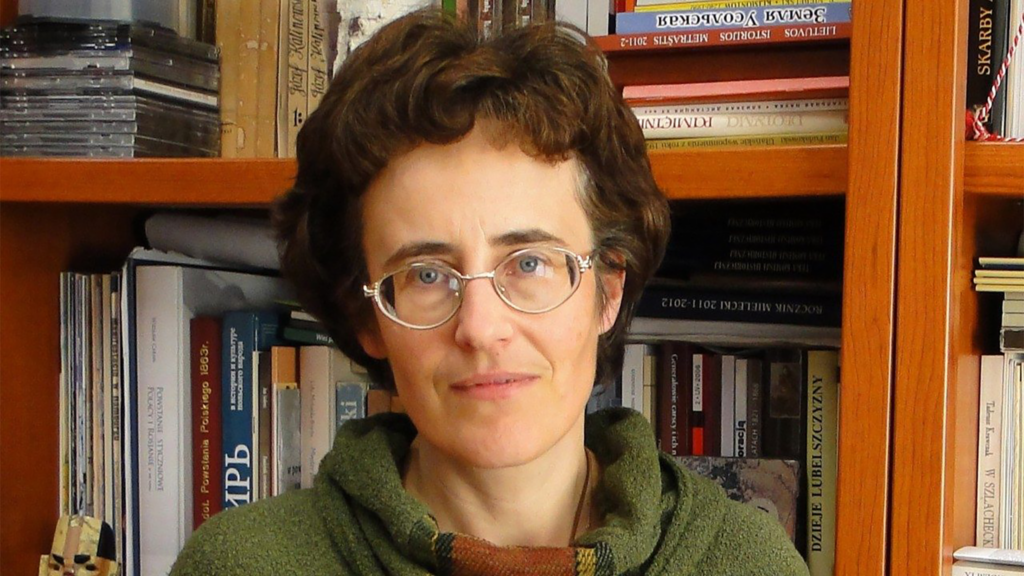
Prof. Anna Barańska admits that the Pope’s decision came as a complete surprise to her. She was informed confidentially about the nomination on August 11, two days before its announcement. “The surprise was complete,” she says in an interview with Vatican News.
The new member of the Pontifical Committee for Historical Sciences emphasizes that her appointment to the Vatican scientific institution is primarily seen as a commitment.
Not a title, but a responsibility
“Participation in an international Vatican institution dedicated to science is an honor and a great responsibility,” notes Prof. Barańska. She adds that the nomination itself cannot be treated merely as another entry in her resume.
“It’s not about adding a new function to my CV and later to my obituary, but about making my presence useful to the Committee,” she emphasizes.
For years, the researcher has focused on 19th-century history, including the history of the Church, the diplomacy of the Holy See, relations between the papacy and Russia, and the situation of the Catholic Church in Polish lands under partitions. It is precisely this experience that she wants to bring to the work of the Pontifical Committee.
History helps understand the present
Prof. Barańska points out that one of the most important tasks of a historian is to perceive processes spanning decades or even centuries. In many contemporary events, one can find the consequences of phenomena whose beginnings date back to the 19th century or even earlier epochs.
“In historical research, it is essential to perceive continuity, the perspective of ‘longue durée’,” she points out.
In her view, such a perspective does not serve merely to better understand the past. It can also be helpful in rationally shaping contemporary relations between Church and State.
A special place in her research is occupied by the diplomacy of the Holy See. As she notes, this is an area that allows for the analysis of both centuries-old traditions of papal diplomacy – today sometimes forgotten or abandoned – as well as past mistakes and the experiences resulting from them.
The voice of Central and Eastern Europe
The new member of the Committee also wants to bring the perspective stemming from the history of Poland and the entire region to its work.
“As a historian from Poland, I am to bring to the Committee’s work knowledge about the political and religious history of our homeland, as well as other countries of Central and Eastern Europe,” says Prof. Barańska.
Among the areas she intends to deal with as part of her work on the Committee, she mentions primarily her previous fields of research: the diplomacy of the Holy See, state-church relations in 19th-century Europe, relations between Russia and the papacy, and the history of the Catholic Church in Polish lands under partitions.
Disputes over history are often disputes over the Church
Prof. Barańska also refers to contemporary debates concerning the history of the Church. In her view, many of them only seemingly concern the past.
“Disputes over the history of the Church rarely have a scientific-academic character. Most often, it is not about the history of the Church, but about the Church itself and worldview issues,” she observes.
In such situations, the historian’s task remains primarily to reliably present facts, the historical background, and possible interpretations based on the current state of knowledge. At the same time – she notes – the political, social, and cultural context of a given era cannot be ignored.
Faith is also a historical fact
The researcher points to yet another element necessary for a proper understanding of the history of the Church: taking into account faith as a real factor influencing people’s decisions and actions.
In this context, she recalls the observation of a Dutch general serving in the Russian army, who during talks with representatives of the Roman Curia noted that the attitude of many of them “is based on true religious faith.”
“It is not necessary to share this faith, but it must be recognized as a phenomenon, as a factor that genuinely shapes human behavior,” emphasizes Prof. Barańska.
In her opinion, it is precisely the combination of rigorous historical methodology, knowledge of the broad context of the era, and the recognition of religious motivations that allows for a better understanding of both the history of the Church and the processes whose consequences remain visible in the present day.