In New York City, any installation or modification of an electrical system must be done by a NYC Licensed Master Electrician under a Department of Buildings permit. For interior carpentry such as installing cabinets and built-ins, the city requires the contractor to hold a Home Improvement Contractor (HIC) license.
In prewar walk-ups in Greenpoint or Ridgewood, the wiring often dates from a time when one outlet and a ceiling fixture were enough for a room. Today the same kitchen runs several appliances at once, and phones and laptops charge in every room. So the question comes up with every renovation: add a few points to the old wiring, or run it new?
The second question is carpentry. Shallow closets, odd alcoves and uneven walls in older buildings mean that off-the-shelf furniture rarely fits. Both need to be planned before the walls are closed and painted.
Who is allowed to do electrical work in New York?
A master electrician licensed by the city, working under a permit, even for jobs that look minor.
The Department of Buildings page on requirements for electrical systems work states that installing or modifying electrical systems requires a permit and a NYC Licensed Master Electrician. Most of this work ends with a required DOB inspection. Minor work, such as replacing a defective circuit breaker or switch rated 30 amps or under, still needs a permit and a licensed electrician, although it is not subject to inspection.
For an apartment owner the takeaway is simple: an extra kitchen outlet or a new circuit for an induction cooktop is not a handyman job. Before signing a contract, ask for the name and license number of the master electrician who will file the permit.
When does it make sense to replace the wiring during a renovation?
Most often when the walls are open anyway and the old system can no longer keep up with the household.
Signs worth discussing with an electrician before work starts:
- breakers trip when several appliances run at the same time;
- rooms are short on outlets and the household relies on extension cords;
- a new kitchen with more electric appliances is planned;
- the project is a gut renovation that takes walls down to the framing.
How much to replace is decided after the electrician assesses the existing system. Sequence matters: wires, boxes and circuits go in after demolition and before the drywall. The inspection has to be built into the schedule.
How do you vet a contractor for electrical and carpentry work?
Ask for license numbers and put in writing who is formally responsible for each part of the job.
According to the DOB’s information on the Home Improvement Contractor license, issued by the NYC Department of Consumer and Worker Protection, any person or business engaged in the construction, repair, remodeling or addition to a building used as a residence must hold this license. The Department’s “Do I Need a Permit?” page notes that installing cabinets and resurfacing floors do not require a permit, but in residential buildings the contractor must have an HIC license.
If one company runs the whole project as general contractor, the contract should state clearly who files the electrical permit, who schedules the inspection and who is responsible for corrections.
What does interior carpentry cover in a New York apartment?
Mainly custom built-ins: closets fitted into alcoves, shelving and storage shaped around the uneven walls of an older building.
In prewar Manhattan apartments and Brooklyn brownstones, closets tend to be shallow, and alcoves beside chimneys or under stairs are hard to use with ready-made furniture. A built-in makes use of that space without wasting an inch. Measurements are taken only after the walls are up and leveled, because in an old building an alcove can be a different width at the top than at the bottom.
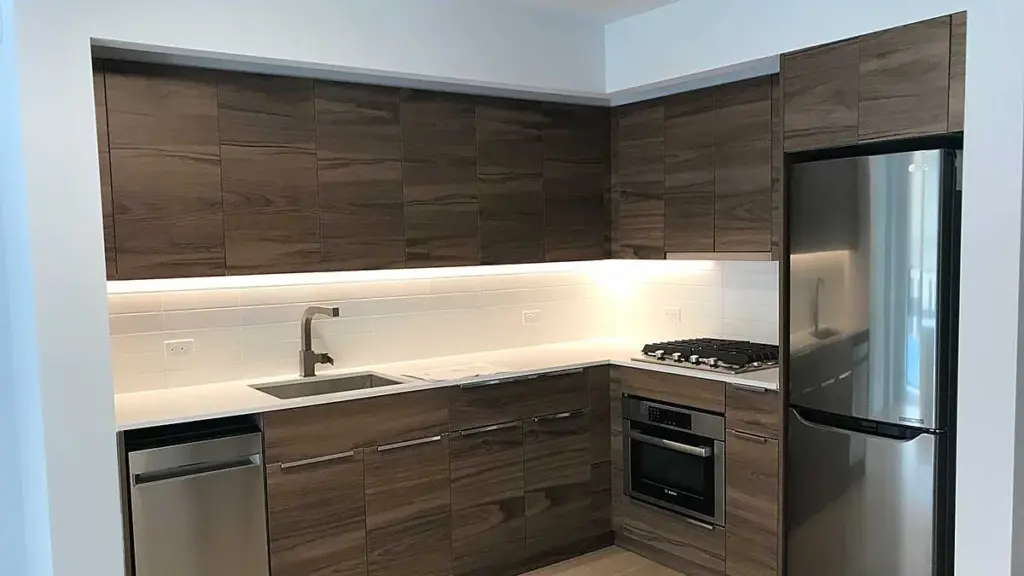
Carpentry also has to be coordinated with the electrician. Closet lighting, outlets in a built-in desk or LED strips under kitchen cabinets need wiring that should be in the wall before it is closed. Adding it later means opening the wall and repainting.
Renovation, heating and windows: related guides
For an overview of preparing a renovation in a New York building, read our article on interior renovations: permits, board approvals and lead safety. We also cover installing and repairing heating and air conditioning, and window replacement is the subject of our guide to energy-efficient windows.
A Polish construction company from Ridgewood
PDP Contracting, Inc. has been in business since 1997, has its office in Ridgewood, Queens, and is led by Peter Praszkowicz. Its list of services includes interior renovations, heating and air conditioning installation and repair, electrical work, and interior carpentry and custom built-ins. On electrical jobs, the general contractor runs the project as a whole, while the wiring itself is done by a licensed master electrician. The company also handles permits and manages projects from planning to final sign-off.
It is a BBB Accredited Business and an EPA Lead-Safe Certified Firm, and it works with homeowners, developers, architects and building managers across New York, New Jersey and Connecticut. Consultations and estimates are free, and service is available in Polish and English. The full scope of services is listed on the company’s website.
Learn more in PDP Contracting’s listing in the PolishPages directory. To schedule an estimate, call 718-456-3150; the office is at 2137 Butler Avenue in Ridgewood.
This article is for informational purposes only and does not replace advice from a licensed electrician or guidance from the Department of Buildings. Regulations may change; before starting work, check current requirements and your contractor’s licenses.
BBB is a trademark of the International Association of Better Business Bureaus. All trademarks belong to their respective owners. Polish Pages is not affiliated with or endorsed by these companies.