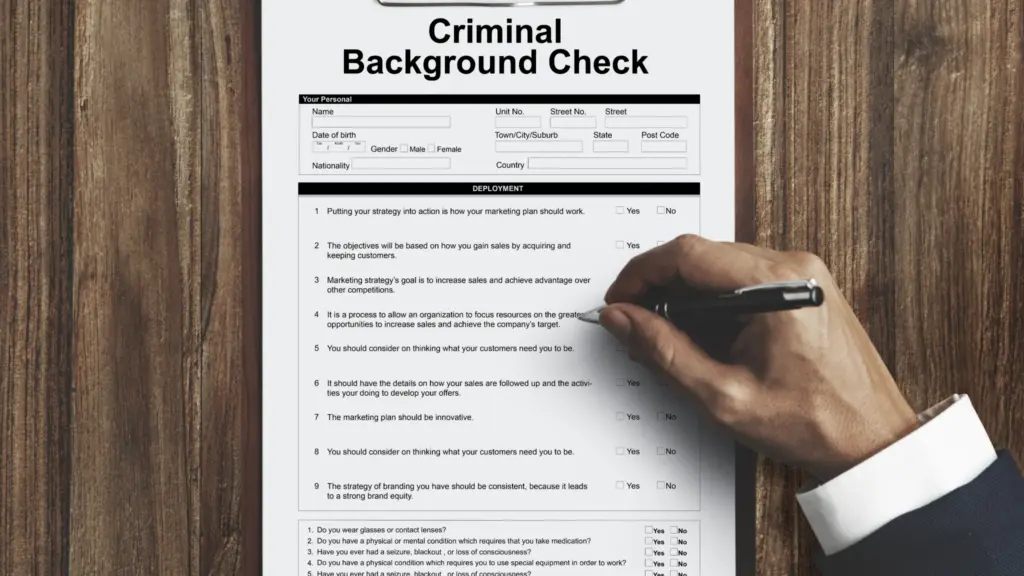
How far the check on us goes depends on the employer. Some employers will be satisfied with checking only our credit history; others will not be satisfied until they have screened us to the maximum.
How the law protects you
The federal Fair Credit Reporting Act (FCRA) and state laws regulate an employer’s access to information about its employees. The FCRA applies to the so-called “consumer report,” which is ordered to check the creditworthiness of a potential borrower, as well as when hiring and promoting employees. The Fair Credit Reporting Act applies only to checks of personal data by specialized companies (outside consumer reporting agencies); it does not apply when the employer gathers the information itself.
Local laws may protect you even more. In New York City, since 2015, the Stop Credit Discrimination in Employment Act has prohibited most employers from requesting and using the credit history of job applicants and employees. Exceptions include, among others, positions for which a credit check is required by state or federal law, the police, and positions requiring a security clearance.
The employer must follow these rules:
- The employer must first inform you that it will check your information and get your permission in writing. Most often you give permission by signing a document informing you of the check, which you receive when applying for the job. You can refuse to consent, but you will probably say goodbye to your chance of being hired.
- Before the employer decides to reject your application (or deny you a promotion) because of a bad consumer report, it must give you a copy of the report together with a description of your rights under the Fair Credit Reporting Act (the “pre-adverse action disclosure”). After making the decision, it must notify you that you were not hired because of information in the report (in writing, orally or electronically) and name the agency that compiled and delivered the information about you, which will allow you to explain any negative information.
- All information gathered about you in this way must be kept confidential, and when the employer no longer has to keep it (hiring records must be kept for at least one year), it must destroy it securely.
If you believe the employer has violated your FCRA rights in any way, you can file a complaint with the Federal Trade Commission by calling 1-877-FTC-HELP (1-877-382-4357) or online: reportfraud.ftc.gov. If you can prove damages caused by an inaccurate credit report that resulted in your not being hired, you can sue the agency that compiled and passed on the information about you. In any case, always consult a lawyer first.
Who has access to your report
Under the FCRA, consumer credit reporting bureaus may share information with various requesters. These are:
- all institutions considering extending credit to you (banks, credit companies);
- a prospective employer considering hiring or promoting you;
- insurance companies with which you are buying or renewing an insurance policy;
- government agencies reviewing your financial status or government benefits (for example, welfare);
- anyone who has a business transaction with you, for example the prospective landlord of an apartment you want to rent.
What information is included in a background check
The amount of personal data depends on the scope of the check and the price the requester is willing to pay. The simplest report will confirm your place of residence, phone number and Social Security number. An employer may choose to check only your credit history. Generally speaking, the data about you, coming from both private and public sources, include:
- Credit information, which includes bank accounts, credit cards, accounts opened in your name with utility companies, etc. The data include the dates accounts were opened, the credit limit used or available, the names of co-signers, and the regularity of payments over the last two years.
- Court records of bankruptcies and unpaid taxes.
- Criminal records of arrests and convictions.
- Reports from the Department of Motor Vehicles on tickets for traffic violations.
- Medical data from the Medical Information Bureau (MIB).
- Information about property (car, house, real estate).
- Previous employers.
- Education.
- State licenses.
- Workers’ Compensation reports and awards.
What information should not be in a consumer report
The Fair Credit Reporting Act prohibits including certain information in a consumer report.
- Any negative information after seven years: late payments, civil court cases, civil judgments, arrest records, paid tax liens.
- Information about bankruptcies after ten years.
- In New York State, state law also prohibits including information about an arrest or criminal charges that did not result in a conviction, unless the case is still pending.
The Fair Credit Reporting Act does not prohibit an employer from asking questions on a job application about matters that should not be in a consumer report. For example, the employer may ask whether you have ever been arrested – unless state or local laws prohibit it.
What information about you is confidential
Public information can be used without your permission. The following data, however, can be used by an employer only with your consent.
- Information from the schools you attended, including your name, address, year of graduation and the diploma received.
- Information about military service, but only your name, rank, pay, place of service and status at the time of discharge.
- All medical information is confidential in most states.
However, if an employer requires a report on physical health in a job offer, it must have access to a medical report concerning the performance of tasks specific to the given occupation. The employer may not, on the other hand, ask questions about age, marital status, skin color or religion.
Elżbieta Baumgartner is the publisher and author of many advice books, including “Jak chować pieniądze przed fiskusem” (“How to Hide Money from the Taxman”), “Jak działa giełda” (“How the Stock Market Works”) and “Jak inwestować w fundusze powiernicze” (“How to Invest in Mutual Funds”). 255 Park Lane, Douglaston, NY 11363, tel. 718-224-3492, www.PoradnikSukces.com
Updated October 2026.