Replacing windows in an individual landmark or in a building inside a New York City historic district requires a permit from the Landmarks Preservation Commission (LPC). The Commission reviews the window’s material, operation, configuration, details and finish. In homes built before 1978, contractors must also follow EPA lead-safe rules.
Many Polish families have spent decades buying rowhouses in Ridgewood and Greenpoint, and also brownstones elsewhere in Brooklyn. Sooner or later the drafty, century-old windows have to go, and that is when owners find out the decision is not entirely theirs.
Before you order windows for an older building, check two things: whether the property is protected as a landmark, and whether the old frames carry lead paint. Ordering windows for a building that is still under construction follows a different logic altogether.
When does window replacement need Landmarks Preservation Commission approval?
Whenever the building is an individual landmark or stands in a historic district. The Commission regulates window replacement in both cases, and applications are filed online through its Portico system.
Proposals that meet set criteria can be approved at staff level. Everything else goes to a public hearing before the full panel of 11 Commissioners. According to the LPC fact sheet on maintaining, repairing and replacing windows, most repairs, retrofits and routine maintenance need no permit. One exception: painting a window and frame a different color.
If you are not sure whether your building is protected, settle that question before signing a window contract. LPC staff can also help owners weigh repair, retrofit or replacement.
What kind of windows will the Commission accept?
On the primary facade, windows must match the historic configuration, details and finish. For individual landmarks, the material must always match as well.
Smaller buildings – six stories or less with less than 40 feet of street frontage – whose windows were historically one-over-one wood double-hungs may switch to another material such as metal or fiberglass, but not vinyl. That matters for owners used to vinyl windows. Larger buildings, seven or more stories or more than 40 feet wide, may use a different material.
Visible windows on secondary facades, such as side or rear walls, must keep the historic configuration and finish; windows that cannot be seen need not match. The Commission also points out that historic windows in fair or good condition can be repaired, and that interior or exterior storm windows can improve energy efficiency and comfort as effectively as modern replacements.
Why does lead-safe certification matter with old frames?
Because the federal EPA Renovation, Repair and Painting (RRP) Rule covers every window replacement in older housing, regardless of how much surface is disturbed. It applies to homes, childcare facilities and preschools built before 1978.
As the EPA’s RRP guidance for contractors explains, an uncertified firm may neither perform nor advertise this kind of work. Who else the EPA rules cover is explained in our article on interior renovations in New York buildings.
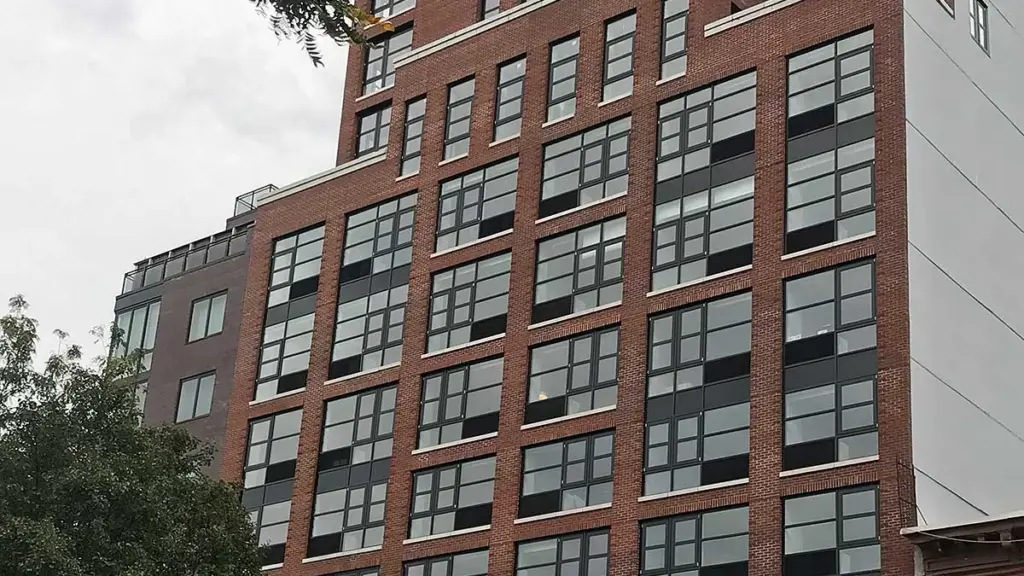
How are windows ordered for new construction?
Early, and in step with the construction schedule. Made-to-measure windows need to arrive once the openings are ready and before interior finishes begin.
In a new building, a window is judged less by how it looks than by how it is installed. The joint between frame and wall determines how airtight and well insulated the envelope is, so installation is planned together with the architect, the developer and the site superintendent.
Unusual shapes – when do you need a custom order?
When the opening is not a standard size or the design calls for recreating a historic detail. Arched heads on brownstones, dormer windows and narrow stairwell windows rarely fit catalog products.
In protected buildings, a custom order is often the only practical way to meet the Commission’s requirements for configuration and detail. In new buildings, architects sometimes specify glazing in non-standard proportions that also has to be made to measure.
More guides on windows, doors and renovation
- Energy-efficient windows for your home – materials and glazing
- Curtain walls, doors and aluminum fences
- Electrical work and carpentry in a New York apartment
A Polish construction company from Ridgewood
PDP Contracting, Inc. has been in business since 1997, has its office in Ridgewood, Queens, and takes on work across New York, New Jersey and Connecticut. It serves residential and commercial clients – homeowners, developers, architects and building managers.
On the window side, the firm handles installation in new construction, historic window replacement, and unusual shapes and custom projects, with a focus on insulation and airtightness. It is an EPA Lead-Safe Certified Firm and a BBB Accredited Business. Its window offering is presented at pdpwindows.com. Consultations and estimates are free, in Polish or English.
Learn more in PDP Contracting’s listing in the PolishPages directory. To schedule an estimate, call 718-456-3150; the office is at 2137 Butler Avenue in Ridgewood.
This article is for general information only and is not legal advice. LPC and EPA requirements can change, so confirm them in the agencies’ current materials before work begins.
BBB is a trademark of the International Association of Better Business Bureaus. All trademarks belong to their respective owners. Polish Pages is not affiliated with or endorsed by these companies.