
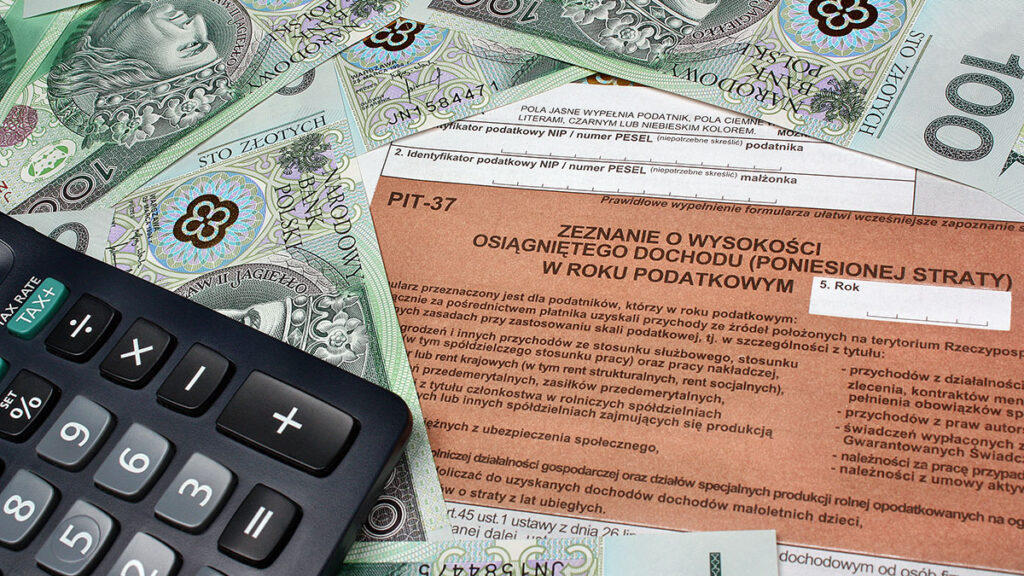
When KAS Can Check Your Bank Account
An amendment to Art. 48(1) of the act on KAS, in force since July 1, 2022, made it possible to demand bank account data not only by the Head of the Krajowa Administracja Skarbowa (KAS, the National Revenue Administration) and the head of a urząd celno-skarbowy (customs and tax office), as before, but also by the head of the local urząd skarbowy (tax office).
Note: On October 22, 2026, the Sejm (the lower house of Poland’s parliament) passed another amendment to the act on KAS, which is intended to narrow this power again to suspects and to make the tax authorities’ access to bank secrecy in preparatory proceedings dependent on a decision of a regional court. The bill now goes to the Senate; it will take effect 14 days after its publication.
KAS has the right to demand from a Polish bank information about a taxpayer’s bank account, including its turnover and balances, in various circumstances: to conduct a tax audit or tax proceedings, and in preparatory proceedings in a fiscal criminal case against a person suspected of committing a fiscal offense.
KAS may demand from a bank information about the bank account of a person suspected of possibly being involved in money laundering or terrorist financing. In other words, the tax authorities can put you under the microscope for any reason at all.
What Information KAS Can Obtain from a Bank
Under the current wording of Art. 48 of the act on KAS, a bank in Poland is required to provide the head of the tax office with information on “bank accounts held or jointly held, or powers of attorney held to dispose of bank accounts, the number of these accounts or powers of attorney, the turnover and balances of these accounts, specifying the credits and debits to the accounts and their descriptions, and, accordingly, their senders and recipients.”
Can KAS Check a Bank Account Without the Taxpayer’s Knowledge?
Yes, KAS can check a taxpayer’s bank account without his or her knowledge, because it has no obligation to inform the taxpayer.
The taxpayer cannot object to KAS looking into his or her bank account. KAS has the right to demand information about the taxpayer’s account from the bank, and the bank is obliged to provide it.
Consequences of KAS Looking into Your Bank Account
The consequences can vary. If KAS finds irregularities, it may launch a tax audit, tax proceedings, preparatory proceedings in a fiscal criminal case, or investigative steps in a fiscal offense case. However, if you pay your taxes conscientiously, you have nothing to fear.
How Often the Tax Authorities Look into Bank Accounts
Data released by the Ministry of Finance in response to a public information request indicated that, statistically, the practice does not appear to be widespread. According to the ministry, in 2022 the heads of tax offices conducted 29,492 preparatory proceedings in criminal cases, but sent only 133 requests to banks under Art. 48 of the act on KAS, which is a mere 0.5 percent of cases.
Can the Tax Office Seize Your Account?
Yes, the Polish tax office can seize your account at a Polish bank if you have tax arrears, including arrears in income tax, VAT, excise tax, property tax, etc. This happens through administrative enforcement: usually the office first delivers a reminder notice, then issues a tytuł wykonawczy (enforcement order), and the seizure itself takes place by sending the bank a notice of the account seizure – without a separate decision. The taxpayer receives a copy of the enforcement order, which states, among other things, the amount of the tax arrears, interest and enforcement costs, as well as information about the seizure. These documents may be delivered in person, by mail or electronically.
KAS cannot seize your entire bank account. Funds held in one person’s accounts are exempt from seizure up to 75 percent of the minimum wage in each calendar month. Since January 1, 2026, the minimum wage in Poland has been PLN 4,806 gross, which means that PLN 3,604.50 a month is exempt from seizure.
What to Do If the Tax Office Has Seized Your Bank Account?
The simplest way to get rid of a seizure by the komornik (court bailiff) is to pay off the tax arrears together with interest and enforcement costs. If you disagree with the enforcement, you first have the remedies provided for in the act on administrative enforcement proceedings: an objection in the administrative enforcement case (e.g., when the arrears have expired or you were not served the required reminder notice) and a complaint against an enforcement action. Only the rulings issued in this procedure can be appealed to an administrative court. You can also file a request with the tax office to release the seizure; it should include a justification of why the seizure is unjustified or burdensome. The deadlines are short, so in such a situation it is worth consulting a lawyer or tax advisor.
In addition, it is worth knowing that the Polish tax authorities can also seize other assets of yours for tax arrears, such as real estate, movable property (a car, a computer, etc.), wages and even a pension. It is not worth tangling with them.
Are Foreign Accounts Safe?
The answer is not clear-cut. The Polish tax office cannot use the STIR system (the bank clearing house’s ICT system for monitoring transactions) for foreign accounts; it can only pursue tax arrears through so-called international tax enforcement, by means of enforcement orders and through the authorities in the given country. This applies mainly to accounts opened in European Union countries that the tax office knows exist. The international enforcement procedure is cumbersome, so KAS uses it only in serious circumstances.
As for accounts opened outside the European Union, the enforcement of tax arrears depends on the content of the international agreements concluded between Poland and the country in which the debtor has the account, and on that country’s domestic law. In short, our money in American banks is beyond the reach of the STIR system, and collecting from it is difficult for the Polish tax authorities. That does not mean, however, that it is invisible to them: under the FATCA agreement signed in Warsaw on October 7, 2014, Poland and the US exchange information every year about the financial accounts of their tax residents.
This text is for information only and is not a substitute for professional legal advice. Elżbieta Baumgartner is the author of many self-help books, including “Planowanie spadkowe, czyli jak uporządkować swoje sprawy w Stanach i w Polsce” (“Estate Planning: How to Put Your Affairs in Order in the States and in Poland”) and “Jak chować pieniądze przed fiskusem” (“How to Hide Money from the Taxman”).
Updated October 2026.