
Karol Darmoros, Sebastián Sansón Ferrari
Family and Community
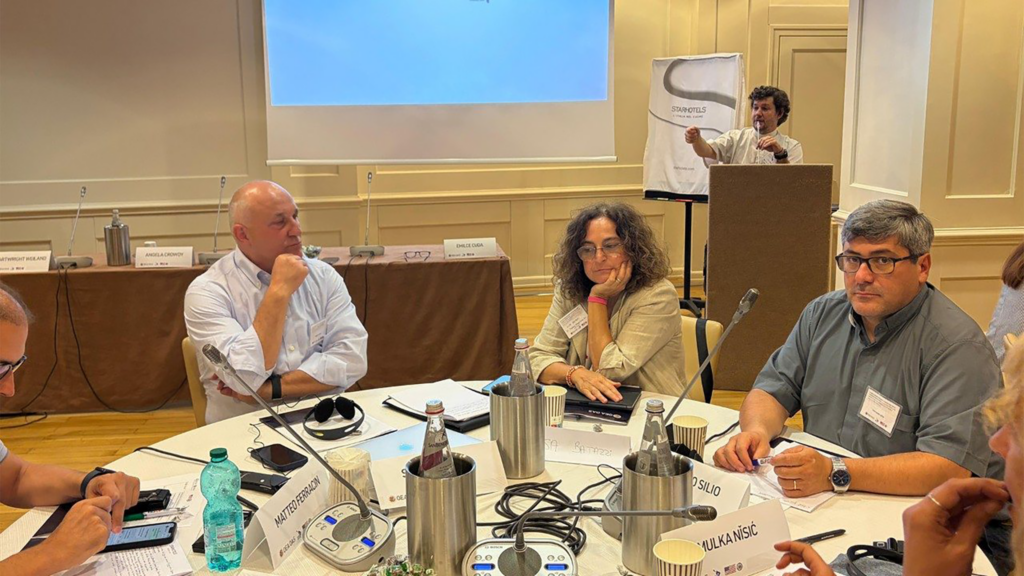
The meeting took place from August 25 to 27. It concluded with an audience with Leo XIV, to whom the participants presented the conclusions of the event.
One of the main topics of discussion was the reintegration of addicted individuals into community life. Emilce Cuda, secretary of the Pontifical Commission for Latin America, emphasizes that recovery does not end with stopping drug use.
The Church Has Its Role
Fr. Carlos Olivero of the Latin American Episcopal Council (CELAM) points out that addictions cannot be treated solely as a problem for specialists. Psychologists, psychiatrists, and neurosciences specialists have an important role, but the Church must also be a community that welcomes and accompanies individuals. As he emphasizes, the Church should be “the family of those who are most wounded,” of those who have been “abandoned by the wayside.” “No one saves themselves,” he reminds.
This community approach is also intended to be served by the manual of the Latin American Ministry for Addiction Accompaniment and Prevention (PLAPA), prepared with the participation of over 300 people from 18 countries. It aims to create a common framework for action, combining the spiritual and community dimension with psychological and neurobiological knowledge.
Gangs Exploit the Void
However, the problem of addiction is linked to another threat: the recruitment of youth by criminal organizations. Jimena Kalawski of the Inter-American Drug Abuse Control Commission of the Organization of American States points out that gangs often look for individuals exposed to similar risk factors.
As she explains, in places affected by violence or displacement, young people particularly need safety and a sense of belonging. Criminal groups may initially offer protection, money, or the promise of a better life, and subsequently leaving such an environment can become a matter of survival.
Reaching Out to Young People
Simone Feder from Casa del Giovane in Pavia emphasizes that it is not enough to wait for those in need to come to help centers on their own. As he explains, it is necessary to go out to the places where people experiencing suffering live and where institutional help often does not reach. He mentions young people heading to a place he describes as a “sanctuary of despair.” Feder points out that such presence should be not only professional but also human.
Denise Ferreira from the Brazilian Ministry of Sobriety points out the importance of the family. As she says, prevention can begin with simple questions from parents: where their child is, who they are with, and what they are doing. Ferreira emphasizes that conversation and family life create a safe space, and when a young person finds trust and acceptance at home, the operating space for criminal groups that might offer them a false sense of belonging is reduced.