Author: Vatican News
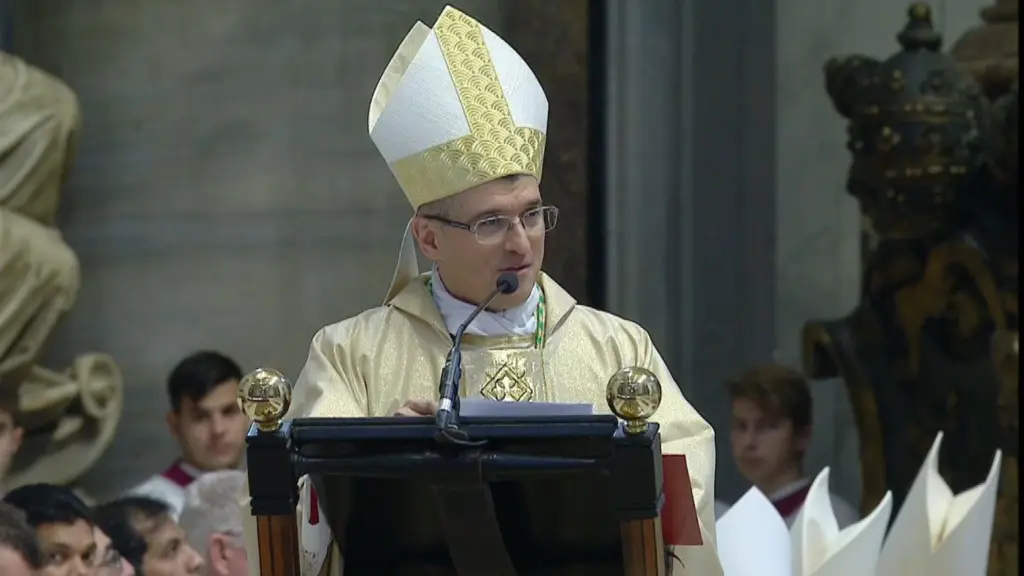
“Statements directed against individuals or communities because of their religion, ethnic origin, nationality, or any other characteristic poison public debate, deepen divisions, and undermine freedom,” said Archbishop El-Kassis.
The Lebanese-born archbishop, who presented his letter of credence to UN Secretary-General António Guterres on September 16, recalled the words of Leo XIV from his encyclical “Magnifica humanitas”: “The first contribution we can make to building a more humane civilization is the care of our words (…). The power of words is immense, and we experience it in our daily communication.”
Incitement to hatred creates the groundwork for violence and persecution
The conference, organized by the Kingdom of Morocco, the United Nations Office on the Prevention of Genocide and the Responsibility to Protect (OSAPG), and the United Nations Alliance of Civilizations (UNAOC), was an opportunity for Archbishop El-Kassis to reiterate that “every human person is created in the image and likeness of God and possesses an indelible dignity that no ideology, ideology of hatred, or expression of contempt can diminish.” “From this fundamental truth,” he said, “arises the moral obligation to reject all forms of intolerance, discrimination, and incitement to hatred that wound the human family and undermine the conditions for peaceful coexistence.”
The position of the Vatican representative was unequivocal: “Incitement to hatred—whether directed against individuals or communities because of their religion, ethnic origin, nationality, or any other characteristic—is contrary to the commandment to love one’s neighbor, poisons public debate, deepens divisions, and too often prepares the ground for violence and persecution.”
Hateful words undermine the conditions of true freedom
As the Permanent Observer of the Holy See to the United Nations in New York pointed out, “True tolerance does not mean indifference or relativism. It is the active recognition of the equal dignity of every person and of the freedom of conscience that belongs to everyone. It requires patient effort in the pursuit of dialogue, mutual understanding, and the rejection of stereotypes.”
In this spirit—continued Archbishop El-Kassis—”The Holy See promotes interreligious and intercultural dialogue as an essential path to overcoming prejudices and building a better world for all.”
The Permanent Observer of the Holy See to the United Nations in New York recalled that “freedom of speech is a fundamental right that must be protected. However, this freedom comes with corresponding responsibilities. Speech that intentionally incites hatred or violence cannot claim the protection of freedom; on the contrary, it undermines the very conditions in which true freedom can flourish.”