
Anna Lisa Antonucci
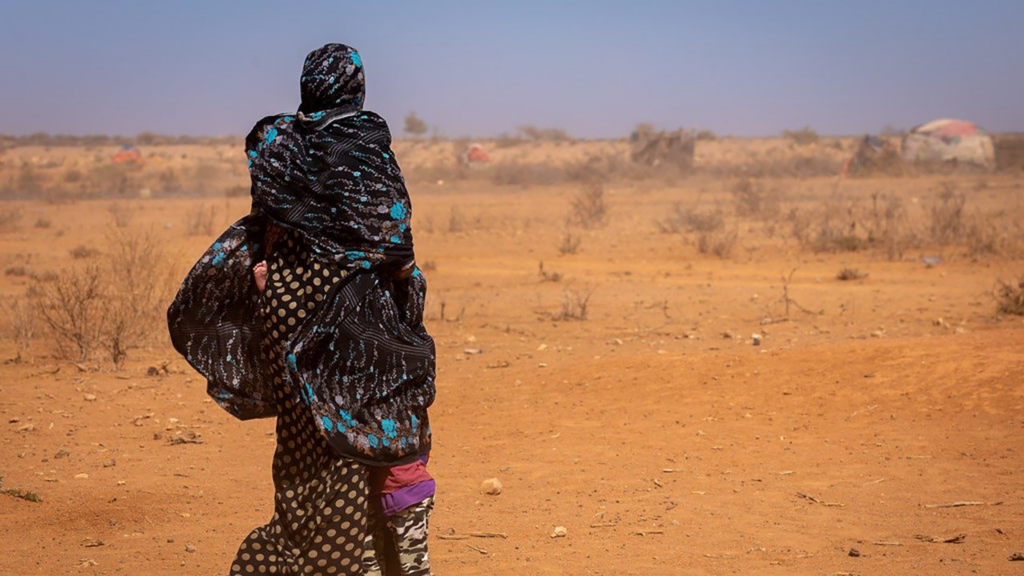
In Somalia, armed groups demanded a ransom from a family of farmers raising four children so they could continue farming their land. The father and mother had to leave their farm and go to a refugee camp. During the long trek on foot, one of the children died.
This is one of many painful stories showing how conflicts and violence have consequences that reach far beyond the battlefields. It was shared by Carl Skau, Deputy Executive Director of the World Food Programme (WFP), who, during a United Nations Security Council meeting convened to discuss the problem of conflict-related food insecurity, used this story to illustrate “the vicious cycle of conflict and hunger.”
Hunger drives further acts of violence
War destroys the means for people to obtain food, and hunger, in turn, increases communities’ vulnerability and creates conditions conducive to further acts of violence.
Therefore, as UN Secretary-General António Guterres stated during the meeting, “the best protection against food insecurity is peace, and the safest foundation of peace is a world free from hunger.”
As emphasized, wars destabilize the global food system. According to UN data, at least 266 million people do not have enough food, and the number of armed conflicts has reached its highest level since World War II.
For the first time this century, famine has been confirmed simultaneously in Sudan and the Gaza Strip. In 12 of the 13 most severe food crisis hotspots identified by the UN, conflict and violence are the main drivers of hunger.
Rising costs of energy, fertilizers, and food
From the Black Sea to the Strait of Hormuz, wars are driving up the prices of energy, fertilizers, and food, while humanitarian aid is dwindling. This mechanism is growing in scale.
In Somalia, farmers are being driven from their land. In Sudan, markets are being attacked using drones and missiles. In Haiti, entire communities are cut off from the world by criminal gangs. From Gaza to Mali and Myanmar, humanitarian workers are prevented from reaching certain populations.
“Basic food systems, as well as the lives and livelihoods of the people who depend on them, are under attack,” Guterres warned.
Farms, markets, warehouses, ports, and sea routes are becoming part of conflicts whose economic impacts reach far beyond the front lines. As emphasized, an attack on a port or a strike on a merchant vessel can now lead to rising food prices even thousands of miles away from the fighting.
The Black Sea is a prime example. Russia and Ukraine are among the world’s largest exporters of grain, and escalating attacks between the two countries are disrupting a vital route for global food trade. According to the WFP, the amount of grain passing through the Bosphorus decreased by 40 percent in one year.
Between Hormuz and the Red Sea
At the same time, attacks on merchant vessels are disrupting shipping in the Red Sea, and tensions in the Strait of Hormuz are affecting the route used to transport about one-fifth of the world’s oil supplies and one-third of global fertilizer trade.
As the UN points out, basic food prices in Sudan have risen by nearly 40 percent since February. Rising fuel costs negatively impact field irrigation, transport, and grain processing, while disruptions in fertilizer exports threaten upcoming agricultural seasons in Africa and Asia.
But that is not all. By destroying livelihoods and forcing populations to leave their homes, war makes impoverished communities more vulnerable to recruitment by armed groups and criminal networks.