Rosa Carillo Ambrosio
The Church of the Diocese of Pozzuoli is, as always, on the front line. About a week after the violent 4.7 magnitude earthquake that struck the Phlegraean Fields on July 31, on Sunday, August 9, the Bishop of Pozzuoli, Carlo Villani, decided to celebrate Mass at 7:30 PM in one of the areas most affected by the tragedy: in the square in front of the Church of the Sacred Heart of Jesus in the Gerolomini district.
Support from Caritas
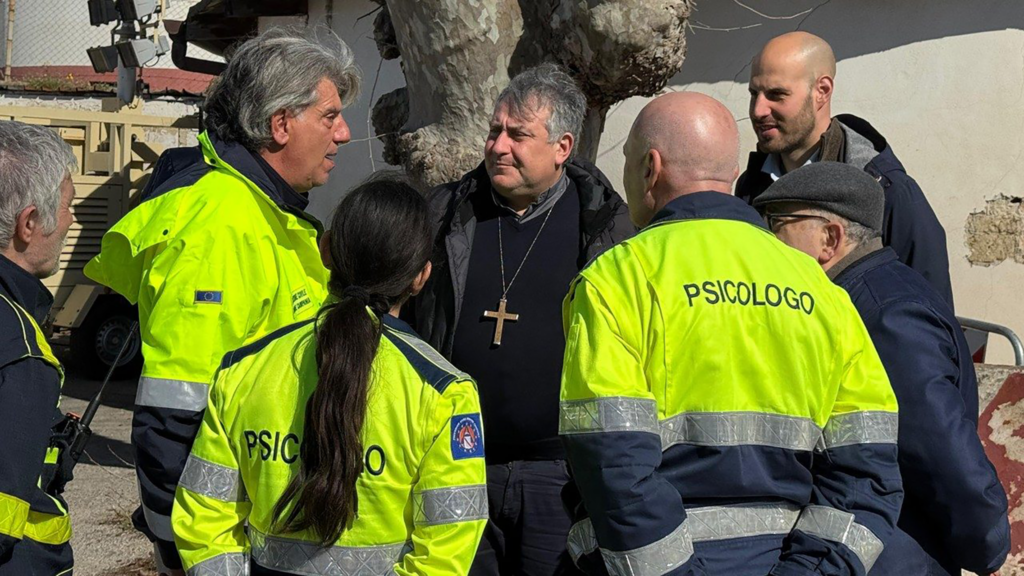
Meanwhile, the diocesan Caritas is opening a support center for residents in need of psychological support, as well as for all those who require legal or technical assistance regarding their housing situation. For this reason, an appeal has been launched to volunteers from support centers in other dioceses, all individuals who have gained significant experience in providing support, as well as to lawyers, psychologists, and psychotherapists.
Pozzuoli is currently facing a deep logistical and social crisis. The scale of the damage caused by the strongest earthquake in the last 40 years is constantly worsening, alongside the careful inspections carried out by the fire department. The total number of evacuated people has already reached 1,700 in the municipality of Pozzuoli alone—a dramatic figure that underscores the severity of the crisis.
To ensure public safety, an increasing number of eviction orders are being issued; dozens of buildings have been declared uninhabitable, and over 600 families have been forced to leave their homes. Although some residents have found independent accommodation with relatives or friends, dozens of people are still staying temporarily in hotels or in the sports hall.
Severe Difficulties and Tense Atmosphere
The situation of complete uncertainty caused by the earthquake has a huge impact on the psychological and economic stability of the local population. In addition to the tragedy of the evacuees, the city must cope with serious infrastructural problems that paralyze daily life. In many districts of the historic center and along the waterfront, drinking water supplies are interrupted due to pipe damage. Entire families are completely dependent on water tankers from the Italian Civil Protection.
Given the exceptional heatwave of recent days, the water provided is sometimes too warm to cool off with. The list of problems also includes the suspension of many basic services—as many as 13 schools and 14 places of worship have been deemed unusable, necessitating the redesign of the school network before the start of the school year. Strategic public offices, such as the health district, post office, and fish market, are also closed or restricted. To cope with the escalating difficulties, various institutional levels have launched initial emergency measures.
Social tension has already reached a critical point. In recent days, desperate residents have taken to the streets, even occupying the port docks to express their anger, primarily over the unfinished construction of the reception center on via Artiaco—a facility designed precisely to manage emergencies related to bradyseism, which has remained an unfinished project.
While the government announces the first emergency measures worth 100 million euros, Pozzuoli remains a city suspended in uncertainty, deeply wounded and awaiting real protection for its future.