Patricia Ynestroza – Vatican City
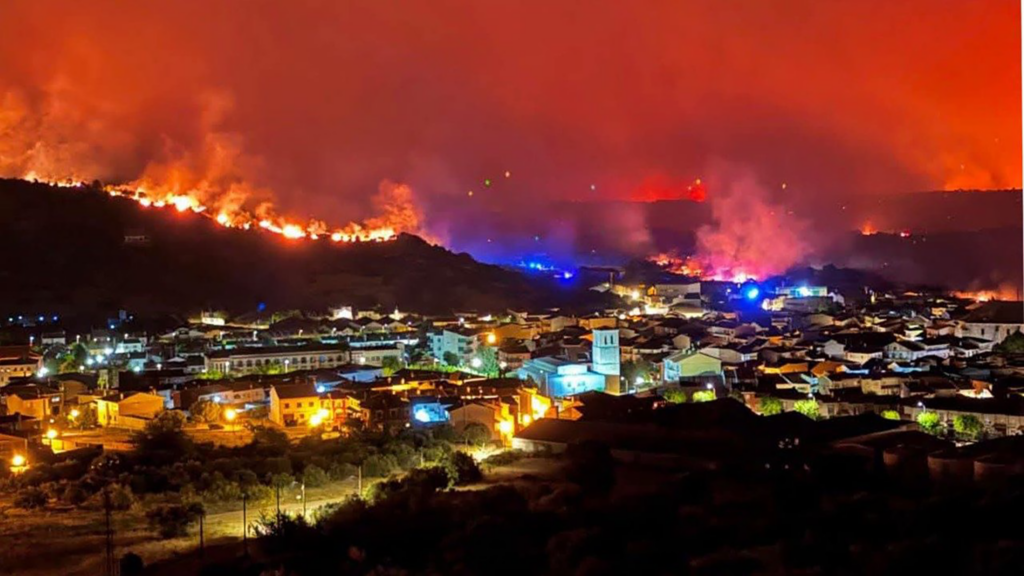
Forest fires that have swept through the autonomous communities of Madrid, Castile and León, and Castilla-La Mancha have led to one of the biggest crises in central Spain in recent years. Thousands of people have had to leave their homes, dozens of towns have been evacuated, and the environmental consequences are already being described as unprecedented, especially in the province of Ávila, where the fire has consumed protected areas and centuries-old forests.
While firefighters continue to battle the flames, the Church and Caritas have launched a wide-ranging network of aid and support for the evacuees, accompanying them through a crisis situation which – as they emphasize – will last long after the fires are extinguished.
Shelter in parishes
In the Diocese of Getafe, assistance began in the very first hours of the crisis. As its spokesperson, Álvaro de Juana, explains, priests immediately opened parishes and even their own homes to welcome residents evacuated from threatened towns, Vatican News reports.
The diocese maintains constant contact with municipal authorities and local priests. Over the past weekend, Auxiliary Bishop José María Avendaño visited several aid centers sheltering about three thousand people. They cannot return to their homes, and some of them have lost everything as a result of the fire.
Caritas volunteers, together with civil defense and social services, are distributing food, clothing, essential supplies, and providing accommodation to those in need. Priests, meanwhile, offer spiritual support, conversation, and opportunities to participate in Holy Mass. Some of them have lost their own homes and are living together with the other evacuees. However, as Caritas emphasizes, the emotional state of the victims is becoming an increasingly serious problem.
“There are people who feel they have lost everything, but there are also those who try to keep hope alive,” says De Juana. Many of them are migrant families who have lived for years in towns in southern Madrid and today do not know when they will be able to return home or what future awaits their children.
Yago Aparicio, head of emergency operations at Caritas, emphasizes that many families were convinced they would leave their homes for at most a day or two. Meanwhile, for almost a week, they have been living in uncertainty, not knowing if their homes are still standing. This uncertainty causes high levels of anxiety.
A crisis with varying progression
The situation is developing differently depending on the region. Aparicio explains that in some places the fire has already been brought under control, while in others the flames remain active. It is estimated that in the autonomous community of Madrid, between 1,900 and 2,500 people have been evacuated, about a thousand in the province of Toledo, and a similar number in the province of Ávila. These figures are constantly changing as some residents are granted permission to return home. Most have found shelter with relatives or friends, but hundreds of people in difficult situations are still staying in sports halls, recreation centers, and other facilities prepared by the authorities.
The most destructive fire
A particularly dramatic situation persists in the province of Ávila. As Quintín García of Caritas of the Diocese of Ávila, emergency coordinator, explains, the fire started near the Valle del Alberche and then, due to a change in wind direction, moved to the Valle del Tiétar. The fire initially engulfed the towns of El Barraco, El Tiemblo, Burgohondo, Navaluenga, Hoyo de Pinares, and Cebreros, forcing the evacuation of thousands of residents. Later, it also reached towns in the south of the province, including Mijares, Pedro Bernardo, Piedralaves, Casillas, and Casavieja, Vatican News reports.
The difficult terrain of the Tiétar Valley, strong winds, and high temperatures make firefighting operations significantly harder. “This is the largest fire in terms of area in Spain’s history,” García emphasizes, attributing the scale of the disaster also to the effects of climate change, which cause increasingly violent and uncontrollable fires.
The environmental consequences are exceptionally severe. The fire reached the Valle de Iruelas nature reserve – one of the most important habitats for the cinereous vulture in Europe – and the historic chestnut forest of El Tiemblo, home to centuries-old trees. Although no fatalities have been reported, the fire has caused considerable material damage, destroying homes, farm buildings, and vehicles.
A coordinated aid network
In the province of Ávila, the first evacuees were directed to the Lienzo Norte Congress Palace, the Carlos Sastre hall, and then to the National Police School, where about 1,100 sleeping spaces were prepared in rooms to ensure dignified and better-organized living conditions. Other residents found shelter in sports halls in Arenas de San Pedro, Candeleda, and Talavera de la Reina, while elderly people from nursing homes were transferred to facilities across various provinces of Castile and León.
Caritas of the Diocese of Ávila focuses its aid on four areas: providing hygiene supplies, logistical support in reception centers, psychological help, and organizing activities for children with the participation of young volunteers to alleviate the psychological impact of the disaster.
Furthermore, staff and volunteers support nursing homes by helping run canteens and relieving the staff. “Listening to another person is one of the most important needs today,” García stresses. “People need the opportunity to share their pain and express the uncertainty they are experiencing.”
Preparations for reconstruction
Although the most important task remains bringing the fire fully under control, both Caritas Spain and the dioceses affected by the disaster are already preparing for the next phase of operations. Caritas representatives are participating in coordination meetings with public administration to plan aid for the coming months, when it will be possible to accurately assess the damage to homes, farms, livestock operations, and tourism-related businesses.
In Ávila, the diocese maintains constant contact with parish priests and deans of the areas affected by the fire to coordinate future financial assistance, accompany families, and support them in applying for public aid. The Church has been actively involved in helping from the very beginning. Parishes, brotherhoods, and parish groups are organizing collections of food, water, and essential supplies. The diocesan seminary also remains available should additional accommodation be required.
For Caritas, however, the real challenge will begin only after the state of emergency ends. Reconstruction will require months of accompanying families who have lost their homes, supporting people left without sources of income, and preventing a situation where the economic consequences force many residents to permanently abandon their towns. In addition to the destruction caused by the fire, it will also be necessary to tackle the restoration of precious natural heritage, which could take decades.