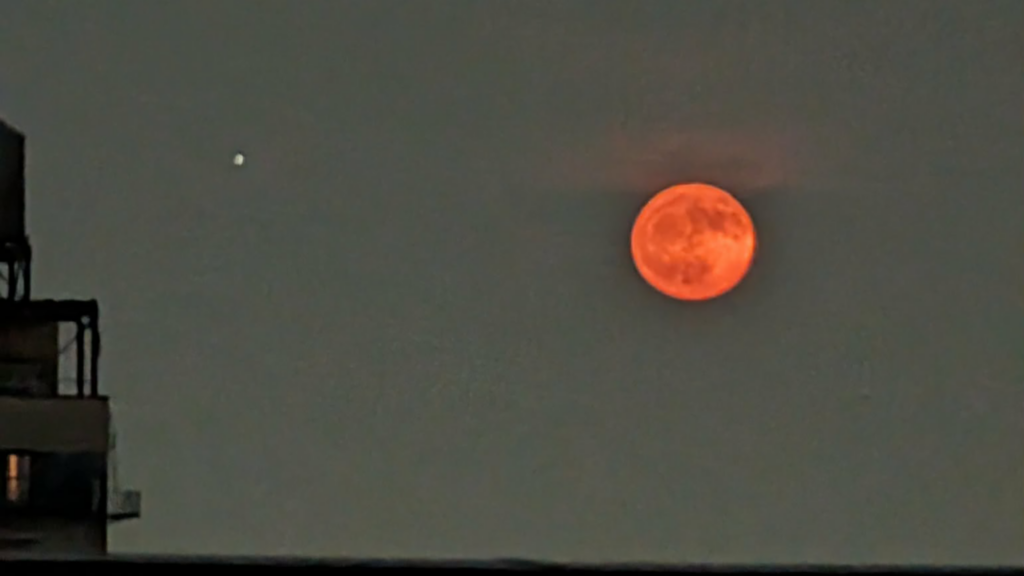
The eclipse begins at 9:23 p.m. EDT, becomes more noticeable around 10:33 p.m., and reaches maximum eclipse at 12:12 a.m. Friday. Unlike solar eclipses, no special equipment is needed to view the event.
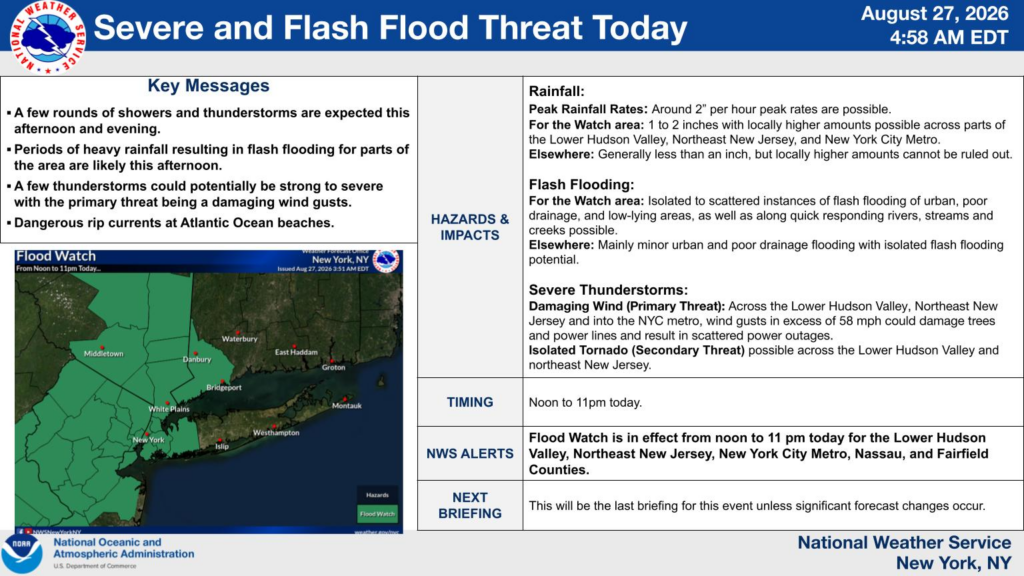
Viewing conditions around New York, New Jersey, and Connecticut will depend on cloud cover. Forecasts call for scattered showers, thunderstorms, and periods of clouds across parts of the region.
That being said, some areas could catch breaks in the overcast skies during the eclipse.
Weather permitting, tonight’s eclipse will be one of the more striking lunar events visible from the region in the coming years, as the next eclipse with similar coverage will occur in 2029.