Artur Hanula
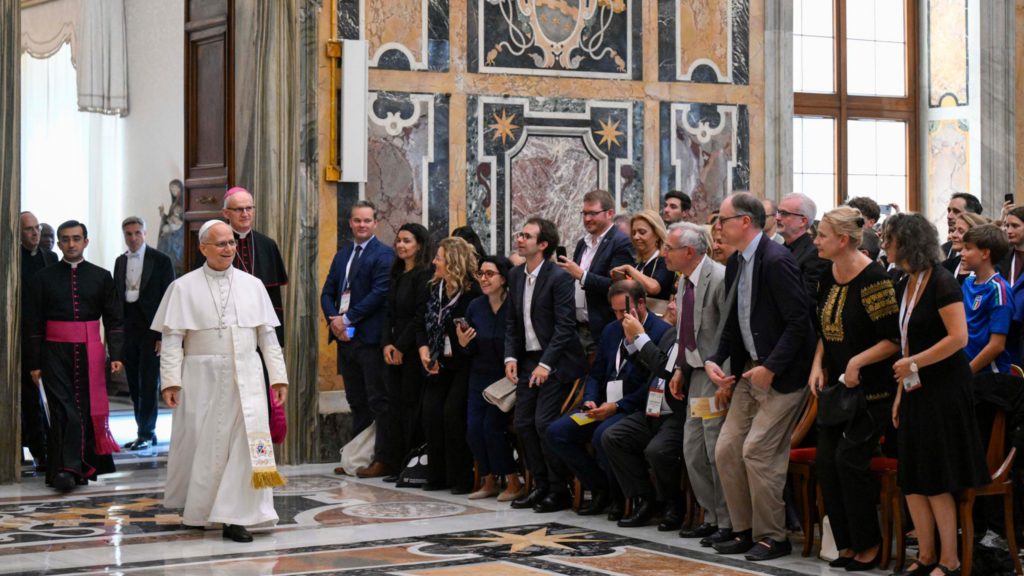
The Holy Father met with members of the Institute at the end of their annual conference held in Rome. He recalled that the Holy See is also a member of the Institute.
Appeal to conscience
The International Institute of Administrative Sciences was established in 1930, shortly after the Great Depression. Leo XIV recalled the message of Pius XII, who on August 5, 1950, delivered an address to the 8th International Congress of Administrative Sciences. Pope Pius encouraged the members of the Institute to constantly appeal to the conscience of political authorities so that they would adapt social life to constantly changing circumstances in order to realize the plans of the Creator’s Wisdom.
Concern for balance in the use of digital tools
Leo XIV referred to the theme of this year’s Institute conference, which today constitutes “a moving call addressed to our world in the digital era to be able to maintain balance in the use of digital technologies.” He noted that this coincides with the message present in his encyclical “Magnifica humanitas.”
The Pope emphasized that currently there is no possibility “not to look into the eyes of this reality, which directly affects our way of life and permeates all spheres of social life.” The pace of development of artificial intelligence prompts questions about whether humanity will be able to control machines in the future and “whether man does not run the risk of becoming a victim of his own inventions.” “One of the serious problems of today is the fact that decisions concerning human life are entrusted to machines,” the Pope said.
The supremacy of human intelligence over technology
The Holy Father welcomed the conference of the International Institute of Administrative Sciences. As he noted, the goal of this event is “to reaffirm the irreplaceable nature of human intelligence in relation to these technological tools.”
The Pope expressed the hope that the Institute’s work can support authorities in making decisions for the good of humanity. He recalled a passage from his encyclical: “To demand prudence, careful verification, and sometimes even a slowdown in the implementation of artificial intelligence does not mean being an opponent of progress, but expressing responsible concern for the human family” (Magnifica humanitas, no. 106).
The need for appropriate rules in the use of technology
Leo XIV pointed out the need to develop ethical rules concerning the use of digital tools, which “unfortunately are concentrated in the hands of large economic and technological entities, and the state has difficulty controlling them.” “Care must be taken to ensure that the good of the human family is not sacrificed for private interests,” the Pope appealed.
Actions for the humanization of digital technologies
The Holy Father encouraged the members of the Institute to “continue research to find ways and means by which you can contribute to the efforts of public administration for the humanization of digital technologies so that they serve life and peace.” He recalled that Pope Francis had already encouraged this, drawing attention to the issue of the responsible use of technology.
In conclusion, the Pope emphasized that the mission of the International Institute of Administrative Sciences is not easy and may be accompanied by discouragement. He assured them of his prayers that God may support their “noble task.”