
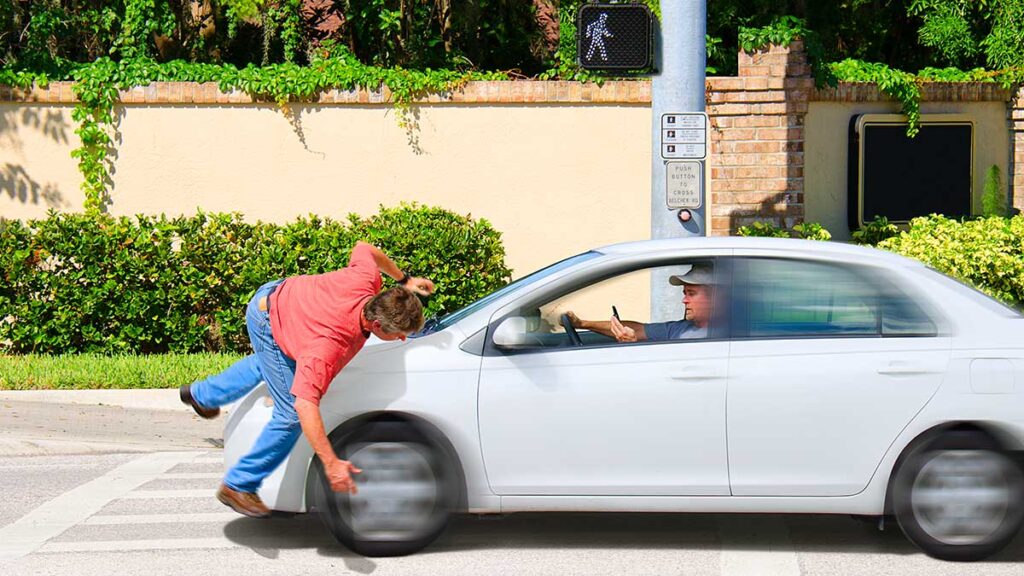
Pedestrian traffic in New York rises noticeably over the summer, and the number of people struck by vehicles rises with it. Attorneys point out that a pedestrian hit by a car draws no-fault benefits from the striking vehicle’s policy, and that a fund covers hit-and-run cases.
Longer days, sidewalk dining, strollers, bicycles and courier scooters all thicken the traffic where the sidewalk meets the roadway, which makes summer the season when the two collide most often. The city has for years tried to bring the toll down through its Vision Zero program, rebuilding intersections and calming traffic, yet in the densest neighborhoods pedestrian collisions remain part of ordinary life.
The season when sidewalk meets roadway
The city documents that effort on its Vision Zero program page, which sets out the street redesign work behind the policy. Redesigned corners and shorter crossings help, but they do not change the volume of traffic that arrives with warm weather.
In the neighborhoods where the Polish community lives — Greenpoint, Ridgewood, Maspeth — one more factor comes into play: delivery traffic. Trucks reversing up to shopfronts, couriers on electric bikes, cars pulling out of supermarket lots straight across the sidewalk. Many collisions happen in exactly those places rather than at the big intersections.
The profile of the people being hurt shifts in summer as well. More seniors out walking, more children coming back from parks, more people pushing strollers. For those groups even a low-speed impact often means fractures and a long rehabilitation — costs nobody should be covering out of pocket when the system provides benefits for them.
The benefits pedestrians do not know they have
The most common mistake injured pedestrians make is purely informational: the assumption that without a car and a policy of their own there is nothing to claim. The New York system works the other way around. A pedestrian who is struck receives no-fault benefits — covering medical costs and part of lost earnings — from the policy of the vehicle that hit them, irrespective of fault. Where injuries are serious, a separate claim against the driver for pain and suffering remains available.
The system even anticipates the worst case, a driver who flees or was driving uninsured. A guarantee fund exists for those situations, but access to it depends on notifying the police very quickly and documenting the effort to identify the driver. A full walk-through of where benefits come from and the mistakes made in the first 72 hours is set out in the firm’s guide to the rights of a pedestrian struck by an uninsured driver in New York.
Expert perspective: “I’m fine” is the worst possible opening line
Counsel for injured pedestrians describe the same sequence again and again: the pedestrian gets up, reassures the driver and the bystanders that nothing is wrong, and walks off without a police report. Head injuries, bleeds and joint damage surface hours later, by which point the documentation, the driver’s details and the witnesses are all gone. Where the driver fled, the absence of a police report can close off the guarantee fund altogether. More on Nicole Brenecki’s experience in road accident matters appears on her PolishPages profile with client reviews.
Hence the summer rule attorneys repeat every season: after any collision with a vehicle, however harmless it seems, police and a doctor the same day. Those two decisions cost a few hours and protect every right that follows.
Foot traffic in the city will only grow through the warm months, and with it the value of knowing what to do in the first hours after being hit. Road accident matters handled in Polish are described on the firm’s listing in the PolishPages business directory.
This article is for informational purposes only and does not constitute legal advice. Attorney Advertising. In individual accident matters, consulting a licensed attorney is advisable.