Vatican News
Rescue operations are underway in Indonesia in areas affected by landslides and cut off from the world. This morning, another 6.1-magnitude earthquake struck off the coast of the island of Sumatra at a depth of 29 kilometers, the Indonesian geophysical agency reported.
Disturbing situation for children
The situation of the youngest is of particular concern. According to Save the Children, over 8,000 children and teenagers in East Nusa Tenggara province are facing a lack of access to schooling and growing threats to their safety.
As a result of the earthquake and numerous aftershocks, over 900 residential buildings have been damaged. To make matters worse, the destroyed infrastructure includes at least 87 schools and 18 health centers.
Furthermore, the earthquake has affected communities already experiencing drought associated with the El Niño phenomenon and volcanic hazards, compounding its consequences for the health, education, and psychosocial well-being of children.
“Children are among the most vulnerable groups”
Save the Children, together with the local organization CIS Timor, is assessing the needs of families to launch relief efforts. Among the priorities indicated by the organization are restoring access to education and supporting family livelihoods. “Children are among the most vulnerable groups,” emphasized Fadli Usman, a representative of Save the Children Indonesia.
He noted that immediate assistance should be accompanied by long-term measures aimed at preventing the loss of continuity in education, malnutrition, child labor, early marriage, and other risks related to the protection of minors.
Caritas Mobilization
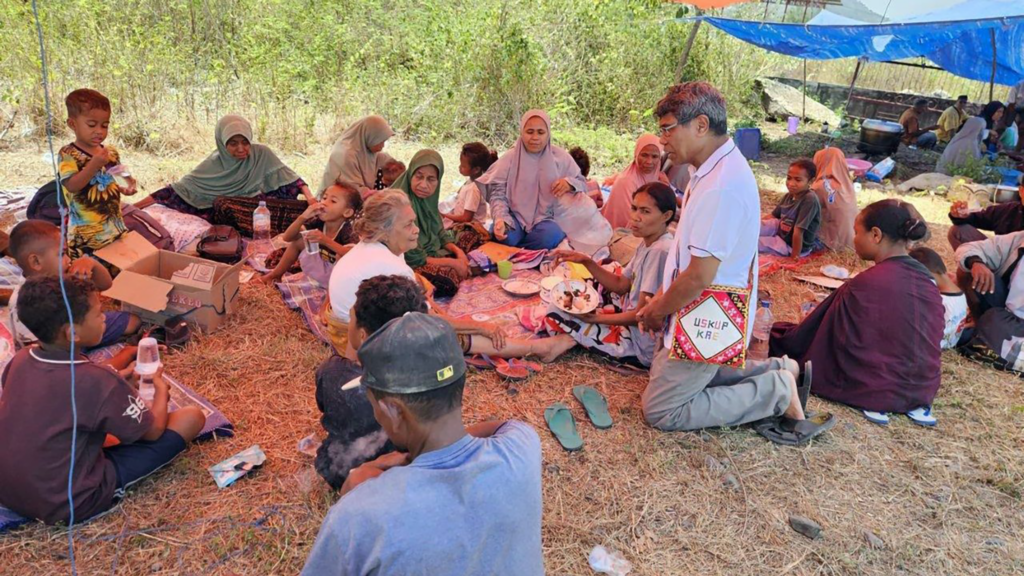
Caritas Indonesia has mobilized the Catholic Church’s humanitarian network in the dioceses affected by the earthquake, cooperating in particular with the dioceses of Ruteng, Labuan Bajo, Kupang, Maumere, and Ende. Volunteers and diocesan teams are already engaging in aid for the population and evacuation efforts. Parishes are gathering information on the needs of local communities.
Among the most urgent needs, Caritas lists drinking water, food, shelter and hygiene kits, medical assistance, and support for the most vulnerable, particularly children, the elderly, pregnant women, and people with disabilities. The activities are carried out in accordance with the principle of “One Church, one response.”
As explained by the director of Caritas Indonesia, Fr. Fredy Rante Taruk, dioceses, parishes, volunteers, and church structures are being mobilized to “swiftly and effectively respond to the humanitarian situation” and deliver aid to the affected communities.