Monika Stojowska KUL
Importantly, the Catholic university in Lublin achieved the highest result in Poland considering the ratio of A+ and A categories to B+, among classical universities meeting the criteria of a research university.
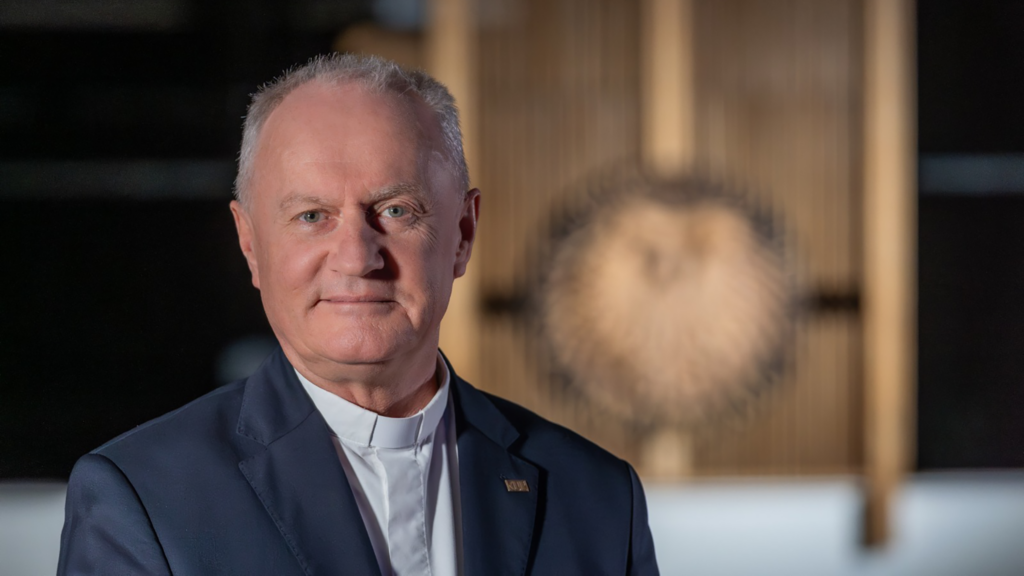
Political science and administration, medical biology, philosophy, linguistics, history, philosophy, psychology, and art studies were placed with category A. “Category A in medical biology, psychology, or political science and administration shows that KUL is developing comprehensively. The evaluation result has not only prestige significance. It influences the possibilities of conducting education, the development of doctoral schools, acquiring grants, the internationalization of research, and the university’s position in scientific partnerships,” notes the Rector of KUL, Rev. Prof. Mirosław Kalinowski.
The prestigious A+ category is awarded only to a few units among those that meet the requirements of category A and whose achievements are comparable to leading European research centers. Disciplines considered as candidates for the A+ category were evaluated by independent foreign experts, which additionally emphasizes the distinction resulting from obtaining the highest category. “Our university achieved as many as five highest A+ ratings, awarded to disciplines with world-class research. We are among the leaders in leading and best-rated universities in the country by the Ministry of Science and Higher Education,” emphasizes Rev. Prof. Mirosław Kalinowski.
In turn, category B+ is held by: biological sciences, legal sciences, pedagogy, economics and finance. The evaluation takes into account the achievements of employees representing a given discipline. The level of scientific activity measured by the quality of publications, the financial effects of scientific research and development works, and the impact of scientific activity on the functioning of society and the economy are evaluated. Such a high result for KUL, as noted by the Vice-Rector for Research, Prof. Iwona Niewiadomska, is the joint success of researchers, institute directors, and administrative staff dealing with this area. “I express my immense gratitude for the committed coordination of the researchers’ work, for its planning, and often being a manager in a given discipline. You have achieved very high results. Thanks to you, we are a leading university in Poland,” summarizes Prof. Niewiadomska.
KUL, in its development strategy, plans to include six more disciplines in the next evaluation. These are medical sciences, pharmaceutical sciences, family sciences, social communication and media sciences, computer science, and architecture and urban planning.