Fr. Łukasz Bankowski – Vatican City
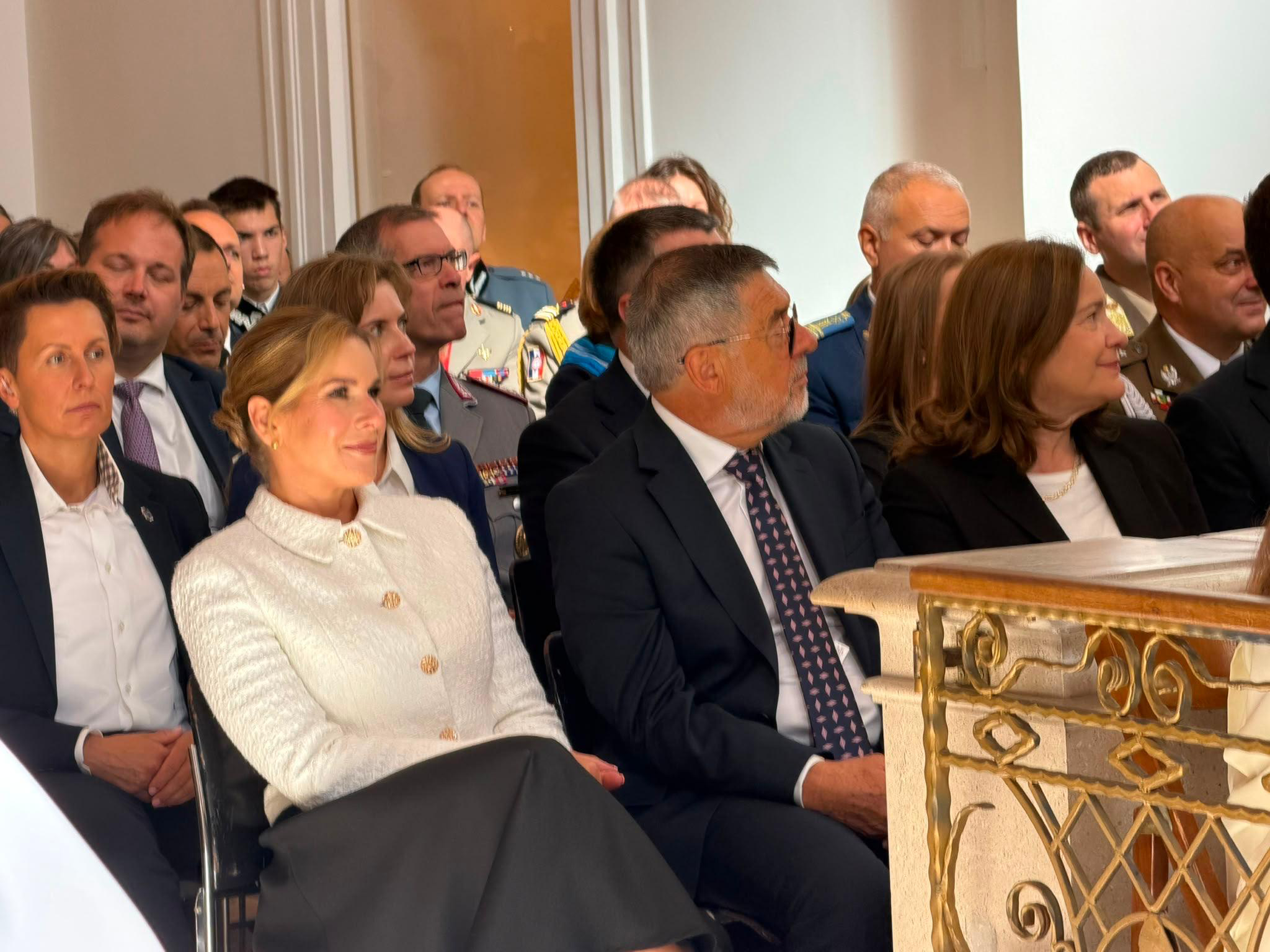
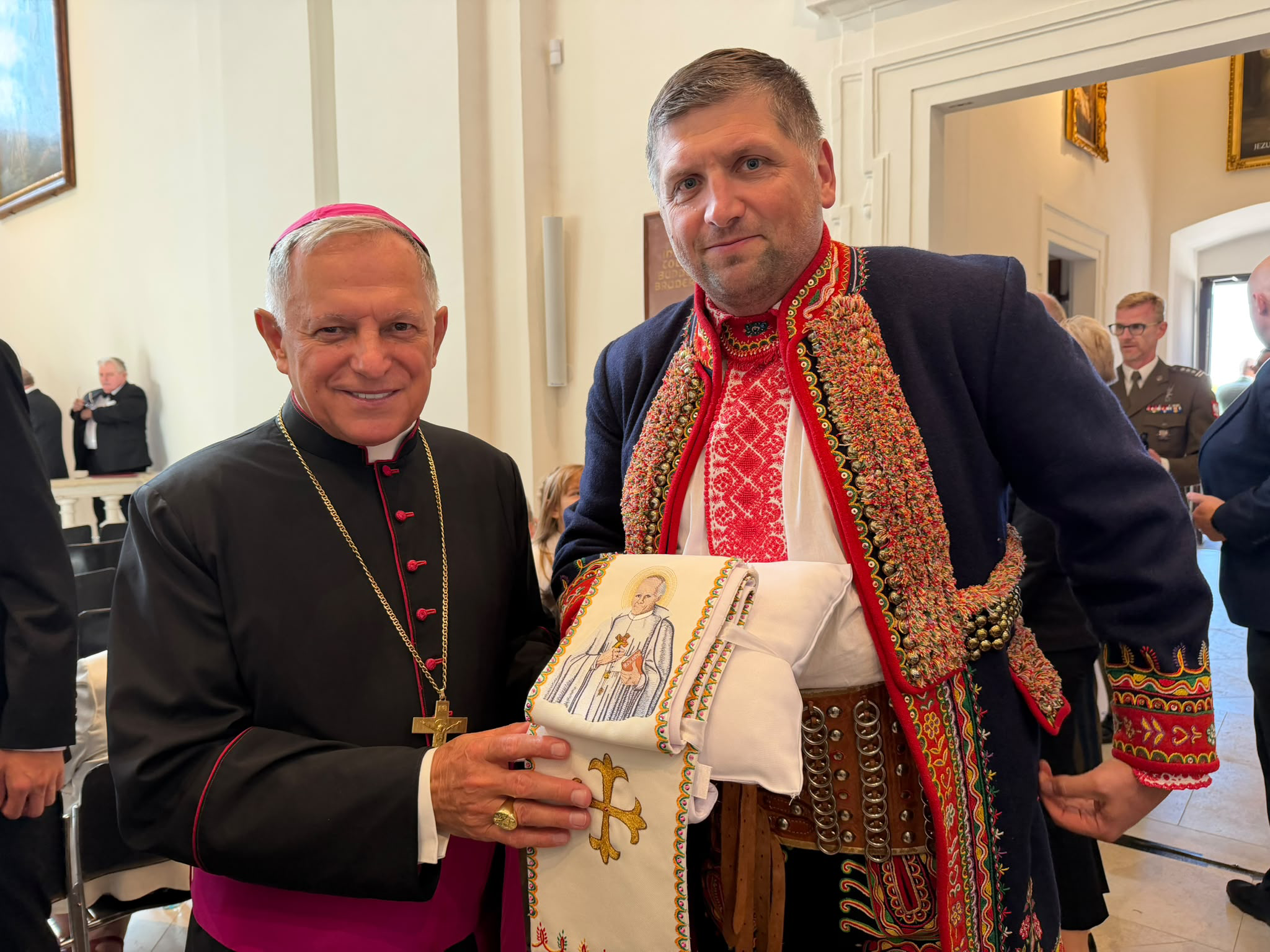
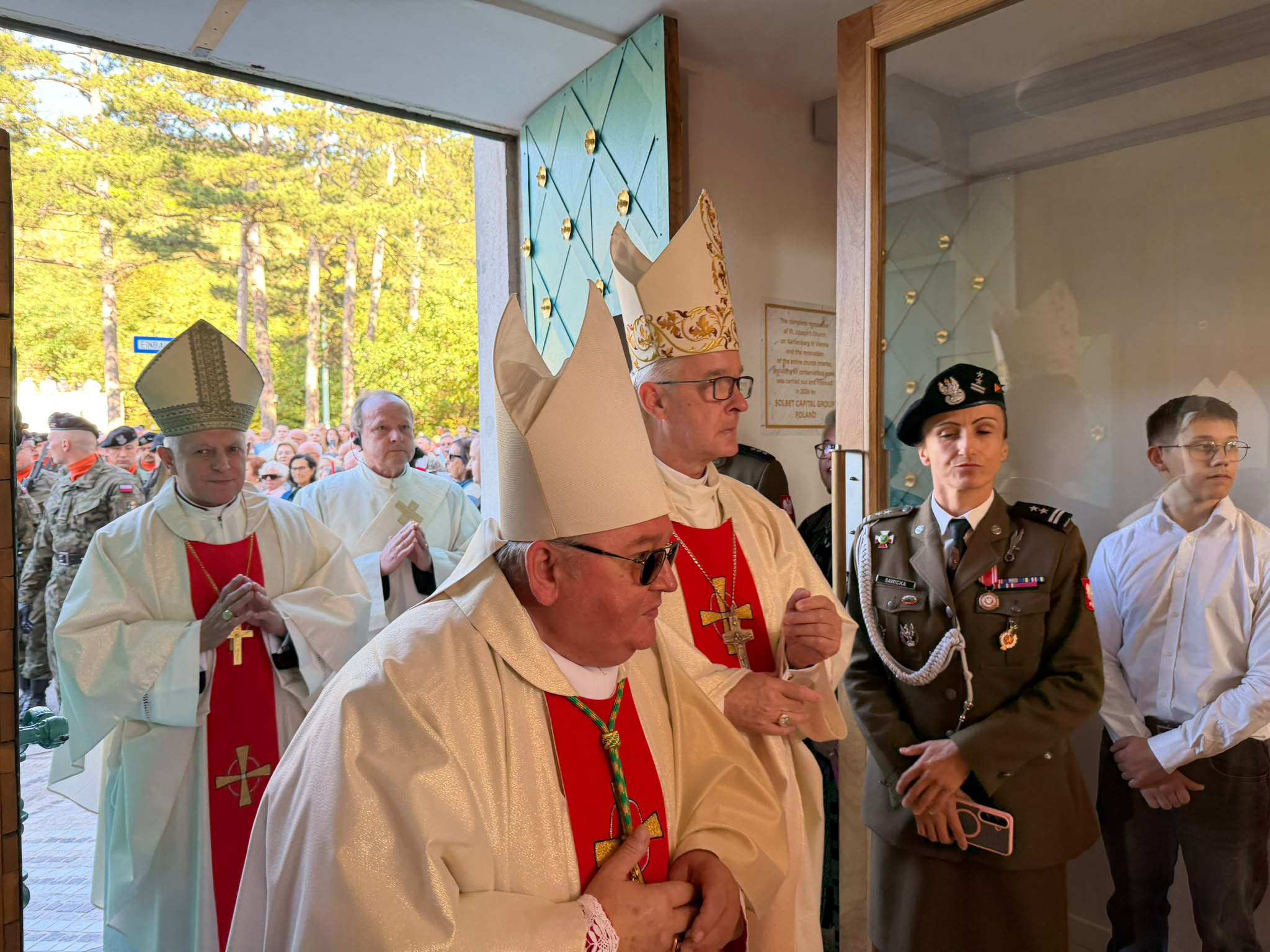
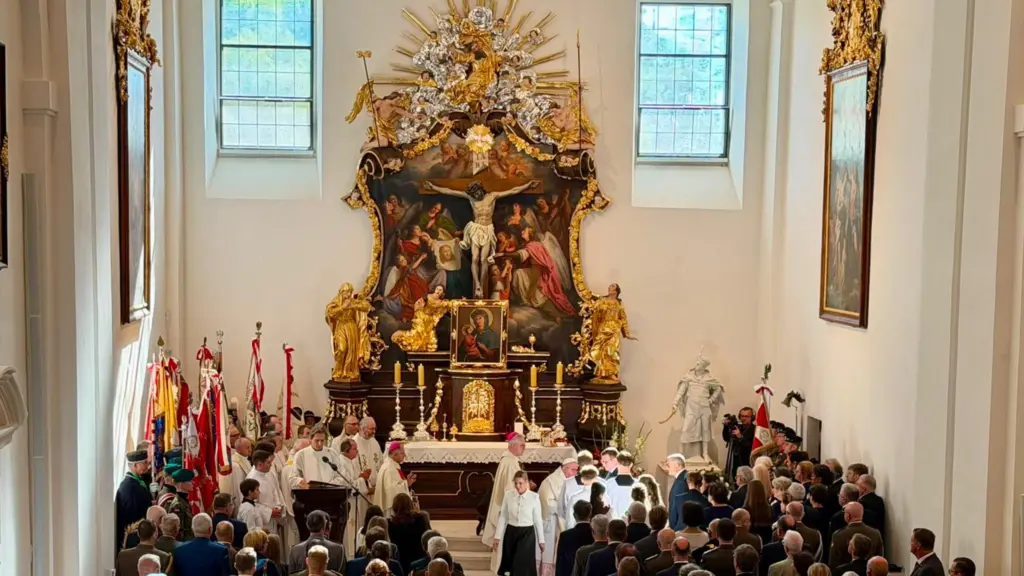
The celebrations commemorating the victory of the troops of Jan III Sobieski gathered representatives of the Church, state authorities, diplomats, the military, and numerous pilgrims on the Kahlenberg. Among the prelates were Archbishop Mieczysław Mokrzycki, Latin Metropolitan of Lviv, and Bishop Wiesław Lechowicz, Military Ordinary of the Polish Armed Forces. The spouse of the President of the Republic of Poland, Marta Nawrocka, was the guest of honor.
“Five minutes of our greatness”
The anniversary liturgy recalled the events of September 12, 1683, when allied troops led by Jan III Sobieski defeated the army of the Ottoman Empire besieging Vienna.
“We must remember what we defended and what value it holds. The DNA of not only Christianity, but also of European culture, was defended here,” says Fr. Roman Krekora CR.
The rector of the sanctuary emphasizes that the Kahlenberg is a special place for Polish historical memory. He recalls the later struggles of Poles at Monte Cassino, in Normandy, and in the Battle of Britain, but points out a fundamental difference.
“Here are five minutes of our greatness. On the Kahlenberg, it was we who gave the orders. This church reminds us of our contribution to Europe’s heritage, to European culture. We have reason to be proud,” he emphasizes.
Bishop Lechowicz: weapons aimed at God strike at man
Bishop Wiesław Lechowicz referred to the significance of history for the present day in his homily. The Military Ordinary of the Polish Armed Forces pointed out that conflicts stem from situations where a person places their own will above God’s law and attempts to impose it on others.
“The history of mankind, and perhaps even of some of us, proves that wherever man usurps rights and prerogatives, wherever he places his own opinion and will above God’s commandments, and above all imposes his convictions on others, there instead of peace, conflict and even war appear,” said Bishop Lechowicz.
The prelate encapsulated this thought in a striking image: “In other words, weapons aimed at God always turn towards man and against man.”
Sanctuary of Central Europe
The Catholic church on the Kahlenberg has belonged to the Polish nation since 1907. However, Fr. Krekora points out that the significance of this place extends beyond Polish history.
“For almost 120 years, the Kahlenberg has been a place that not only unites Poles, but also the countries of Central Europe. I would say it is the spiritual sanctuary of today’s Three Seas Initiative,” he says.
The international character of the celebrations was emphasized by the presence of representatives of the armed forces of many countries. Military attachés from about 15 countries participated in the liturgy. The first reading was read by an Austrian general, and the second by the United States military attaché.
“This place truly not only unites Poles, but also unites all of Central Europe,” notes the rector of the sanctuary.
John Paul II knew how important the Kahlenberg is
This year’s commemorations also mark the 43rd anniversary of John Paul II’s visit to the Kahlenberg. The Pope arrived here in 1983 during his first official trip to Austria.
“He found the time to climb this mountain because he knew how important this place is not only for Poland, but also for Europe, for European identity,” says Fr. Krekora.
President Karol Nawrocki also referred to the words of John Paul II in a message read during the celebrations. He recalled the presence of the Polish Pope on the Kahlenberg on the 300th anniversary of the Battle of Vienna and encouraged a renewed listening to his call to build the unity of Europe based on its spiritual values. He also pointed out the relevance of the question of who Europeans and Christians living on the continent are today.
Burial site of Polish soldiers discovered
After more than a year of work, the sanctuary can now be seen after a major renovation, carried out largely thanks to Marek Małecki, who, as he says himself, when he saw that the “ambo was falling apart”, decided to provide material help for the renovation work.
The rector emphasizes that the church had been waiting for such an extensive renovation for decades. The work was made possible primarily thanks to the commitment of people for whom preserving Polish heritage on the Kahlenberg is important.
The renovation also brought an unusual discovery. “We found the place where our soldiers who died after the battle were buried,” says Fr. Krekora. The area of the former cemetery is currently being restored.
“Let us fight for our memory. Let us remember those who chose the more difficult path so that we could be a free, democratic nation,” appeals the rector of the Polish National Sanctuary on the Kahlenberg.