Who gives up permanent resident status
Every year about 1.1 million people receive immigrant permanent resident status – in everyday terms, a green card. According to the Federal Register, between nine and eleven thousand people a year decide to abandon their green cards. With so many people knocking on America’s door and waiting years to be let in, why do some slam that door behind them?
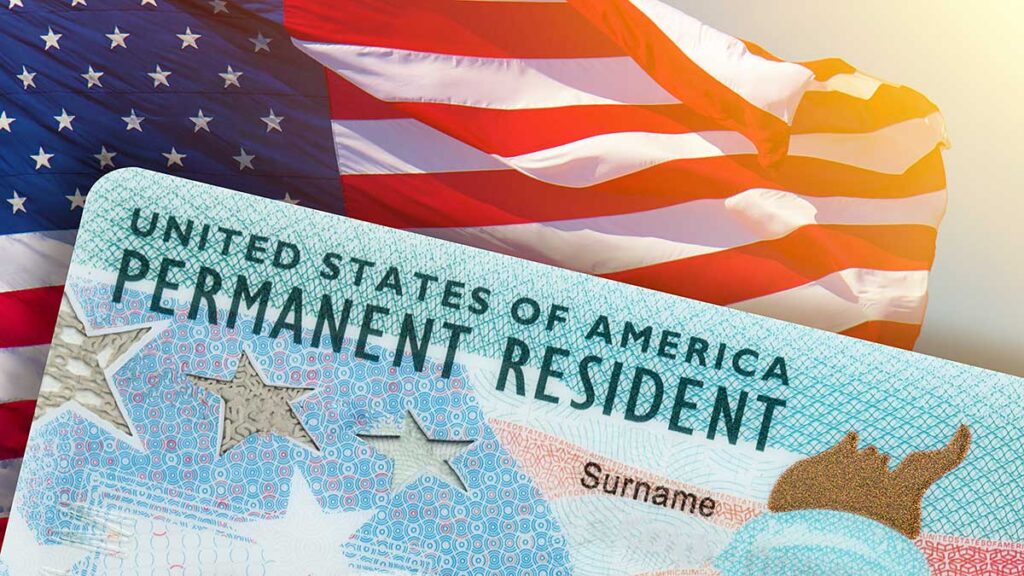
Green card is the popular name for Form I-551, the document confirming Lawful Permanent Resident (LPR) status. In this article we use these terms interchangeably.
A person with permanent resident status has the right to give up that status. There can be two reasons: travel and taxes.
Travel reasons
Permanent resident status means that you have chosen the U.S. as your permanent home. But if you stay outside the United States for more than a year, or drop in here only briefly and have strong ties to another country, that means you have abandoned permanent residence, because your home is elsewhere. This is decided by the immigration officer at the border crossing or airport. The officer may confiscate your green card and leave the final decision to an immigration judge at a hearing.
A green card is not a document that allows occasional short visits to the States, and trouble at the border is only a matter of time. You can protect your chances of being let into the U.S. by applying in advance for a so-called “white passport” (re-entry permit) or by requesting an SB-1 returning resident visa, but there is a simpler way.
If you have already ended your American adventure (or never started it, because, for example, you won a green card in the visa lottery you did not really need), it may be much better to give up permanent resident status and travel freely to the U.S. visa-free. Since November 11, 2019, Poland has been part of the Visa Waiver Program. All you need to do is register online with the Electronic System for Travel Authorization (ESTA) and pay the fee by credit card (currently about $41; the amount is adjusted every year).
The ESTA website https://esta.cbp.dhs.gov/ is available in several languages, including Polish. With a travel authorization, you can stay in the U.S. for tourism or personal reasons for up to 90 days. You can cross the border any number of times for two years or until your passport expires, whichever comes first.
Tax reasons
The second reason why thousands of people a year give up permanent resident status in the U.S. is taxes.
As we know, residents are required to pay taxes on their worldwide income. For wealthy people with substantial assets and income outside the U.S., the tax obligations are costly and burdensome. For retirees with only Social Security and a Polish ZUS (Poland’s Social Insurance Institution) pension, this does not matter, because their tax liability is small or nothing at all. Even they, however, sometimes have unpleasant reporting obligations to meet.
A permanent resident (LPR) with assets abroad must report those assets every year to the U.S. tax authorities by filling out several forms, among them the so-called FBAR (Report of Foreign Bank and Financial Accounts), filed electronically with FinCEN – a bureau of the Treasury Department – if the total value of his or her foreign financial accounts exceeds $10,000 at any time during the year. You must list bank accounts, investment accounts, insurance policies, pensions, credit accounts and so on. Although no tax is calculated on these assets, failure to meet the reporting obligation can lead to civil and criminal penalties.
Paying U.S. tax on income from Poland always seems unfair, although the Polish-American tax treaty provides methods for avoiding double taxation. In the U.S., we can use the so-called Foreign Tax Credit. Nevertheless, reporting income in two countries can be complicated for wealthy people with income from various properties, investments or businesses, and preparing the tax returns requires costly help from tax experts. For such people, who have already loosened their ties to the U.S., giving up the green card is sometimes simpler. Keep in mind, however, that a person who was a permanent resident in at least 8 of the last 15 tax years (a so-called long-term resident) must file Form 8854 with the IRS after giving up the status and may be subject to the expatriation tax – it is worth discussing this with a tax advisor before sending in Form I-407.
Note: If a father or mother abandons LPR status, this may also apply to their minor children (for a person under 18, Form I-407 is signed by the parents or legal guardians).
How to give up your green card
It is not enough to cut up the plastic I-551 card or send it back to U.S. Citizenship and Immigration Services. You have to take the proper steps. There is no shortage of consulting firms online ready to help for a fee, but you can spare yourself that expense.
The procedure for giving up a green card consists of filling out Form I-407, Record of Abandonment of Lawful Permanent Resident Status, and sending it to USCIS. The form is free. The form and its instructions can be downloaded here: https://www.uscis.gov/i-407.
Form I-407 is used to formally record the decision to give up U.S. Lawful Permanent Resident (LPR) status. At the same time, it confirms that the applicant is doing so voluntarily and knowingly, in accordance with the applicable legal procedure. It also confirms that the person (if he or she is seeking admission) knows of the right to a hearing and knowingly waives it.
On Form I-407 you enter basic personal information, the date you last left the U.S. and the reason for abandoning permanent resident status. Make copies of the completed form and of your green card (I-551), and send the originals to the address given at https://www.uscis.gov/i-407, preferably by a delivery method with a return receipt. Keep the reply from USCIS carefully and have it with you when you travel to the U.S.
You can send Form I-407 from Poland, hand it to a CBP officer at the border (a U.S. port of entry), or send it while you are in the U.S., confirming that you abandoned LPR status in the past and have now entered on a tourist visa.
If you stated your decision to abandon LPR status orally at a USCIS office or at a U.S. consulate, the immigration or consular officer would fill out Form I-407 for you based on your statement.
What happens next
Without permanent resident status, you can travel to the U.S. under the Visa Waiver Program or apply for a temporary U.S. visa. Just remember to carry USCIS’s reply to your Form I-407 when you enter the U.S.
Giving up LPR status is irrevocable, which means you cannot change your mind later. It does not, however, rule out applying for a green card in the future. Just remember that you would then have to start the process from the very beginning, assuming you have grounds for it (close family or an employer). Giving up permanent resident status does not mean an automatic right to a U.S. nonimmigrant visa, which you must apply for under the general rules.
The bottom line: Do not give up your green card hastily; carefully weigh all the consequences.
Updated October 2026.