
Fabio Colagrande, Artur Hanula
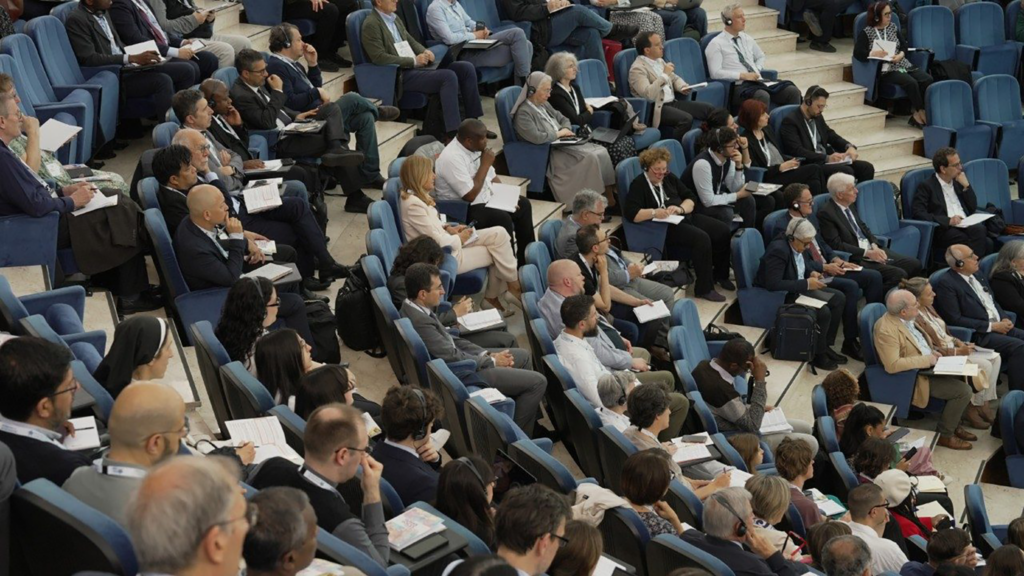
Pope Leo XIV’s message for World Communications Day, dedicated to the deeply human value of communication in the era of artificial intelligence, resonated widely far beyond the Church’s borders. This was evident in the presentations of 14 speakers from various countries during the conference „Custodire voci e volti umani” („To Protect Human Voices and Faces”), organized at the Urbaniana by the Dicastery for Communication in collaboration with the Dicastery for Culture and Education.
Journalists, lecturers, technology managers, and digital ethics experts from Europe, the United States, Latin America, and Africa grappled with the same question: How can the dignity of the person be preserved in an information and relational ecosystem increasingly shaped by algorithms?
Are algorithms the new “gatekeepers” of information?
The discussion was opened by Marijana Grbeša Zenzerović, a lecturer in political communication at the University of Zagreb, who described a radically changed media ecosystem: traditional media are losing relevance, while algorithms are becoming the new “gatekeepers” of information. While television still plays a role in some social groups, social media dominates among young people; the authority attributed to content creators and influencers is growing. The risk, she noted, lies in mass disinformation deepened by generative artificial intelligence, capable of creating credible images, videos, and synthetic identities, leading to a true “synthetic politics.”
When chatbots enter human relationships
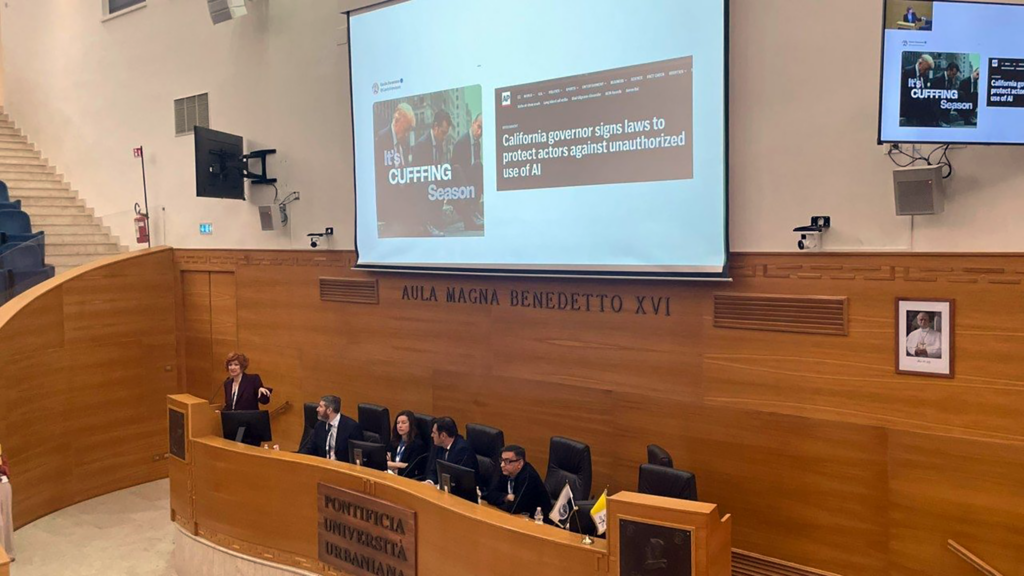
“The New York Times” journalist Kashmir Hill highlighted the impact of chatbots on personal lives. These tools can appear empathetic and encouraging, to the extent that they become symbolic confidants. However, it is precisely the design focused on user engagement that can make them dangerous, especially when they aim to satisfy the user rather than correct them. Hill cited the case of sixteen-year-old Adam Raine, who died after long conversations with a chatbot, emphasizing that the risk applies to anyone who entrusts these technologies with the need to be heard.
Innovation, truth, and responsibility in journalism
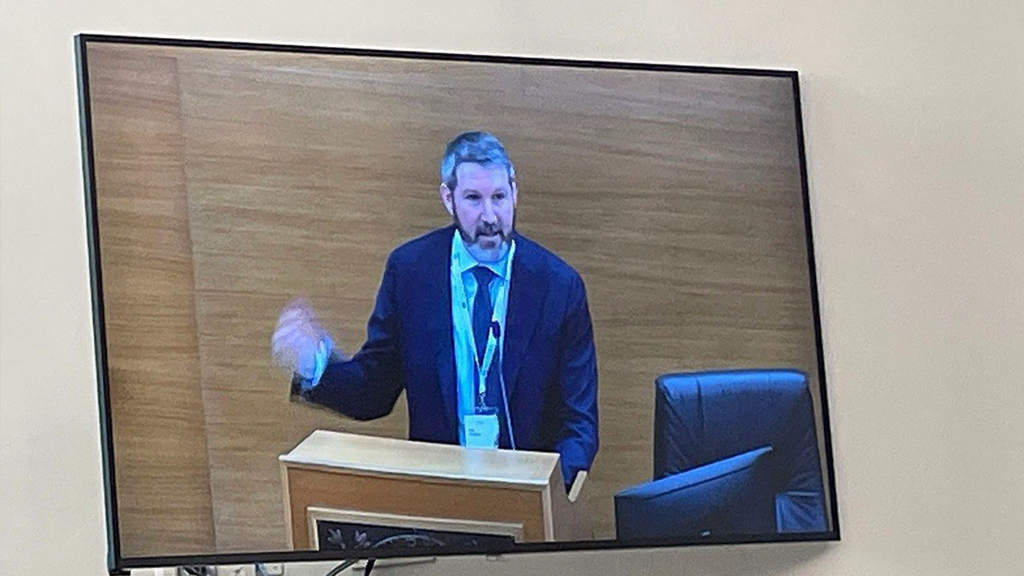
Vineet Khosla, CTO of “The Washington Post,” focused on opportunities; he discussed how artificial intelligence is being implemented in editorial processes: automating repetitive tasks, document retrieval, interactive tools for readers, and AI-generated audio content. The goal: to enhance, not replace, journalistic work. But under one condition: preserving truth as a distinguishing criterion and public trust as decisive capital.
Eli Pariser from “New_ Public” shared reflections on the quality of digital life. He noted that platforms promise connectivity but often cause loneliness because they are designed to maximize attention and revenue. Artificial intelligence can also become “parasitic,” aimed at addicting the user, or “prosocial,” if designed to foster authentic relationships and collective well-being.
Inequalities and digital colonialism
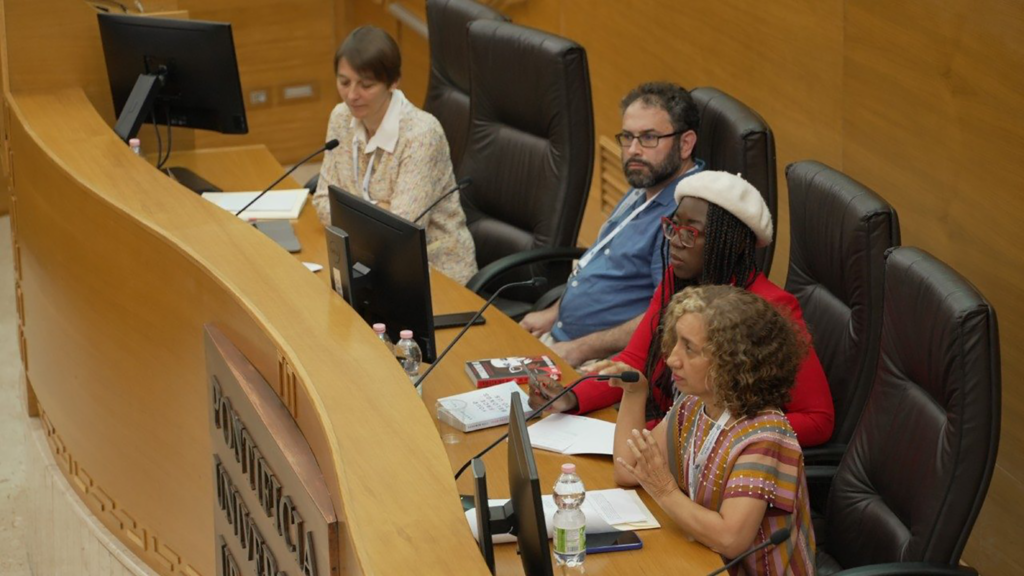
During the panel on inequalities, Paola Ricaurte Quijano, a Mexican scholar and expert in AI ethics, condemned the “extractive” nature of this technological model, which concentrates wealth and power by exploiting invisible labor, resources from the poorest countries, and even users’ data, fears, and desires. Algorithmic models, she said, threaten to perpetuate colonial and racist logic, erasing marginal cultures and languages.
The dark side of artificial intelligence: simulated empathy and discrimination
Benjamin Rosman from South Africa appreciated the surprising ability of language models to simulate empathy and human presence, to the extent that some young people use them as psychologists. However, precisely this credibility raises profound ethical questions, especially if tools designed to maximize engagement learn to exploit fear or outrage. According to Rosman, the Global South should not be a victim of these technologies but should contribute to shaping them.
Concluding the second morning session, Joy Buolamwini, founder of the “Algorithmic Justice League,” condemned the racial and gender biases encoded in facial recognition systems, which have already led to errors and unjust arrests. The activist and poet highlighted the risk of a society under constant surveillance, where artificial intelligence can erase identity, creativity, and even human life, especially in the context of autonomous weapons development. Her final appeal was unequivocal: international regulations, human oversight, and clearly defined rights are needed before the pace of innovation outstrips the ethical capacity to control it.