Salvatore Cernuzio, Wojciech Rogacin
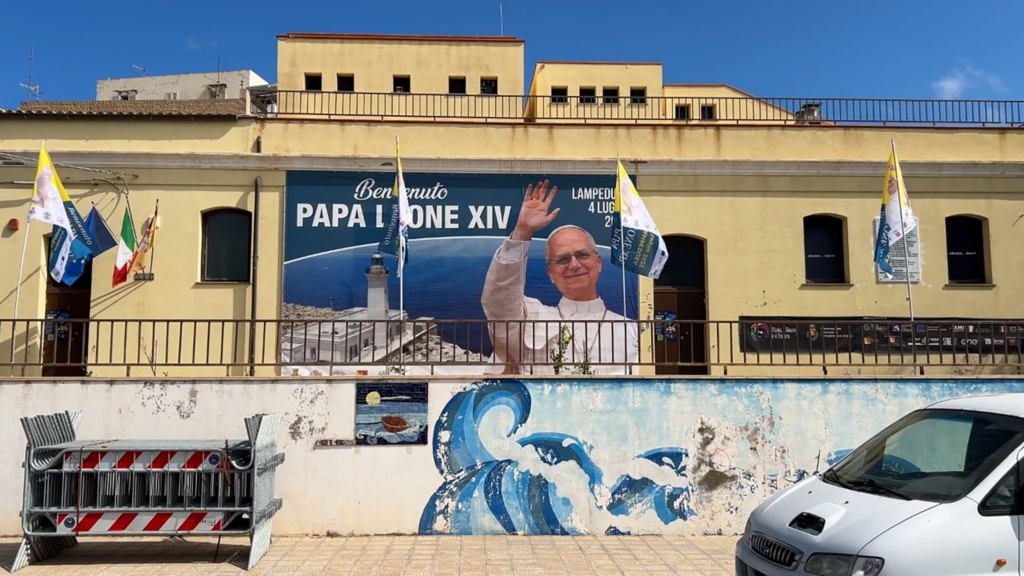
Before 8:00 AM on Saturday, the Pope will depart by plane from Rome to Lampedusa, an island off the coast of Italy, whose name has become a symbol of welcoming the wave of migrants arriving by boat from North Africa.
The main purpose of the papal journey is to celebrate the Eucharist. However, the Pope will begin his visit at the cemetery, where little Yusuf rests – a six-month-old boy who died in a migrant boat disaster.
At Yusuf’s Grave
Next to the unassuming tombstone is a photograph of the infant, a small angel figurine, and a dedication in English: “Why so early, my son? Mom and Dad will love you forever.”
Behind the photo is a card with drawings of a rainbow and a boat full of migrants. Above the photograph is the name “Yusuf Ali Kanne,” and below it, only one date – 2020.
Yusuf did not even live to see his first birthday. He died at just six months old in the waters off the coast of Libya, when the waves of the Mediterranean Sea proved stronger than the arms of his seventeen-year-old mother, who survived the dramatic journey from Guinea to Europe.
The mother and child were rescued from the sea by an Open Arms NGO vessel. The woman was admitted to one of the centers on Lampedusa, while her son was laid to rest in a walnut coffin, as there were no coffins for children on the island at that time.
The boy’s father experienced the funeral remotely – he followed the ceremony online, watching it from the other side of a computer screen.
The Scar of the Mediterranean
The story of little Yusuf has become a symbol of the migration tragedy that Lampedusa represents.
It is an incredibly beautiful island with its rugged cliffs and picturesque coves. There are no migrants visible on the streets – all are in hotspots and reception centers. Meanwhile, seafood restaurants and watermelon stalls are filled with tourists of all ages and from all over the world, dressed in swimsuits and flip-flops.
Lampedusa is both a scar of the Mediterranean and an altar of hospitality and solidarity for approximately 400,000 migrants – that many have been registered on the island in the last fifteen years, according to UNICEF data. Another 26,000 people failed to reach it – swallowed by the waters of the Mediterranean Sea.
Latest Landings – July 1
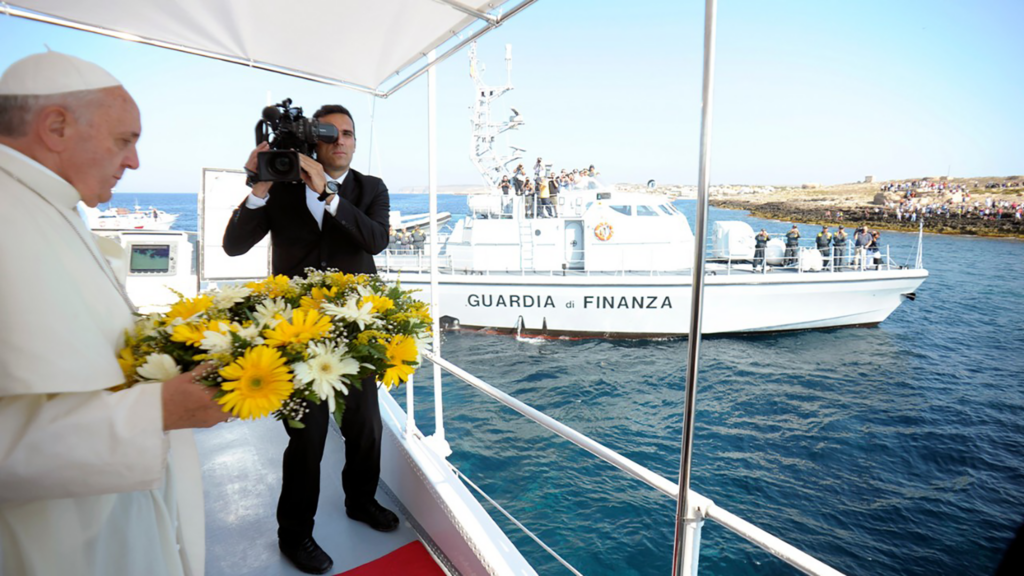
Leo XIV will then proceed to the famous Favarolo Pier. This is the first point migrants reach, convinced they have already arrived in the heart of Europe, unaware that they are still in the middle of the Mediterranean, on an island geographically closer to Tunisia than to mainland Italy.
The last migrants were received here on July 1 – they arrived after a rescue operation carried out by the CP 324 patrol unit of the Italian Coast Guard. They were Egyptians and Somalis. They had set off the previous afternoon from Libya on a nine-meter boat, dreaming of reaching Germany and the Netherlands.
After being consecrated by Leo XIV with a commemorative plaque placed on a limestone stele, Favarolo Pier will be named “Pope Francis Pier” from July 4.
50,000 Faithful Expected at Holy Mass
The Pope will then go to the local stadium – which resembles more of a golf course – to begin celebrating Holy Mass at 10:30 AM. Up to 50,000 people are expected, although many tourists sunbathing on the beaches until yesterday did not know what event would take place here on Saturday, July 4.
The Holy Mass will be preceded by a meeting and greeting addressed to the mayor and residents of the island.
At the Gate of Europe
Earlier, the Holy Father will stop at the monument known as the Gate of Europe. Made of materials resistant to wind, saltwater, and the passage of time, it reflects the enduring memory of human tragedies.
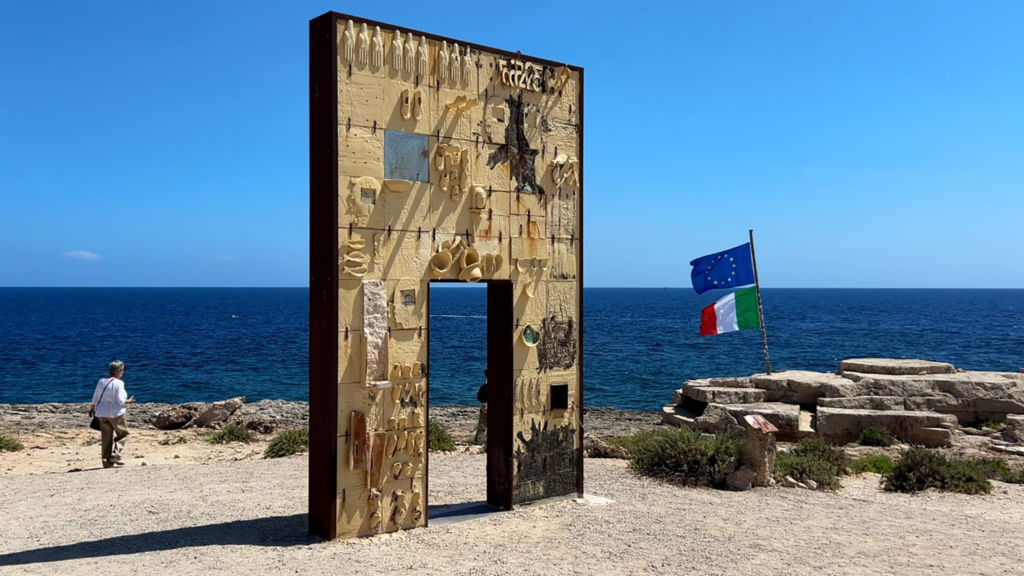
Leo XIV will remain in silence for a few moments, looking from the southernmost point of the island at the Mediterranean Sea, which for millennia has been a meeting place of civilizations, and in recent decades has also become a space of pain and hope.
In the early afternoon, the Pope will return to the Vatican.