Fr. Prof. Dariusz Kowalczyk SJ
Universities facing the challenge of artificial intelligence
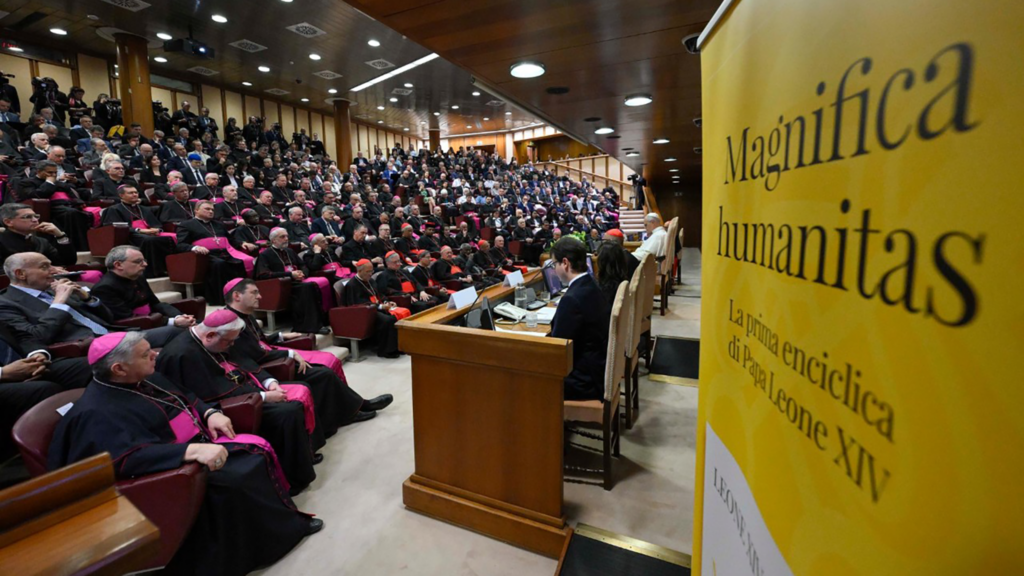
When Leo XIV, in the encyclical Magnifica humanitas, refers to the image of Nehemiah rebuilding the walls of Jerusalem, one might think of higher education institutions – places entrusted with a particular “section of the wall” in the era of artificial intelligence. The Pope directly indicates that “at the university level” there is “a great challenge of knowledge integration” (no. 137), meaning the combining of different fields of knowledge and methods of verifying facts.
AI as an opportunity for science
The encyclical argues that technology “from the very beginning has been inscribed in our history as a profoundly human activity” (no. 4). Universities, including ecclesiastical ones, should interpret this sentence as an invitation to creatively use AI in scientific research, in the analysis of source texts, and in teaching. AI tools can accelerate access to knowledge, facilitate interdisciplinary work, and broaden access to scientific resources, including for academic communities that have hitherto been economically marginalized. AI can profoundly change education, but we should not be afraid of it.
“Hygiene of attention” and the defense of humanity
At the same time, the encyclical warns against reducing thinking to an algorithm. Quoting Plato, Leo XIV reminds us that “man learns the deepest things only after a long time and many efforts” (no. 140). The task of universities is therefore to protect the slowness of thought’s maturation. And this is not about some conservative reflex, but about the defense of humanity. “Hygiene of attention”: a rhythm of life that includes silence, in-depth study, reading, and thoughtful exchange of ideas (no. 146), as well as “fasting from AI” (no. 140), is today an element of full academic education, not just of a seminary.
The Polish editorial team of Vatican Radio – Vatican News has published a free audiobook of Leo XIV’s encyclical “Magnifica humanitas”. The “Introduction” is available on the Vatican News portal…
Contribution of theology and philosophy
For ecclesiastical universities, the encyclical opens up an important space: theology, philosophy, and social sciences can jointly develop ethical criteria for evaluating AI systems, criteria based on the dignity of the person, the common good, and solidarity. This is a contribution that a purely technical environment cannot develop on its own.
Tower of Babel or walls of Jerusalem?
The encyclical Magnifica humanitas does not provide ready answers. However, it asks: What kind of builder – of the Tower of Babel or the walls of Jerusalem – do you want to be? This question is addressed to every rector, every lecturer, every student.