
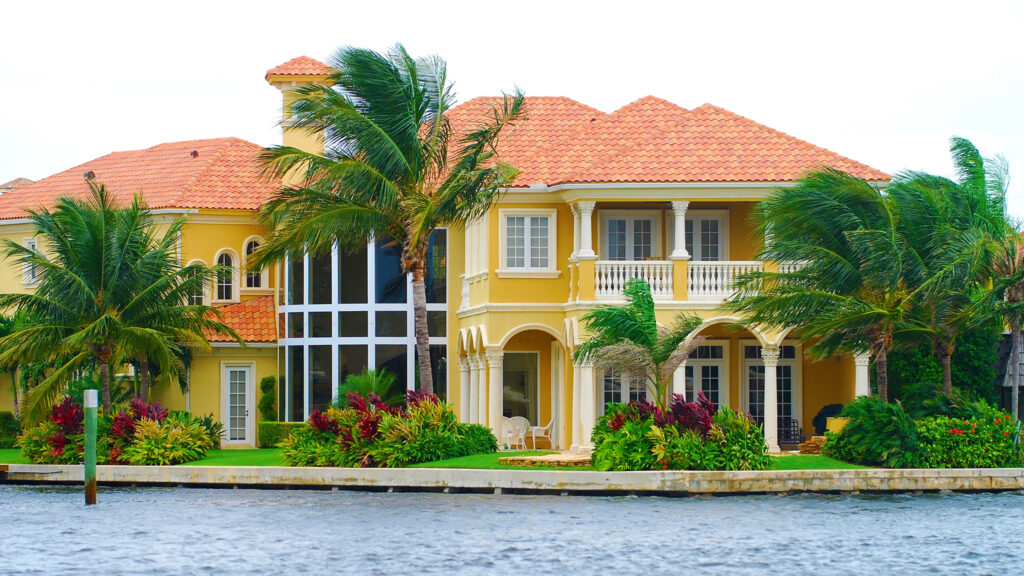
For some, it’s a retirement destination; for others, a second home; and for some investors, a way to diversify assets in dollars. But Florida 2026 is not just about beaches and sunshine: it also means high insurance costs, HOA fees, hurricane risks, local short-term rental restrictions, and a market that has become very expensive after the pandemic. More and more Poles from Chicago, New York, and Poland are buying apartments and houses here. Florida 2026 is a state within a state – with its own pace, its own rules, and a Polish accent that wasn’t there fifty years ago.
Why Florida
The first wave of Florida’s Polish community settled here in the 1950s and 1960s. These were mainly political refugees and their children, for whom Miami was a gateway to the United States after Cuba and Latin America. The second wave came in the 1970s and 1980s – Poles from Solidarity, professionals with engineering and medical degrees who found work in growing Miami and Tampa. The third wave was in the 2000s – Poles from northern cities like Chicago, Detroit, and New York, who came for retirement. The fourth wave is happening today. These are Poles from Poland who treat Florida as part of their investment portfolio diversification.
The reason is simple. A warm climate for most of the year is not just a tourist slogan – it’s a climatic argument for people spending the last decades of their lives. Additionally, Florida does not levy a state personal income tax, which can be significant for individuals who are moving their tax residency from New York, New Jersey, Illinois, or California. On top of that, there’s the Homestead Exemption – a property tax relief available to qualifying owners who use the home as their primary, permanent residence in Florida. Plus two key factors not found on the first page of advertising brochures: proximity to Poland across the Atlantic (LOT launched a direct Warsaw–Miami connection on June 1, 2019; the current schedule should be checked seasonally) and proximity to the Caribbean for vacations. It must also be honestly added that in many locations, prices are still lower than in the most expensive parts of New York, although, after the pandemic, South Florida has become much more expensive – in the Miami metro area, home prices have risen by over 60% since February 2020.
Map of Polish Florida
The Polish community in Florida is not homogeneous. It consists of several distinct geographical clusters, each with its own character and institutions.
Miami and Miami-Dade County are one of the most recognizable Polish communities in South Florida. The center of Polish life is the Sunny Isles Beach area, where many Poles live in oceanfront high-rises and run small businesses. This is a district local media call “Little Moscow” because of its Russian signs, but Poles are also strongly represented here. In the Sunny Isles Beach, Davie, Hollywood, and Pompano Beach areas, Catholic communities operate, where masses are celebrated in Polish. The American Institute of Polish Culture, founded in Miami in 1972 by Blanka Rosenstiel, is one of the oldest Polish cultural institutions in the state.
Pompano Beach – home to the Polish Catholic Mission of Our Lady of Częstochowa, one of the most important Polish parishes in South Florida. The Mission was founded in 1983, and its current church was consecrated in 1997. According to parish descriptions, it gathers about 1,500 faithful. Poles from Pompano Beach are mostly second-generation – engineers, nurses, small business owners who came from Chicago or New York in the 1990s.
Tampa, St. Petersburg, and Clearwater – the Polish center of West Florida. Clearwater is home to the Polish Center of John Paul II – one of the active Polish community institutions in the state, operating since 1995 and featuring its own concert hall and a regular program of cultural events. The organized Polish community of Tampa Bay gathers at the Polish Center for cyclical Saturday events, dinners, a Polish Saturday school for children, and concerts by invited Polish artists.
Orlando and Orange County – a family-oriented Polish community, less institutionally visible but numerous. In Orange County, you can find Polish delicatessens (Europol Polish Deli) and Polish restaurants. Part of the local Polish community is associated with the broader tourism and services sector that dominates the Orlando region’s economy around Disney World and Universal Studios.
Boca Raton and Palm Beach – an affluent Polish community. This is where Polish businessmen from Poland, doctors, and retired entrepreneurs from Chicago and New York are increasingly buying homes. The Boca Raton market includes both cheaper apartments and houses, as well as newer, larger residences and luxury developments where prices often reach several million dollars. The Polish clientele in this region is served, among others, by the married couple Małgorzata and Krzysztof Wójtowicz from The Keyes Company’s office in Wellington, who run the Polish-language portal DomyFL.com, offering listings in Palm Beach, Boca Raton, Fort Lauderdale, and Miami.
Cape Coral, Fort Myers, and Naples – Polish community from the southwest coast of Florida. A region less associated with Polish clusters than Miami, but since the 1990s, it has attracted Poles from Chicago and Poland seeking cheaper properties than on the East Coast. Cape Coral, known as the “Venice of Florida” with over 400 miles (about 640 kilometers) of waterways, is attractive to buyers of homes with water access and their own dock. Naples, in turn, is a quieter, more expensive version of Boca Raton, with luxurious residences on the Gulf of Mexico. The Polish clientele in this region is served, among others, by Vito Kostrzewski from Century 21 AllPoints Realty, a broker experienced in transactions in the Cape Coral, Fort Myers, and Naples markets.
Real Estate – What Poles Really Buy
According to local real estate offices serving the Polish market, Polish clients are looking for three types of properties in three different price ranges.
The first group is short-term rental apartments – one- or two-bedroom units near the beach. Cheaper studios and one-bedroom apartments can start from around two hundred to three hundred thousand dollars, but buildings with good locations, low fees, and real short-term rental potential are usually more expensive. The client buys such an apartment as an investment, rents it out via Airbnb or long-term, and uses it themselves for four to six weeks a year. The most popular locations are Hollywood, Miami Beach, Sunny Isles, Hallandale Beach, and Aventura. However, caution is advised: not every building or city allows Airbnb. Before purchasing for short-term rental, it is necessary to check local city regulations, HOA or condo association rules, minimum rental period, licenses, and local tourist taxes.
The second group is retirement homes – three to five bedrooms, prices from several hundred thousand dollars to over a million, depending on the city, age of the home, HOA fees, and distance from the ocean. Locations in Boca Raton, Pembroke Pines, Coral Springs, and Wellington. Buyers are usually Poles from the northern states who are coming for retirement or planning to come in five to ten years. They often sell a house in New Jersey or Long Island and buy a house twice as large in Florida for a fraction of that price.
The third group is luxury residences – prices from two million dollars upwards, locations in Boca Raton, Palm Beach, Naples, and Bal Harbor. These are mainly bought by Poles from Poland – business owners, stock market investors, doctors, and lawyers. Florida is an element of their portfolio diversification strategy: dollars instead of zlotys, sun instead of rain, a different rental market.
What to Know Before Buying
First rule: a Polish citizen can, in general, buy property in Florida without a green card or US tax residency. Poland does not fall under the specific restrictions of Florida’s 2023 law regarding so-called foreign countries of concern (China, Russia, Iran, North Korea, Cuba, Venezuela, Syria), especially regarding agricultural land and properties near critical infrastructure or military installations. A typical Polish citizen buying an apartment or house does not fall under this law. However, an ITIN (Individual Taxpayer Identification Number) may be required for reporting rental income, banking procedures, mortgage loans, and property settlements. The deed of ownership itself does not always require it, but before an investment purchase, it is worth consulting with an agent, lawyer, and tax advisor familiar with transactions involving foreign buyers to review the transaction structure.
Second rule: A mortgage for someone without a US credit history is more difficult, but it is possible. Banks cooperating with Polish clientele and private lending institutions offer so-called “foreign national mortgages” or “ITIN mortgages” – credit products for individuals without an SSN. These usually require a higher down payment (often around twenty-five to forty percent), additional cash reserves, and a slightly higher interest rate than a standard loan for a US resident.
Third rule: insurance. Florida is a state prone to hurricanes and floods, which means that annual homeowners insurance premiums often run into several thousand dollars; in coastal locations and those more exposed to hurricanes, they can be significantly higher. Flood insurance usually needs to be analyzed separately, as a standard homeowners policy typically does not cover flood damage.
Fourth rule: HOA and condo fees. Many Florida properties – especially apartments in high-rises – are subject to Homeowners Association or condo associations with monthly fees ranging from several hundred to over a thousand dollars. In older buildings, it is also necessary to check community reserves, special assessments (one-time surcharges for major renovations), and the cost of insuring the entire building, which has significantly increased after structural inspection regulations were introduced in recent years.
For Whom Florida 2026 Is Not a Good Idea
It must also be soberly stated: Florida is not for everyone. Property prices in Miami-Dade and Broward counties have risen by forty to sixty percent in the last five years. Home insurance has become so expensive that many people in the state are planning to sell and move further north. The summer climate from June to October is brutally hot, and the hurricane season is difficult for many older Poles to endure. In summer, even Floridians escape to North Carolina or New England.
For a Pole considering moving to Florida from Chicago or New York, the question of a social network is also important. In Greenpoint, you just need to walk down Manhattan Avenue to hear Polish within the first five minutes of your stroll. In Sunny Isles Beach, Polish speech is heard in the grocery store on Collins Avenue once every two weeks. This is a different type of Polish community – less visible, less institutional, but no less authentic.
The Caribbean from Florida – a Second Investment
More and more Polish clients of real estate agencies in Florida are asking not only about Florida but also about the Caribbean. This is a natural consequence: when you have a home in Boca Raton or Sunny Isles, a trip to the Bahamas, the Dominican Republic, Aruba, or Puerto Rico is an hour’s flight. For many Polish investors, a second Caribbean home becomes a logical complement to their Florida residence – cheaper than a second home in Miami, providing access to a different tourist market, sometimes offering tax benefits (Puerto Rico has its own attractive tax regimes for investors; the Bahamas do not levy income tax).
This is a topic for a separate article, which will appear in the “Poles in the South” series in the coming weeks. Along with analyses of specific cities – Miami Beach, Tampa Bay, Palm Beach, Orlando, Key West – and a practical guide to buying real estate in Florida for a Polish citizen. Because Florida 2026 is not just a vacation. It’s a financial plan. And increasingly, a Polish financial plan.
Editorial Staff, Voice of Polonia in the USA
Polish Real Estate Agencies in Florida – Directory Partners
Directory information / partners of poland.us and polishpages.com. The following contacts have been submitted as Polish-speaking customer service for the Florida real estate market.
Palm Beach, Boca Raton, Fort Lauderdale, Miami
Małgorzata and Krzysztof Wójtowicz — The Keyes Company
Buying • selling • property management
Assistance in finding the right investment, mortgage, and tenants for newly purchased property.
13920 Wellington Trace, #200, Wellington, FL 33414
Phone: 561-523-0360
E-mail: [email protected]
WWW: www.DomyFL.com (offers in Polish) | margaretwojtowicz.keyes.com
Free transportation from the PBI airport in West Palm Beach by prior arrangement.
Cape Coral, Fort Myers, Naples, and surrounding areas
Vito Kostrzewski — Century 21 AllPoints Realty
Single-family homes • vacant properties • investments • duplexes • vacant lots • bank-owned properties
Experienced real estate agent, providing professional support in buying, selling, and renting properties in the most beautiful locations of Southwest Florida.
Cell phone: 239-910-5400
Office: 239-415-5881
E-mail: [email protected]
WWW: www.vitofloridarealtor.com
We encourage Polish entrepreneurs in the real estate, tax advisory, mortgage, and relocation industries to contact the editorial office regarding inclusion in the polishpages.com directory and on poland.us.