Vatican News
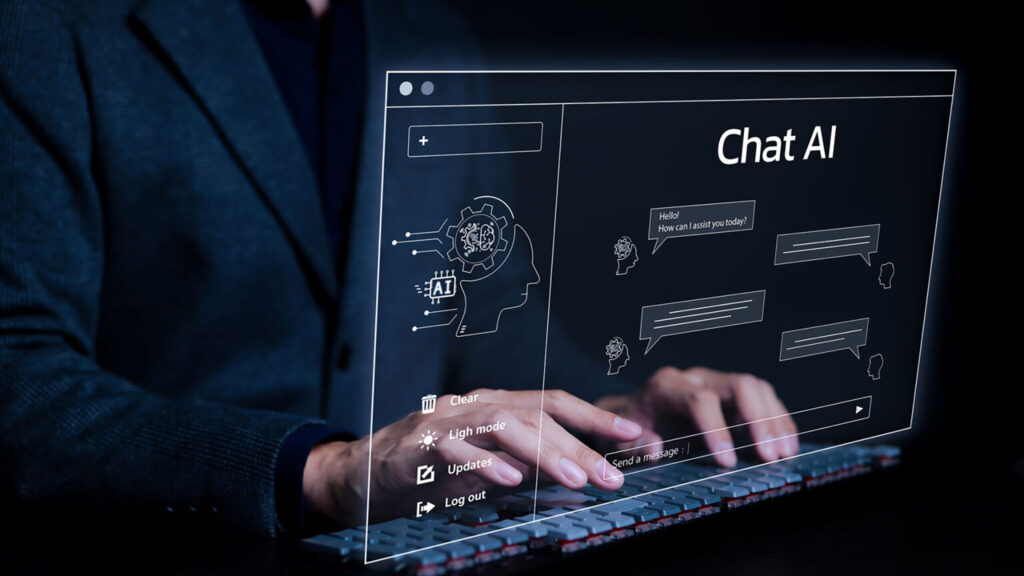
Artificial intelligence is “perhaps the greatest cultural revolution in the entire history of homo sapiens” and even constitutes an “anthropological transformation” because it changes the way humans relate to reality – emphasizes Professor Rasetti in an interview with Alessandro Gisotti.
AI Revolution and the Concept of Truth
Another key issue addressed in the interview is the concept of truth. According to Rasetti, “the biggest problem artificial intelligence currently faces is recognizing whether content is true or false.” AI presents reality but does not understand it: “Artificial intelligence presents, it does not understand, it does not even interpret – it only presents.” In this context, Professor Rasetti draws a comparison to Plato’s cave and the shadows of reality, deceptively taken for truth.
AI is a powerful tool that must be directed towards the good of humanity
One of the most critical elements, according to Professor Rasetti, is the rapid pace of AI development, which is much faster than the changes that occurred during the Industrial Revolution. As he says, this speed leads “to situations where our human reflexes do not allow us to have control over anything.”
A lecturer at the most prestigious universities in the world, from Oxford to Princeton, believes that we are currently at a crossroads of crucial importance for humanity. “We must transform AI from a practice into a science, primarily because only then will we be able to direct it. All the weaknesses of artificial intelligence can be reduced to ethics. We need people of good will who care about the future of the human race, not geopolitics, which – as we see now – is driven by egoism, domination, and indifference.”
AI is an incredibly powerful tool, based on “raw power,” meaning on increasing computational power, capable of performing “things we would do using reason, intelligence.” And at the same time, as Professor Rasetti emphasizes, like all tools, it can be used for both good and evil.
Address the issue of environmental balance before it’s too late
In the interview, the physicist devotes much attention to the urgent issue of environmental balance, noting that there is a risk that AI will “crash into the energy problem,” such as the enormous consumption of electricity and water, as seen in the example of Google’s data centers in Ireland and Microsoft’s investment in a former nuclear power plant on Three Mile Island.
Professor Rasetti emphasizes that to use data centers, “energy, water, an enormous amount of water is needed. These computers consume a large amount of water to cool the machines. Someone might say: ‘But they don’t throw it away.’ Yes, but they process it and then reintroduce it into the environment at a temperature 3 degrees higher than the initial one, and this has a dramatic impact on the environment.” Therefore, this aspect must be addressed immediately and with great determination.
Humans are more powerful than AI
Professor Rasetti concludes the conversation by emphasizing human superiority over machines: AI is not creative, does not understand the deep meaning of experiences, and cannot correct itself if it generates “hallucinations.” Despite all advances in computational power, humans therefore remain the only beings capable of understanding and making choices. Therefore – the expert concludes – despite the astonishing progress of machines using AI, “Each of us humans is much more powerful than machines.”