Dorota Abdelmoula-Viet – Vatican
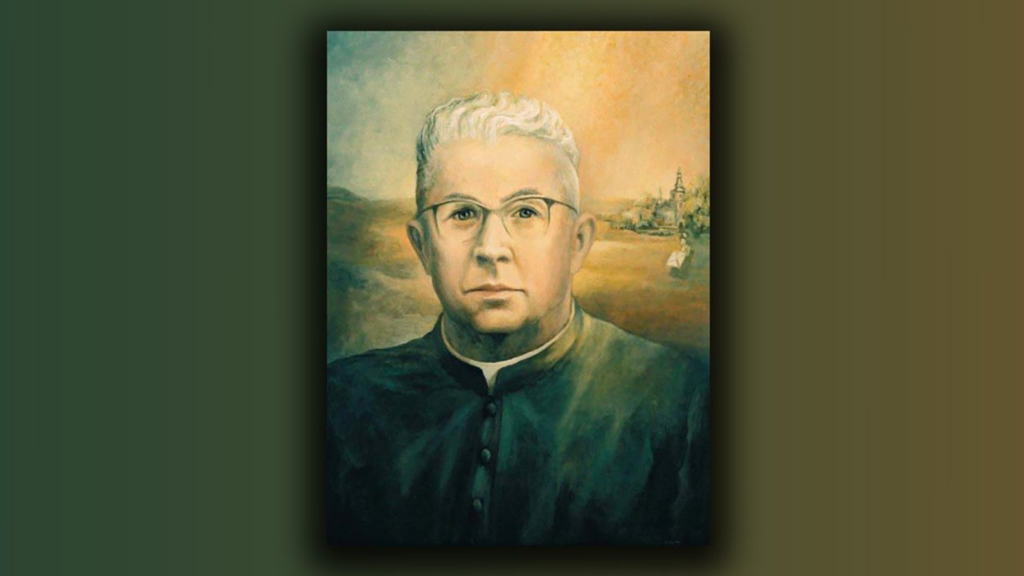
The life of Blessed Władysław Findysz shows the scale of the communists’ hatred toward the Church. Falsey accused of forcing people into religious practices, he was sentenced to two and a half years in prison. During his imprisonment, he was subjected to physical and psychological abuse, and the authorities prevented his scheduled surgery for esophageal cancer. Released in a state of extreme exhaustion, he died a few months later in the odor of sanctity. “Neither prison nor death separated him from Christ and the sheep entrusted to him,” Pope Francis wrote about him in a letter on the 50th anniversary of his martyrdom. “May Blessed Władysław be a call for all priests to fidelity, holiness, and total dedication in their daily ministry to Christ and their brothers. For all the faithful, may he be a sign and example of trust in God and a radical attachment to Christ and the values that the Gospel offers to all people.”
A Vocation That Matured in the Hardships of Childhood
Władysław Findysz was born in 1907 in Krościenku Niżne near Krosno, in southern Poland, under the then Austrian partition. His childhood was marked by the poverty prevailing in the region and personal tragedy: when he was barely five years old, he lost his mother.
Just a few years later, after the horrors of World War I, when Poland returned to the map of Europe as a sovereign state after 123 years of partitions, young Władek grew up in the shadow of the experiences of a war whose consequences also affected his native parts. In reborn Poland, in 1927, after passing his secondary school final exams, he chose the path of priesthood and entered the Major Theological Seminary in Przemyśl. There began a journey on which he was to heroically fulfill the words of St. Paul that nothing “will be able to separate us from the love of God.”
A Priest Amidst the Wounds and Ruins of War
After his priestly ordination and ministry in several parishes—including Borysław and Drohobycz in present-day Ukraine, as part of the then Diocese of Przemyśl lies in lands now beyond Poland’s eastern border—he arrived in Nowy Żmigród. He could not have guessed back then that the parish church of Saints Peter and Paul, of which he became the parish priest, would one day become a sanctuary dedicated to him.
The multicultural and multi-denominational region where he came to serve was a meeting place for various traditions and cultures. The young priest became renowned for his extraordinary warmth and care for all residents, as well as his strictness, especially toward himself. His parishioners bore fresh and deep wounds caused by World War II. The German authorities expelled all the town’s residents, along with Fr. Findysz, and Nowy Żmigród itself was almost completely destroyed. Upon his return on January 23, 1945, the priest engaged in rebuilding parish life and helping residents affected by the war. Soon he would have to face another threat: the repression of the communist authorities and the programmatic atheization of society.
“He Was Born to Be a Priest”
“In very difficult times, when the occupation prevailed in these lands,” recalled one of his friends, Mieczysław Brożyna, “he tried to give us hope, saying that all this would pass. And that times would come when people would look at life differently. He knew how to empathize with the lives of others, to comfort them. He helped the poor and the sick.” Fr. Findysz, at the risk of his life, helped persecuted people and those threatened with death, regardless of their nationality and religion, including Jews whom he helped escape to Hungary. “He wanted to lead the entire parish to God. He felt responsible for every person and every family. He helped himself and asked for help for those in need. I think he was born to be a priest.”
An Apostle of Unity in the Nation
Fr. Findysz was aware that the difficult post-war times could contribute to divisions in a nation heavily scarred by war and occupation. In addition to immediate help given to parishioners, he was an advocate of unity within the nation and a proclaimer of reliable hope in every aspect of life. He did this contrary to the assumptions of the post-war communist state, which aimed to remove God from social life and subjected the Catholic Church and its priests to repression.
He was liked by the youth and respected by his parishioners. He quickly became a thorn in the side of the communist authorities—already from 1946 he was under surveillance by the Security Office. In 1952, he was suspended by the school authorities from teaching catechism in the local high school. Afterward, the authorities twice refused him permission to stay in the border zone, preventing him from carrying out pastoral ministry in part of the parish. However, the period of the most severe persecution coincided with the work of the Second Vatican Council.
“Conciliar Act of Goodness”
When, during the conciliar work, John XXIII asked the faithful for spiritual support in the form of prayers and “works of goodness.” In Poland, on the initiative of Primate Stefan Wyszyński, the initiative of the “Conciliar Act of Goodness” was created—concrete works and prayers undertaken in Polish families and societies as support in implementing the conciliar resolutions of the moral renewal of the Church. “The spirit of forgiveness, reconciled, harmony, forgiving your wrongs, real or imagined, a fraternally extended hand, a smile, and a kindly eye for everyone are the best and most effective form of help for Christian unity,” the bishops wrote at the time. The Conciliar Acts of Goodness, which became an important element of the Polish pastoral program associated with the Council, were then a phenomenon on the scale of the universal Church.
Fr. Findysz also joined this work, encouraging his parishioners to take part. After a thyroid surgery, having voice problems, as a personal and discreet expression of concern for some parishioners, he sent them over a hundred letters. In them, he encouraged them, among other things, to care for their sacramental life, break with addictions, and achieve reconciliation and the end of family and neighborhood feuds. He reminded people living in non-sacramental relationships of the need to reconcile with God and regulate their situation in the Church, offering help in entering into a sacramental marriage. Some recipients felt offended by these appeals and filed a complaint with the communist authorities. These were then used as the basis for accusing Fr. Findysz of forcing citizens to practice religious rites and ceremonies, and consequently for initiating proceedings against him and staging a show trial.
Condemned for Faith
In 1963, he was arrested and placed in the then prison in the castle in Rzeszów. An eloquent sign of the hatred the authorities held toward him was the humiliation he experienced in prison, as well as physical and psychological abuse. He was accused, among other things, of breaking the constitution and consciences, and of forcing people to profess the Catholic faith, and in a show trial, he was sentenced to two and a half years in prison.
He served the first two months of his sentence in Rzeszów. On January 25, 1964, he was transferred to the Central Prison on Montelupich Street in Kraków. Although it was confirmed at the time that he was suffering from cancer and required urgent treatment, the prison and judicial authorities refused him proper treatment and prevented the previously planned surgery for esophageal cancer—despite the intervention of the diocesan authorities and a lawyer. As a result of this, as well as physical and psychological abuse, his health deteriorated rapidly. On February 29, 1964, he was conditionally released in a state of extreme exhaustion. He returned to Nowy Żmigród and died on August 21, 1964, in the odor of sanctity. On June 19, 2005, he was beatified in Warsaw.