Fr. Paweł Rytel-Andrianik, Karol Darmoros
Families’ Experience
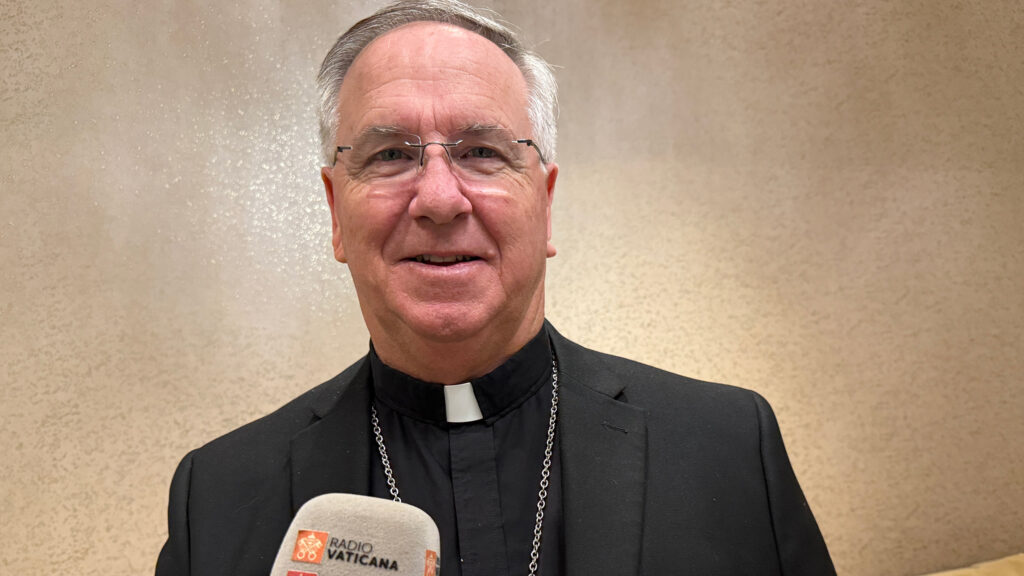
Bishop Dolan draws attention to the tragedy of families dealing with mental illness or the suicide of a loved one. “Families endure immense suffering when they lose a loved one to suicide or when they watch them struggle with mental health issues,” he said.
In such situations, it’s easy – as Bishop Dolan emphasized – to succumb to the temptation of simple solutions. “Sometimes, trying to find a quick fix seems like the answer,” he added. However, neither an exclusive call to return to religious practices nor limiting oneself to medical help is sufficient. “One might think: you just need to tell them to come back to church – but that won’t necessarily solve the problem. And sending someone to a psychiatrist is a good starting point, but that’s not enough either,” he noted.
Faith and Science
According to Bishop Dolan, mental health ministry must encompass the whole person. “In mental health ministry, we discover that everything is needed at once,” he emphasized. This means simultaneously inviting people into the Church community and encouraging them to seek professional help. “We need to invite these individuals into the space of the Church, and at the same time, encourage them to seek help from counselors, psychiatrists, or psychologists.”
At the same time, Bishop Dolan strongly rejects pitting faith against science. “We don’t want to compete with each other. We want to walk the same path together – faith and science,” he explained. “God has given us the wonderful gift of science; psychiatry and psychology – we believe – are a gift of the Holy Spirit.”
Accompanying on the Peripheries
Explaining the meaning of his episcopal coat of arms – “Abide in my love” – Bishop Dolan refers to the symbolism of the heart, which sends blood to the peripheries of the body. “Mental health ministry reaches the peripheries – to the wider Body of Christ and to the world,” he observed.
Its essence is not to “fix” a person, but to be present. “We don’t diagnose, we don’t prescribe medication, we don’t treat – but we accompany,” he explained. “It is primarily an act of love that flows from the Sacred Heart of Jesus.”
Three Key Actions
Bishop Dolan points to three specific priorities for mental health ministry in the Diocese of Phoenix. The first is education, especially training clergy in mental health first aid.
The second area is presence in particularly vulnerable environments, including prisons. The diocese is developing programs of accompaniment and peer support there. “There is a kind of peer accompaniment there,” the bishop explained.
The third step is systemic actions. In Maricopa County, Arizona, the number of beds for patients in mental health crisis has been doubled. “We increased their number from 350 to 600. It was a costly undertaking, but necessary,” he noted.
Formation and Hope
Mental health ministry also includes the seminary. “We want future priests to know that mental health is not something to be avoided, but something to be embraced,” Bishop Dolan emphasized. The goal is a deeper self-knowledge and growth as beloved children of God.