
Valerio Palombaro – Vatican City
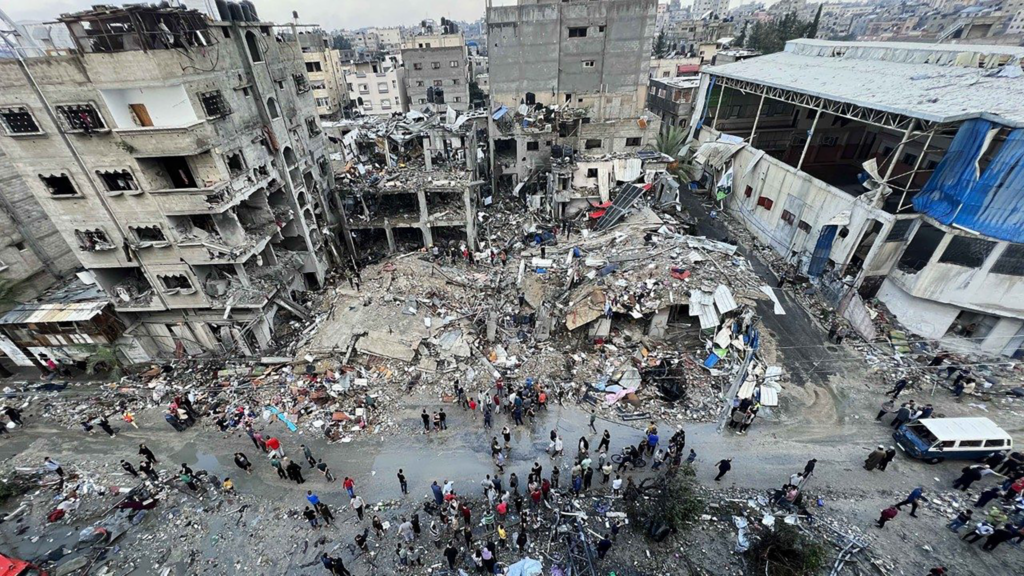
On the rooftop of a building overlooking devastated Gaza, amidst the rubble of the Tel al Hawa neighborhood, 49-year-old Palestinian beekeeper Ibrahim al Dabba tends to his apiary every day along with his seven children.
The Beekeepers of Gaza
The war has dealt a severe blow to the activities of the head of the Gaza beekeepers’ cooperative, forcing him to resume his work on a rooftop in the city amidst concrete, dust, and rusted rebars. The working conditions are certainly not optimal, as he admits in interviews with international press agencies: “Bees need trees; we are raising bees among the rubble.” Before the outbreak of hostilities, the cooperative managed over 40,000 hives and brought together 450 beekeepers, with about a thousand families making a living from this activity.
“Displaced” Hives
Out of the 400 hives that Ibrahim owned in the agricultural lands east of Gaza City, he managed to rescue 35. These “evacuated” hives, cared for by a displaced family in Gaza, once again bear witness to the terrible conditions in which—ten months after the fragile ceasefire of October 2025—about 90 percent of the residents of the Gaza Strip continue to live.
Today, the apiary produces only a fraction of the honey it did before the war; “they should live safely in a proper agricultural area, but today they suffer just like us,” the Palestinian beekeeper points out in an interview with AFP.
Yet bees also know how to coexist and adapt: “Now they fly in and out, feeling right at home,” Ibrahim recounts, hoping for better times marked by peace and security. Reconstruction remains a distant dream, and according to data from the United Nations Satellite Centre (UNOSAT), more than 80 percent of buildings are damaged.
Hope for the Revival of Beekeeping
Amidst the numerous threats lurking in the ruins of Gaza, and despite the lack of proper equipment for work, the al Dabba family does not lose hope. They point to data indicating a slight revival in the sector. Beekeeping in Gaza, which was largely conducted in forested border areas now controlled by the military, came almost to a complete halt with the outbreak of the war.
Currently, the number of hives stands at 3,000, which is 2,500 more than the minimum of just 500 at the beginning of the conflict, and about 100 beekeepers have returned to production. This is a small sign of hope that goes beyond mere numbers and honey production. It is daily proof of perseverance and love for one’s work amidst the devastation of war. “We hope,” Ibrahim concludes, “that goodness and the opportunity to live in peace and security will come, just as in other countries.”