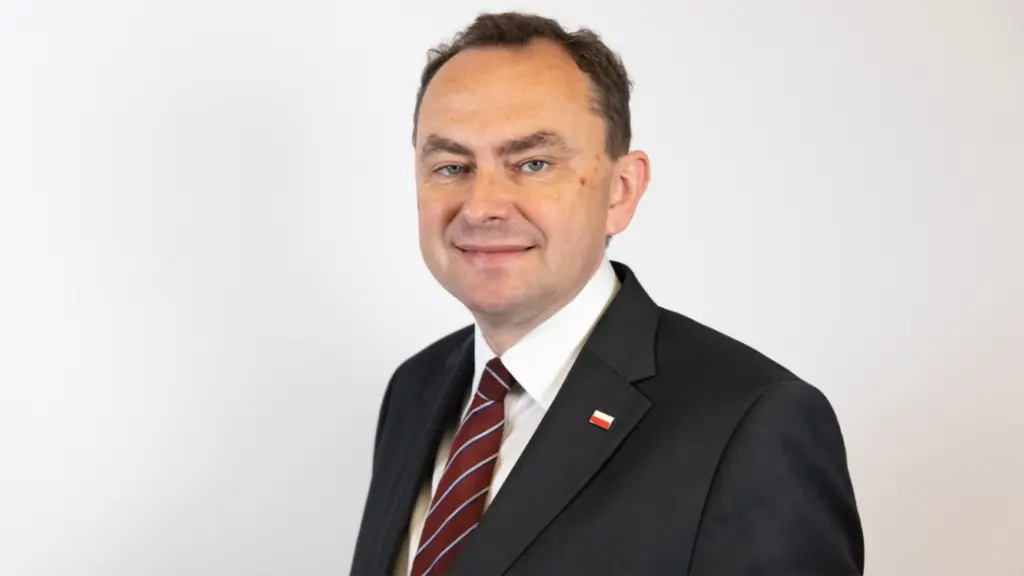
Vatican News / Karol Darmoros, Wojciech Rogacin, Fr. Paweł Rytel-Andrianik
White smoke forever in memory
Although his mission spanned two pontificates, Ambassador Kwiatkowski considers the moment of Leo XIV’s election to be the most exceptional event. He recalls that when the white smoke appeared over the Sistine Chapel, he headed toward the Vatican.
“It was incredible, because people were heading toward the Vatican from virtually all sides of Rome. Some were walking, others were running. I remember religious sisters: one in a wheelchair, the others pushing the chair, and she trying to stay seated on it… Streets closing, bridges closing, thousands of people going to hear who the next Successor of Saint Peter will be,” he recalls.
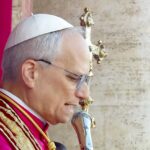
The uncertainty was also special: the crowd headed to St. Peter’s Square without knowing who would appear on the Basilica’s balcony. The ambassador admits that due to closed streets, he feared he wouldn’t make it on time. Ultimately, he was in the square when Cardinal Dominique Mamberti announced the election of Leo XIV.
Dialogue that matters
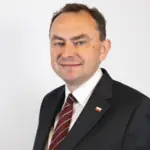
Summarizing his mission as Poland’s Ambassador to the Holy See, Adam Kwiatkowski highlights first and foremost the importance of Poland’s relations with the Vatican. He considers invigorating the dialogue between the Polish authorities and the Holy See to be one of his most significant achievements.
He points out, among other things, the visits of the Polish presidents—first Andrzej Duda and subsequently Karol Nawrocki—as well as contacts at the governmental and ministerial levels. As he notes, he was keen to convince others that dialogue with the Holy See is necessary and can yield concrete fruits.
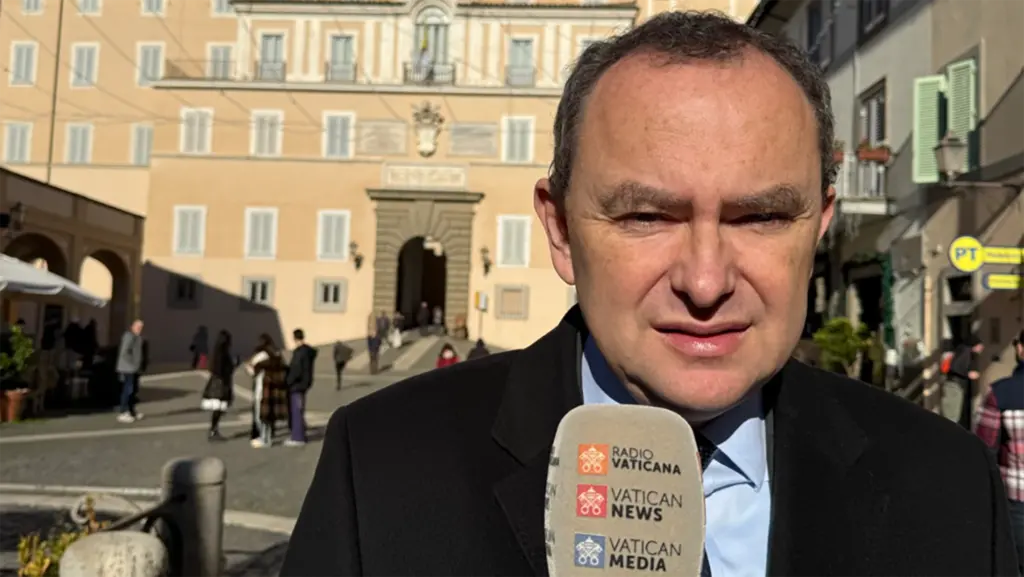
Kwiatkowski draws attention to the special character of the Holy See: although the Vatican is the smallest state in the world, it possesses an extraordinarily developed diplomatic network. In his opinion, its international significance was particularly clearly visible after the death of Francis, during the conclave, and at the beginning of the pontificate of Leo XIV.
“This shows that this small state is strong for some reason and that for some reason it is worth coming here as well as having your dynamically operating representation,” he says. As he adds, the role of the embassy is to conduct dialogue, observe the policy of the Holy See, respond to challenges, and implement joint projects.
Polish traces remain
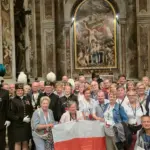
The ambassador devotes a lot of space to initiatives that will remain in the Vatican forever. Among them, he mentions Polish-language audio guides in the Vatican Museums, the Basilica of St. Mary Major, and Castel Gandolfo. They were created—as he says—thanks to the engagement of the embassy and through the use of funds from the Ministry of Foreign Affairs.
“Not only are we providing our compatriots from Poland and around the world with the opportunity to tour these places in Polish, but at the same time we are promoting Poland, because these guides are marked everywhere with the inscription ‘Poland, Polonia, polski’ and feature the white-and-red flag,” he emphasizes.
In the Vatican Gardens, amidst Marian mosaics from around the world, the first Polish image was unveiled: Our Lady of Gietrzwałd. This mosaic was blessed by Cardinal Pietro Parolin, the “Vatican prime minister,” during the ceremony inaugurating the 150th-anniversary celebrations of the apparitions in Gietrzwałd. Near the place where the mosaic is located grows an apple tree, also planted by him, in memory of the blessed Ulma family from Markowa.
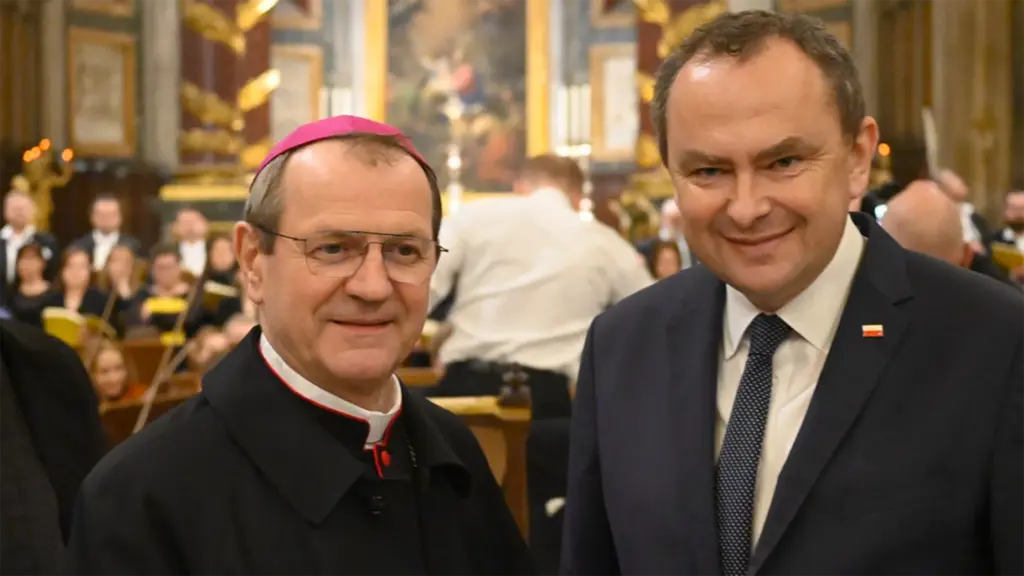
Ambassador Kwiatkowski also recalls major musical events organized in the Basilica of St. Mary Major: a concert by Mazowsze, the Vatican premiere of Krzysztof Penderecki’s “Credo” performed by the Kraków Philharmonic, and Mozart’s “Requiem” by the Warsaw Chamber Opera.
“These events, commemorating important events and anniversaries for Poland, filled the basilica. There were so many interested people that we had to turn some away. A great musical feast and at the same time a great promotion of Poland,” the ambassador summarizes.
Poland and Ukraine
One of Kwiatkowski’s first projects upon arriving in Rome was a study trip for Vatican journalists to Poland and Ukraine. The stay, organized jointly with the Embassy of Ukraine, allowed media representatives to meet Ukrainian refugees in Poland, learn about the scale of assistance provided to them, and then travel to Ukraine for a few days.
“On the one hand, they could see the scale of this evil that the Ukrainian nation is experiencing from the Russian aggressor, but on the other hand, they could also see what Poland and the Polish Church are doing for our neighbors from Ukraine,” the ambassador says.
“It is completely different to talk about something you watch on television. And it is completely different to talk about something you can touch, see, and experience,” he points out.
In cooperation with the Embassy of Ukraine and the Press Club Poland, the Polish Embassy organized the exhibition “Eyes of War,” presented on the grounds of the Papal Basilica of Saint Paul Outside the Walls. Also jointly with the Ukrainian embassy, the Embassy of the Republic of Poland organized film screenings, which always met with great interest from the Vatican community.
The invitation of Leo XIV
One of the important and current topics today is the possibility of a pilgrimage by Leo XIV to Poland. Kwiatkowski recalls that the invitation was extended to the Pope by President Andrzej Duda and subsequently sustained by President Karol Nawrocki. On behalf of the Church in Poland, the Pope was also invited by the Chairman of the Polish Episcopal Conference, Archbishop Tadeusz Wojda.
“From the formal side, all necessary issues on our side have already been fulfilled,” the ambassador says. As he adds, the decision currently lies with the Pope himself and the Holy See. There also remains a series of necessary arrangements concerning the course of the visit and preparations for it.
At this stage, Kwiatkowski says that the first possible date for the pilgrimage is 2028. He emphasizes that for many Poles, the visit of Leo XIV would be the most important event they are waiting for.
The Vatican from the inside
Concluding his four-year mission, the ambassador also speaks about the experience of getting to know the Vatican structure from the inside. “I managed to understand a significant part of how the Vatican functions,” he assesses.
He stipulates that it is a structure much more complicated than it might seem from the outside. The key is understanding it and building personal relationships with dignitaries representing the Holy See.
Adam Kwiatkowski considers the permanent presence of representatives of the Secretariat of State of the Holy See at events organized by the embassy to be an important sign of good bilateral relations and the Vatican’s attitude toward Poland. He also mentions, among other things, the New Year’s meetings of Poles working in Vatican institutions, which always gather at least 300 people.
“I wanted there to be a moment in the year when absolutely all Poles are invited, regardless of whether someone is a cardinal, bishop, monsignor, superior general, mother general, or an ordinary brother, religious sister, or lay employee,” he says.
John Paul II every Thursday
A characteristic element of the ambassador’s Roman mission was his presence at Thursday Holy Masses at the tomb of St. John Paul II in St. Peter’s Basilica. Kwiatkowski says that he came there “out of a need of the heart, from a deep conviction.”
“This is the place where the greatest Pole rests, to whom we should be grateful for everything he did for Poland,” he says. He adds that other diplomats reminded him that John Paul II did not belong exclusively to Poles.
“When I said ‘our Pope,’ they reminded me that I must not say that, because he was also their Pope, who accomplished important things for their part of the world.”
For Kwiatkowski, Thursday prayer at the tomb of the Polish Pope and meetings with compatriots also had a personal dimension. “This is a place where, purely on a human level, a person can recharge their batteries, calm down, and think about solving various problems,” he points out.
“With my head held high”
Kwiatkowski’s four-year mission was thus marked both by events of significance for the entire Church—the death of Benedict XVI, the Jubilee Year, the death of Pope Francis, the conclave, and the beginning of the pontificate of Leo XIV—and by daily diplomatic work. During this complex and historic time, the most important priorities of his mission were carried out: developing political dialogue with the Holy See, strengthening Poland’s visibility in the Vatican, reminding people of Polish identity and history, and building cooperation around the priorities of Polish international policy. Support for Ukraine has also been important from the beginning.
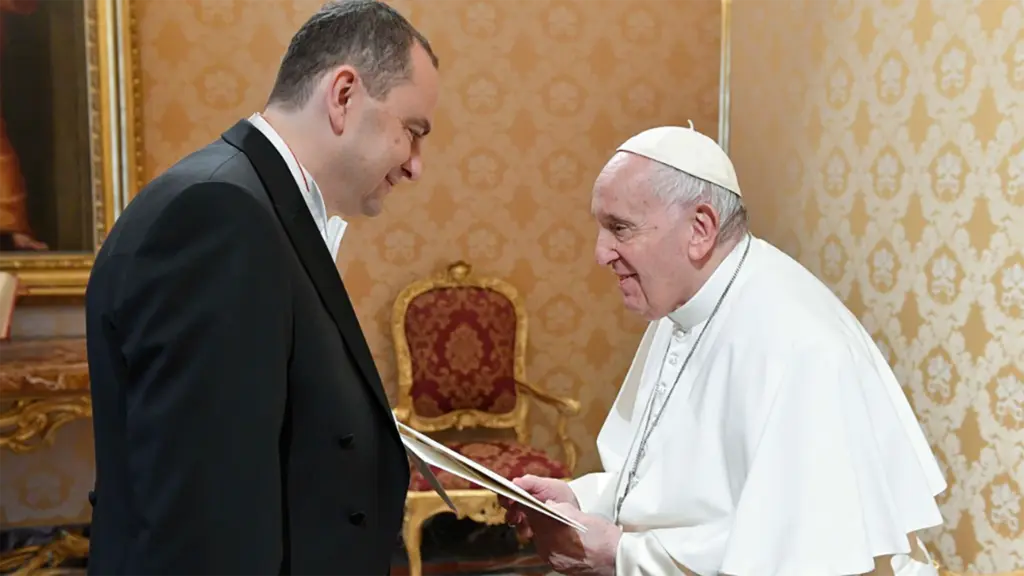
Audio guides, initiatives in the Vatican Gardens, cultural and historical events, and meetings integrating Poles associated with the institutions of the Holy See are the fruits that will remain after this mission.
“I am leaving here with my head held high. I am convinced that in this exceptional time when I had the honor of representing the Republic of Poland here, we managed to achieve a great deal,” he summarizes.