This report was first published on May 7, 2026, ahead of the papal visit. Read Pope Leo XIV’s May 8 homily in Pompeii.
Fr. Łukasz Bankowski – Vatican
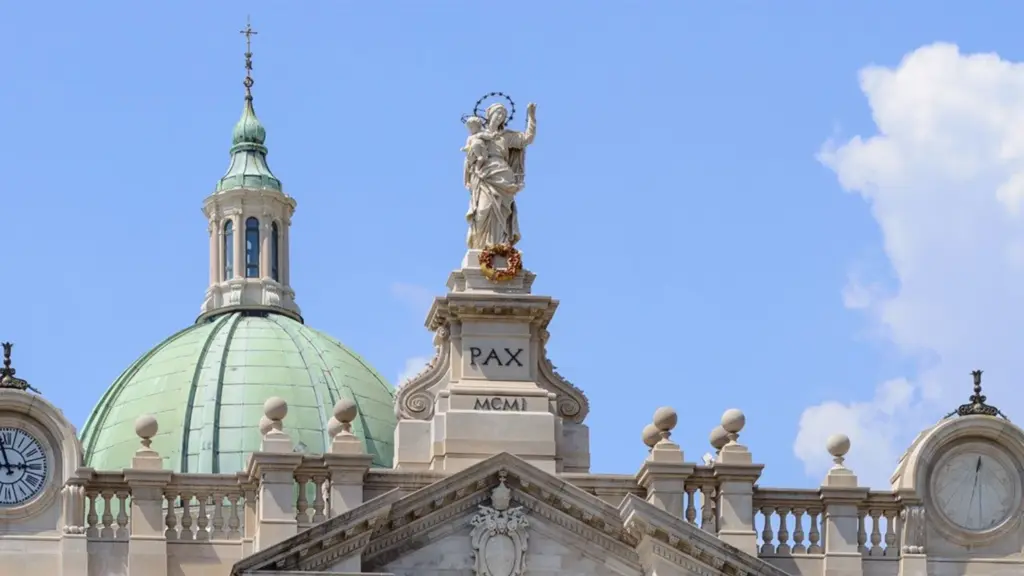
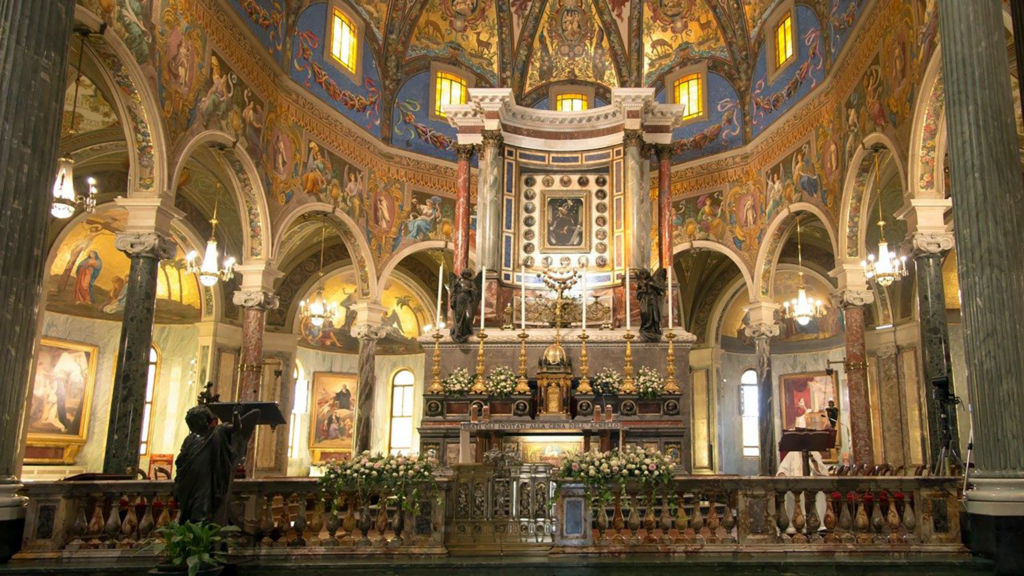
It began with one man’s crisis of faith and an old, damaged painting. Today Pompeii is home to one of the world’s most important Marian shrines, which draws millions of pilgrims each year, including popes. Its history shows how praying the rosary can change individual lives and the course of events. This was why, as Vatican News reported, Leo XIV planned to go there on the first anniversary of his election as pope.
From a crisis of faith to sainthood
The origins of the shrine in Pompeii are closely tied to Bartolo Longo. His life was hardly an uninterrupted story of piety. As a young man he moved away from the faith and experienced a profound spiritual crisis, joining a Satanist group in Vienna. He gradually returned to God through encounters with people of faith and by discovering the power of the rosary. It was then that he heard inwardly the words that would guide his life: “Whoever spreads devotion to the rosary will be saved.” With that conviction he came to the impoverished valley of Pompeii, where he encountered poverty and religious indifference.
The turning point came in 1875, when a painting of Our Lady of the Rosary was brought to the town. It was in poor condition and had little artistic distinction, yet it quickly became the center of religious life in the area. People began to gather around it in prayer. What began there grew gradually and took on greater importance with each passing year.
From a small chapel to a papal shrine
Construction of the first church began in 1876. As the congregation grew, the church had to be enlarged, and the basilica was consecrated in 1891. The shrine’s growth coincided with the pontificate of Leo XIII, who was a strong advocate of praying the rosary. His support gave Pompeii a significance beyond the local area. The shrine became part of the wider life of the Church, and the devotions associated with it began to spread.
In the 20th century, popes began to visit Pompeii regularly, chiefly to pray. Pius X placed the shrine directly under the care of the Holy See. During the First World War, Benedict XV became the first pope to pray the Pompeii supplication publicly for peace. On April 23, 1965, Paul VI placed crowns on the revered image of Our Lady. In more recent years, St. John Paul II made pilgrimages to Pompeii in 1979 and 2003, Benedict XVI in 2008 and Francis in 2015.
The “Pope of Pompeii”
Leo XIV was due to go to Pompeii on the first anniversary of his election. The date carried particular significance. May 8, the date of his election, is also a day for the solemn recitation of the Supplica alla Madonna di Pompei. The beginning of his pontificate thus coincided with the annual prayer, and his ties to the shrine deepened on October 19, 2025, when he canonized its founder, Bartolo Longo.
See also the Polish audio guide at the Basilica of Saint Mary Major and Polish connections at St. Peter’s Basilica in Rome.
The Polish Pages directory lists Polish and Polish American cultural and community organizations in the United States.