
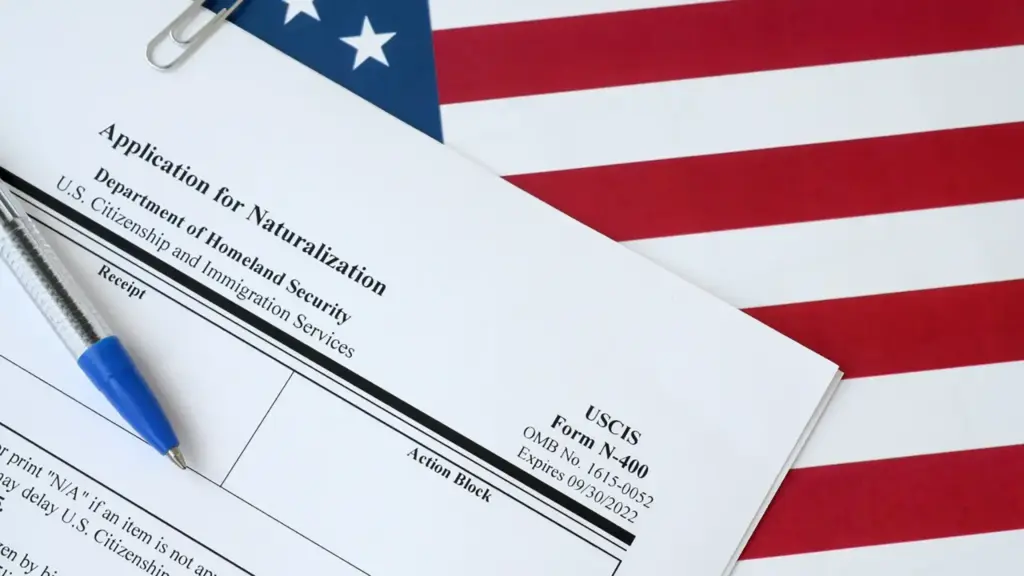
The change in forms is a direct consequence of the July DHS regulation, which replaces “duration of status” with rigid stay limits for F-1 students, J-1 exchange participants, and foreign media representatives (category I) — we wrote about it in our article The End of Duration of Status. Now comes the technical part: without the proper form edition, the application will not be accepted for processing at all, no matter how well prepared it is in terms of substance.
This is not a cosmetic change to a print form. An application submitted on the wrong edition of a form does not go into a “to be corrected” queue — it faces outright rejection, rather than just being sent back for completion. For a student or graduate, this means a waste of time and, in a worst-case scenario, the risk of a gap in the continuity of their legal status if the deadline for submitting the corrected application passes.
Which forms are changing
The new versions apply to two documents most frequently used by students and graduates from Poland:
- Form I-539 (Application to Extend/Change Nonimmigrant Status) — filed when you need to extend your stay or change status; the previous edition dated August 28, 2024, is being replaced by the September 15, 2026 edition.
- Form I-765 (Application for Employment Authorization) — used, among other things, for OPT applications, STEM OPT extensions, or work permits for spouses in J-2 status; the edition dated August 21, 2025, is being replaced by the September 15, 2026 edition.
Zero grace period — how it works in practice
USCIS has explicitly stipulated that there will be no grace period for completing applications on old forms. The rule is simple, but unforgiving for those who are late:
- An application submitted before September 15, 2026 must use the old edition (I-539 from 08.28.24, I-765 from 08.21.25). A new edition submitted before that date will also be rejected.
- An application submitted on or after September 15, 2026 must use the new edition dated 09.15.26. An old edition submitted after this date will be rejected.
The crucial factor is how USCIS counts the filing date: for applications sent by mail, the postmark date counts; for online applications, the online submission date counts. A form mailed before September 15 but delivered to USCIS only after that date should still be on the old edition — in practice, however, any delay in the mail increases the risk of error and rejection for purely formal, rather than substantive, reasons.
Who is affected and what to do right now
The change primarily affects F-1 students filing for an extension of stay or change of status, graduates applying for OPT or a STEM OPT extension, as well as J-1 exchange participants and their spouses in J-2 status applying for work authorization. Universities, exchange-sponsoring organizations, and legal representatives must also update their procedures.
For individuals whose application deadline falls around September 15, we advise not leaving it to the very last minute. If the application needs to be filed right before that date, it is better to send it with a safety margin of time to avoid a situation where postal delays cause the form to reach USCIS after the edition change — meaning on the wrong document. It is worth consulting with a Designated School Official (DSO) at your university or an immigration attorney, especially when the expiration date of your current status is near.
This material is for informational purposes only and does not constitute legal advice. Every case should be consulted individually with an immigration attorney or a university advisor (DSO/RO) before submitting an application.
Polish immigration attorneys from the Polish Pages directory can help students and graduates preparing an application for an extension of stay or work authorization to compile their documents.