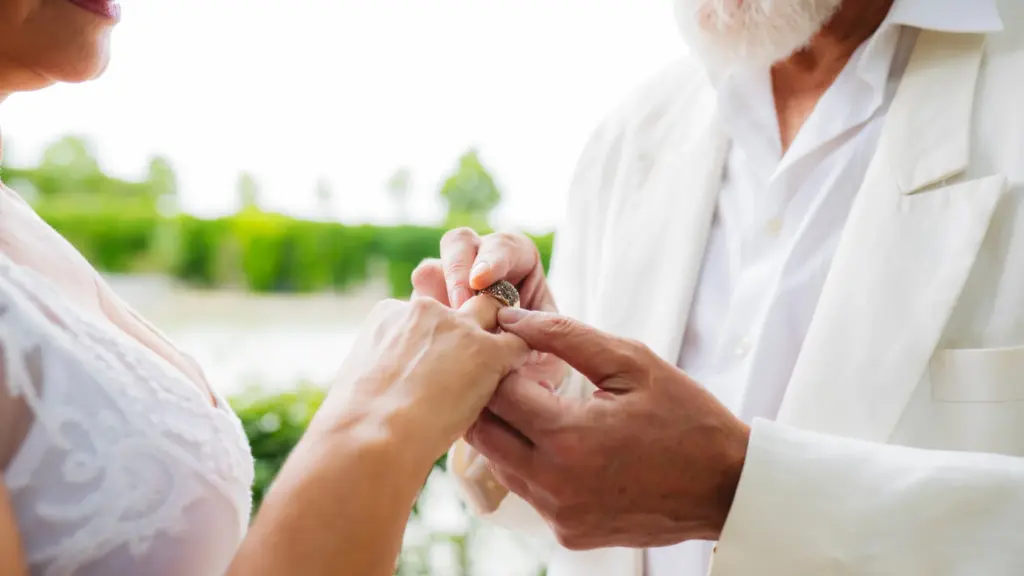
A question from Mr. Leon: “I receive Social Security retirement benefits and have both US and Polish citizenship. I live partly in the States and partly in Poland. I am planning to move to Poland permanently and marry a widow (Janina), who is now in her forties and is raising a 10-year-old child. Will my new family be entitled to any Social Security benefits? Janina was once in the US and worked illegally for 9 years under a purchased Social Security number. She was told she is not entitled to a retirement benefit. Will our marriage change anything in this matter?”
Social Security Spousal Benefits for a Wife
Before March 1, 2009, Mr. Leon’s new family in Poland would not have received any benefits from Social Security. This was changed by the Polish-American social security agreement (totalization agreement), which took effect on March 1, 2009. Social Security rules (unlike the rules of the Polish ZUS, Poland’s Social Insurance Institution) provide for family benefits not only for workers’ widows, but also for spouses whose own Social Security retirement benefit (based on their own work in the US) would be lower than the spousal benefit. Details are in the book “Ubezpieczenie społeczne Social Security” (“Social Security”).
To qualify for spousal benefits, the retiree’s spouse must reach retirement age (at least 62) and have been married for at least one year. Full retirement age is 67 for people born in 1960 or later (for those born in 1943–1954 it was 66). At full retirement age, the spousal benefit is about 50% of the worker’s retirement benefit, and the widow’s benefit – 100%. Benefits are limited when more people in the family collect them. All benefits (his and his family’s) based on one worker’s record cannot exceed 150 to 180 percent of his retirement benefit.
It is worth noting that it does not matter where the marriage takes place: in the States or in Poland. It is best to do it in the country where you intend to live permanently.
A Retirement Benefit After Working in the US Off the Books
Ms. Janina worked in the US for 9 years under an illegal Social Security number. Whether it is worth claiming a retirement benefit based on that work depends on whether it would be larger than the spousal benefit Janina will become entitled to through her marriage to Leon. If not, it is not worth the bother. After only 9 years of work, the retirement benefit would certainly be tiny.
But let’s say Janina’s own retirement benefit would be much larger than her spousal benefit. Then the road to recovering it is long and troublesome. Since Janina worked under an illegal SSN, she will receive a retirement benefit only if she becomes eligible for a legal number, and that will happen only after she legalizes her immigration status in the US. Then Janina should apply to Social Security for her own SS number and ask for the contributions to be transferred from the illegal number to her own SSN, which I explain in the book “Życie od nowa: jak uporządkować problemy w urzędach” (“Life Anew: How to Sort Out Problems with Government Offices”). After reaching retirement age, Janina will apply to the SSA for a totalized retirement benefit, that is, one based on combined periods of work in the States and in Poland. Details are in the book “Emerytura polska i amerykańska” (“Polish and American Pensions”).
In the US, a 25.5% tax is withheld from family benefits or from one’s own retirement benefit for US tax nonresidents (people without American citizenship and without a green card) living in Poland.
Social Security Benefits for a Child
Spousal benefits or recovering one’s own retirement benefit are not the only advantages of marrying an American retiree. The second benefit due is a benefit for a minor child. Children of a Social Security beneficiary (a retiree or a person receiving disability benefits) can receive Social Security child’s benefits (as a dependent or as a survivor) if they meet the following requirements:
- be unmarried;
- be under 18; or
- be a student aged 18–19 attending school full time (no higher than grade 12); or
- be 18 or older and disabled; the disability must have begun before age 22.
Social Security considers as children not only the retiree’s biological children, but also step-children (stepdaughters and stepsons) and adopted children.
Family Benefits for a Stepchild
Mr. Leon is fully insured and receives Social Security retirement benefits. For the Social Security Administration, Mr. Leon’s spouse’s child automatically becomes his step-child and is treated like his own child. Adoption is not necessary. The only condition is that the marriage took place after the child was born.
To receive dependent’s benefits, the child must have been the retiree’s (or disability beneficiary’s) stepchild for at least one year. This means the retiree must have been married to the child’s parent for a year or longer. A stepchild’s benefit can amount to 50% of the retirement (or disability) benefit. If other members of the retiree’s family receive benefits based on their relationship with him (a wife, other children), then family benefits are limited to a certain amount (family maximum).
Benefits After the Retiree’s Death
After the retiree’s death, the widow and minor child are entitled to survivors benefits. The widow will receive 100% of his retirement benefit, and the minor child – 75% (limits apply).
The child must have been a stepchild for at least 9 months, which means the stepfather/stepmother and the child’s biological parent must have been legally married for at least 9 months. The exception is when the retiree’s death was caused by an unexpected accident or military service. If the retiree officially adopted the child, the marriage may have lasted a shorter time.
It should also be remembered that a 25.5% nonresident tax will be withheld in the US from family benefits.
If the retiree was also receiving a Polish retirement or disability pension, then after his death his wife may be entitled to a ZUS survivor’s (widow’s) pension.
Updated October 2026.