Guglielmo Gallone – Vatican City
The Closeness of Leo XIV
“By becoming human, Jesus takes on our fragility, identifies with each of us: with those who have nothing left and have lost everything, like the inhabitants of Gaza; with those who are plagued by hunger and poverty, like the people of Yemen” – with these words, spoken in his Christmas Urbi et Orbi message, Pope Leo XIV directed the world’s gaze to one of the most cruel, yet most forgotten, wars in the world: the war in Yemen.
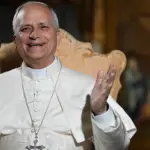
“Our community feels immense gratitude towards the Holy Father,” said Bishop Paolo Martinelli, Apostolic Vicar of Southern Arabia, which includes the United Arab Emirates, Oman, and Yemen.
“I was particularly moved by the gaze of faith he proposed,” added Bishop Martinelli, “connecting the incarnation of the Son of God with His identification with the suffering, with those who are victims of hunger, poverty, and destitution. In this way, Pope Leo XIV reminds everyone of the presence of Christ in the suffering. His words seem to recall a world that often forgets the reality of living in misery. God, however, does not forget: God is present in them. I must add that even during recent personal meetings with Pope Leo XIV, I saw him very committed to the affairs of Yemen, interested in understanding the general situation and the living conditions of our faithful.”
Escalation in Recent Days
In recent days, the escalation of the conflict has intensified. In the country located on the Red Sea and the Gulf of Aden, the front line with Houthi rebels has been breached again.
A few days ago, the Transitional Council, formed in 2017, presented a clear political project, faithful to its ideals: the proclamation of an independent state in southern Yemen, preceded by a two-year transitional period and a referendum.
Although the separatist idea once again gained the support of the United Arab Emirates, it was rejected by both Saudi Arabia and the Yemeni Presidential Council, which currently serves as the internationally recognized government.
Thus, Aidarous al-Zubaidi, an experienced politician and leader of the Southern Transitional Council, was accused of treason. Moreover, he was called to account for the killing of soldiers and officers and for sabotaging military infrastructure.
However, instead of going to Riyadh for institutional meetings, al-Zubaidi decided to change his route and chose a previously unknown location.
Saudi Arabia immediately accused the Emirates of secretly spiriting the separatist leader out of Yemen, but Abu Dhabi has not yet responded. In addition to the growing tension between the two neighbors on the Arabian Peninsula, this event also revealed new cracks within the secessionist movement: although on Friday the secretary of the Transitional Council announced the dissolution of the separatist group, this was quickly denied by a spokesman for the same group.
Humanitarian Drama
The political chaos between nationalists and separatists also spills over into society. On Wednesday, at least 20 people were killed in Yemen’s southwestern Ad Dali province in airstrikes carried out by the Saudi-led Arab coalition against Southern Transitional Council targets.
The next day, Yemen’s separatist authorities imposed a night curfew in their southern stronghold – Aden (the country’s former capital) – due to growing fears of clashes with Saudi-backed forces.
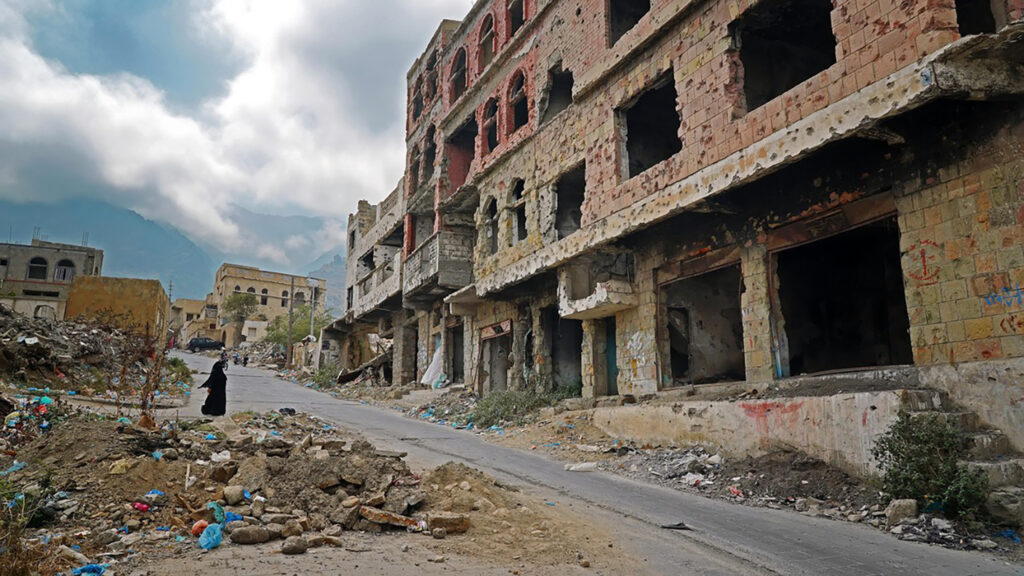
Once again, the population is experiencing the effects of a tragic conflict that has lasted for 14 years and has so far left over 19 million Yemenis – half the population – in urgent need of assistance. In Yemen, one in two children under the age of five suffers from acute malnutrition, and over 4.5 million people have been displaced by the conflict.
Christians on the Arabian Peninsula
“I am in constant contact with the Christian community in Yemen,” said Bishop Martinelli. “It is very small. We don’t know exactly how many Catholics there are, because after ten years of civil war, most of them have left the country, especially migrants who lost their jobs.”
“Furthermore,” the Apostolic Vicar continued, “unlike other Gulf countries, in Yemen there are also local Christians, alongside faithful from various parts of the world. Many have been forced to leave the country due to the conflict and attacks during these long years of war. I would particularly like to recall that in 2016, at the beginning of the internal conflict, four sisters from the Missionaries of Charity of Mother Teresa of Calcutta were murdered by a group of extremists. In addition, all four of our churches were severely damaged and are currently unusable.”
“Currently,” Bishop Martinelli reported, “two communities of Missionaries of Charity remain in northern Yemen, who, despite the 2016 attack, continue their mission. In their two homes, they welcome the poorest: over a hundred people in each home, mainly the sick and elderly. They truly perform miracles of love, with very modest means at their disposal. They are accompanied by one priest – the only one currently in Yemen – belonging to the male branch of the Missionaries of Charity. I am in very frequent contact with him, sometimes daily. He informs me about the life of Christians, the situation of the sisters, and the condition of the sick they care for. When possible, we also maintain contact with the sisters through video conferences, despite technical difficulties. Of course, it is impossible to carry out any evangelization activities. Nevertheless, a small group of faithful meets regularly to pray and participate in Mass celebrated in the chapels of these two communities. It is a small group, but very close-knit. The presence of the sisters and the priest is a great gift for the few Christians who remain.”