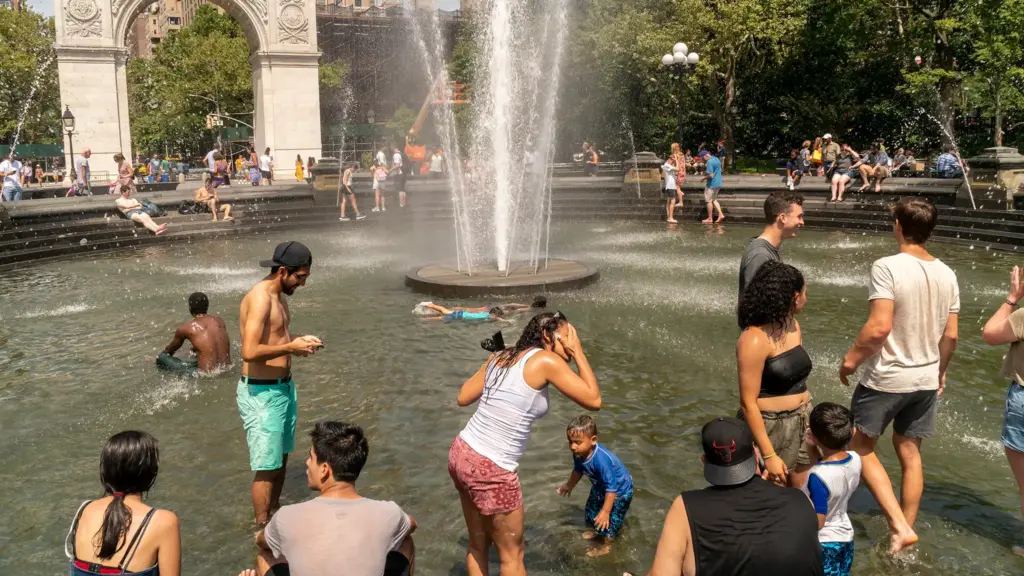
The actual air temperature will reach around 100°F (≈ 38°C) on Thursday and Friday, but due to high humidity, the “feels-like” temperature will reach 111°F (≈ 44°C). The city has opened hundreds of cooling centers. Seniors and people working outdoors are at the highest risk.
A heat dome has settled over the eastern United States for the 4th of July weekend, covering more than half the country. For New York City, this means one of the most dangerous heatwaves in years – and a real health risk, especially in a densely built city where concrete radiates heat long after sunset.
100°F in the shade, but feels like 111°F – what’s the difference
On Thursday and Friday, thermometers in New York City are expected to show around 100°F (≈ 38°C) – these are the first two consecutive days above 100°F since July 2011, and the first “century” in Central Park since 2012. However, the key is not the air temperature itself but the heat index, which is the perceived temperature that combines heat and humidity. The National Weather Service forecasts it will reach 111–112°F (approximately 44°C).
If someone sees “111 degrees” in the headline, it refers to this perceived Fahrenheit value – and certainly not in Kelvin, because 111 K is −162°C, a temperature from outer space. Nights will bring little relief: lows may approach a record 84°F, making it difficult for the body to recover.
Who is most at risk
The heatwave hits elderly people the hardest – including many lonely Polish seniors – whose bodies cope worse with dehydration and overheating. The second high-risk group is people working outdoors: construction workers, roofers, gardeners, and delivery drivers – professions that a significant part of our community holds. Hours of exertion in full sun at a perceived 111°F can quickly lead to heatstroke.
Symptoms of heatstroke – when to call 911
Heatstroke is a life-threatening condition. Call 911 if you or someone nearby notices: very high body temperature, hot and dry or, conversely, sweaty skin, severe headache, dizziness, nausea, rapid pulse, confusion, or loss of consciousness. Until help arrives, move the person to a cool place, cool the body with wet compresses, and give water if conscious.
How to protect yourself – practical steps
Several rules genuinely reduce risk during such weather: drink water before you feel thirsty, and avoid alcohol and sugary drinks; limit exertion and going out during peak sun hours (11:00 AM–5:00 PM); wear light, bright, and breathable clothing; use air conditioning, and if you don’t have it – use a cooling center. Never leave a child, an elderly person, or an animal in a parked car. Check on elderly neighbors and lonely relatives by phone – that one call can save a life. People working outdoors should take frequent breaks in the shade and drink water every 15–20 minutes.
Cooling centers – where to find relief
The city has activated hundreds of cooling centers in all boroughs, extended public pool hours, deployed mobile cooling vans, and enhanced assistance for seniors and the homeless. Find your nearest cooling center by calling 311 or using the city’s “Cooling Center Finder” on nyc.gov. Mayor Zohran Mamdani and Governor Kathy Hochul urge everyone to prepare their “heat plan” – especially if caring for an elderly or sick person.
Celebrate the 4th of July by all means – but wisely. Shade, water, and a cool room are not luxuries this weekend, but a matter of safety.
Author: Głos Polonii Editor · July 1, 2026