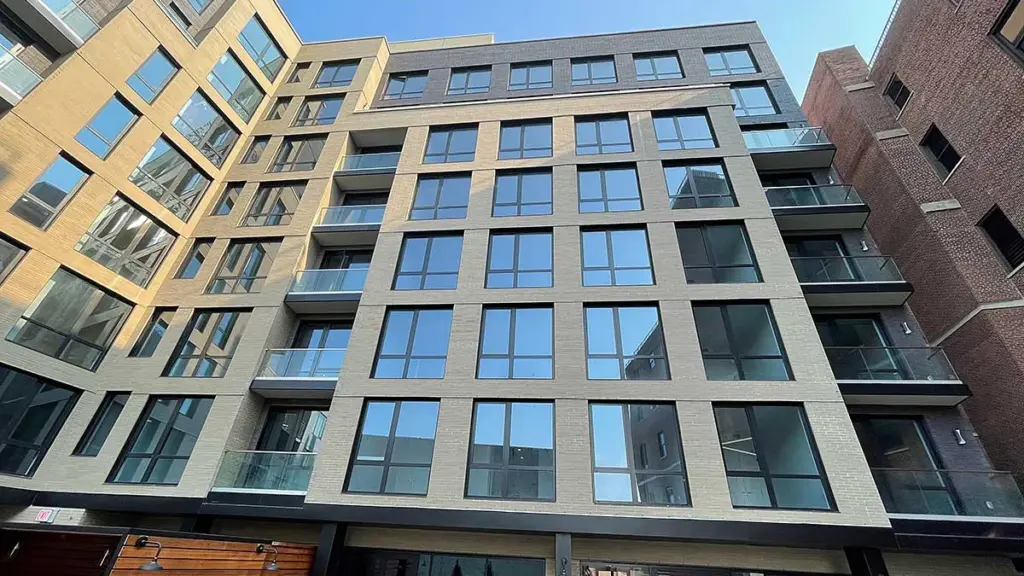
On a new development, the general contractor turns the design into a building. The contractor sequences the work, hires and coordinates subcontractors, manages the schedule and prepares the building for sign-offs. It is the investor’s single point of contact on site, and the process ends with a Certificate of Occupancy.
The Polish community in New York includes investors as well as homeowners. Some build small multifamily buildings in Brooklyn, others convert older buildings in Queens or prepare retail spaces for tenants on busy shopping streets. The scale differs from project to project, but the logic is much the same.
The investor is responsible for the money and the decisions, the architect for the design, and the general contractor for making sure the building goes up according to the plans. Below we explain how that division works in practice and what to look at before signing a contract.
What is the general contractor responsible for on a development project?
Everything that happens on site, from setting up the site through structure and mechanical systems to finishes. The general contractor hires subcontractors, orders materials, sets the sequence of work and answers to the investor for its quality.
On commercial jobs the scope may be narrower, but it is not simpler. With tenant fit-outs and office buildouts in Midtown towers, the contractor works inside an occupied building. Work hours, freight elevator use and deliveries have to be arranged with building management so the other tenants are not disrupted.
In mixed-use buildings, with apartments above retail, the contractor also has to reconcile two sets of requirements within one structure. That is a good test of a builder’s experience.
How does the contractor work with the architect and engineers?
The architect and engineers design the building and file the drawings with the Department of Buildings; the contractor builds and flags anything that cannot be built the way it is drawn.
It works best when the contractor joins the team before the drawings are filed. The contractor can then price design choices, suggest less expensive alternatives and point out items that need to be ordered well in advance, such as windows, facade systems or HVAC equipment.
During construction, the collaboration is mostly questions and answers. Every design change should be documented in writing, because it affects both cost and the sign-offs later on.
What drives the schedule on a new development?
Mainly permits, deliveries and the order of the trades. Construction cannot start until the DOB approves the plans and issues the permit, and every round of corrections to the drawings pushes the start date back.
Once work begins, the schedule is shaped by long-lead items and by weather during roof and facade work. On tight Brooklyn blocks, limited access and no room for storing materials mean deliveries have to arrive in batches.
An honest schedule includes buffers and makes clear which stages depend on decisions from the investor. It is worth agreeing up front how often the contractor will report on progress.
What do sign-offs and the Certificate of Occupancy mean for an investor?
They mark the point at which the building can be legally occupied and leased. According to the DOB, a Certificate of Occupancy states the legal use and type of permitted occupancy of a building, and new buildings must have one.
No one may legally occupy a building until the Department issues a CO or a Temporary Certificate of Occupancy (TCO). Existing buildings must have a current or amended CO, for example when the use changes. The details are on the Department of Buildings page on the Certificate of Occupancy.
Investors in larger buildings should also know Local Law 97. According to the city, it covers buildings larger than 25,000 square feet, with certain exemptions, and sets greenhouse gas emissions limits starting in 2024, with stricter limits coming in 2030. The city’s Local Law 97 page has the details. Decisions about insulation, windows and building systems are made at the design stage.
More articles on construction work
If your project is smaller or focuses on specific parts of a building, you may also want to read:
- building a custom home: from the lot to a DOB permit
- curtain walls, doors and fences
- heating and air conditioning in buildings
A Polish construction company from Ridgewood
PDP Contracting, Inc. has been in business since 1997 and has its office in Ridgewood, Queens. Alongside single- and multi-family homes, it handles new development construction and commercial projects, including tenant fit-outs, office buildouts, structural alterations and facade renovations. It also takes care of permits and project management from planning through final sign-off.
The company works with developers, architects and building managers across New York, New Jersey and Connecticut. Consultations and estimates are free, and service is available in Polish and English. The portfolio on the company’s website lists addresses including 1400 Blondell Avenue in the Bronx, 150 N 5th Street in Brooklyn, 24 Leonard Street and 152 Elizabeth Street in Manhattan, and 98-95 and 107-02 Queens Boulevard in Queens.
Learn more in PDP Contracting’s listing in the PolishPages directory. To schedule an estimate, call 718-456-3150; the office is at 2137 Butler Avenue in Ridgewood.
This article is for general information only and is not a substitute for advice from an architect, engineer or attorney. Department of Buildings rules and Local Law 97 can change, so check the current requirements before starting a project. In New Jersey and Connecticut, local rules apply.