Vatican News / Karol Darmoros, Fr. Paweł Rytel-Andrianik
The Beginning of a Great Cooperation
The origins of both universities date back to July 1918. Just three days after the cornerstone-laying ceremony for the Hebrew University of Jerusalem, the Catholic University of Lublin (KUL) was established. Today, 108 years later, both institutions are opening a new chapter in their relations.
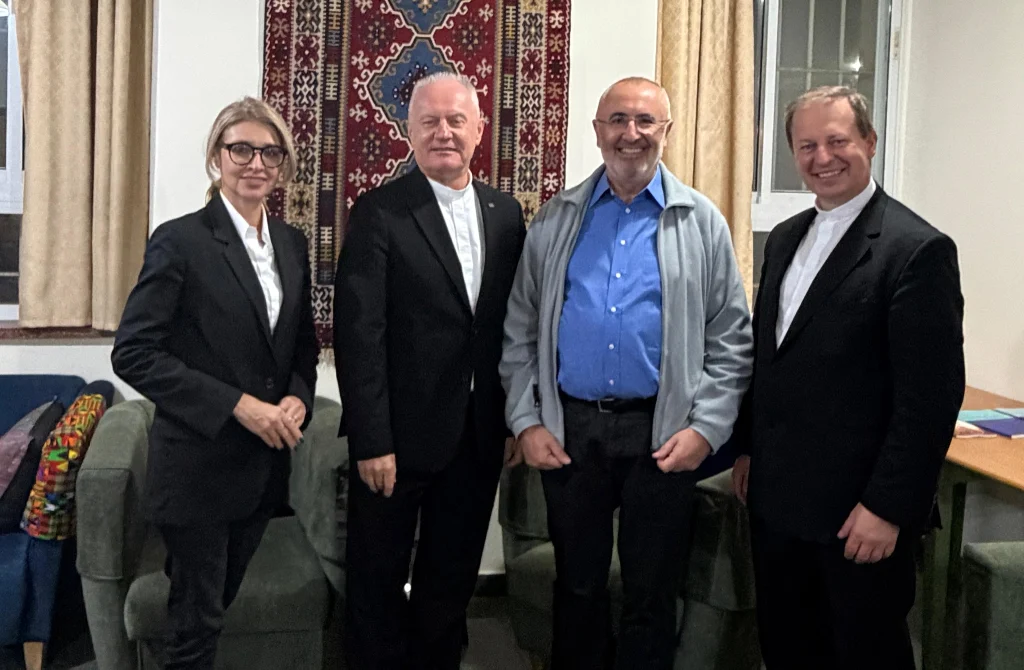
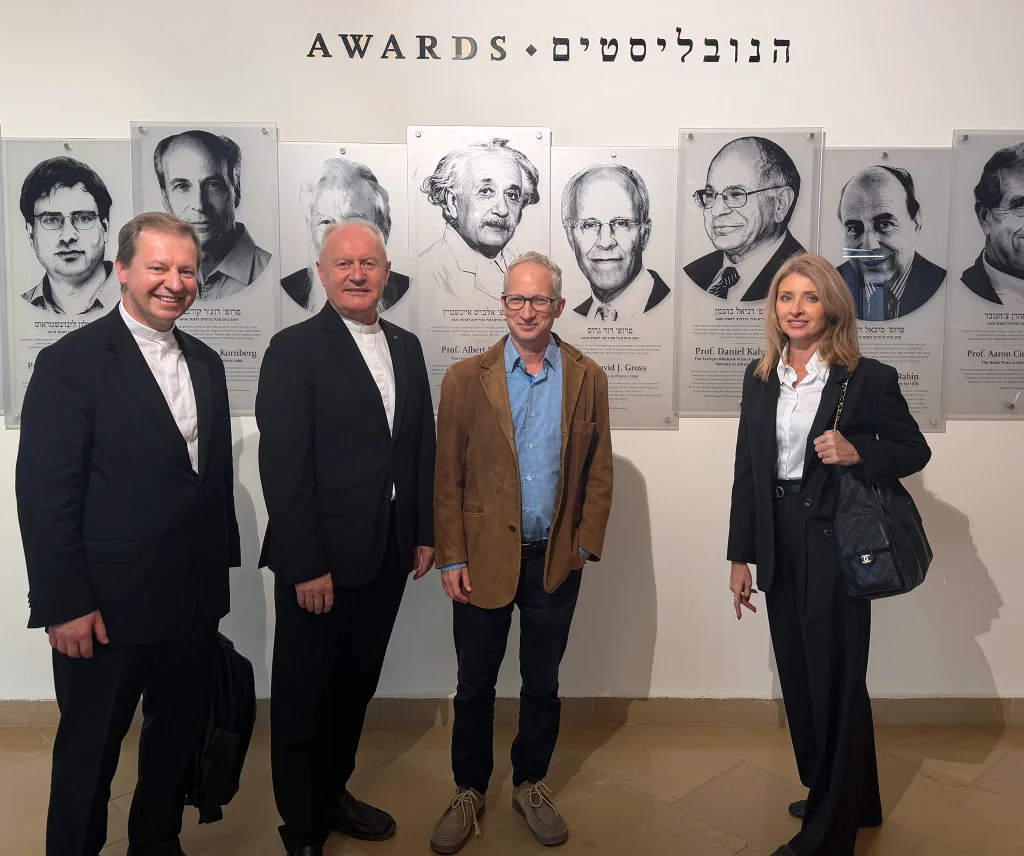
“I believe this is the beginning of large-scale cooperation,” says Rev. Prof. Mirosław Kalinowski after meetings with representatives of the Israeli university, which is associated with ten Nobel Prize winners.
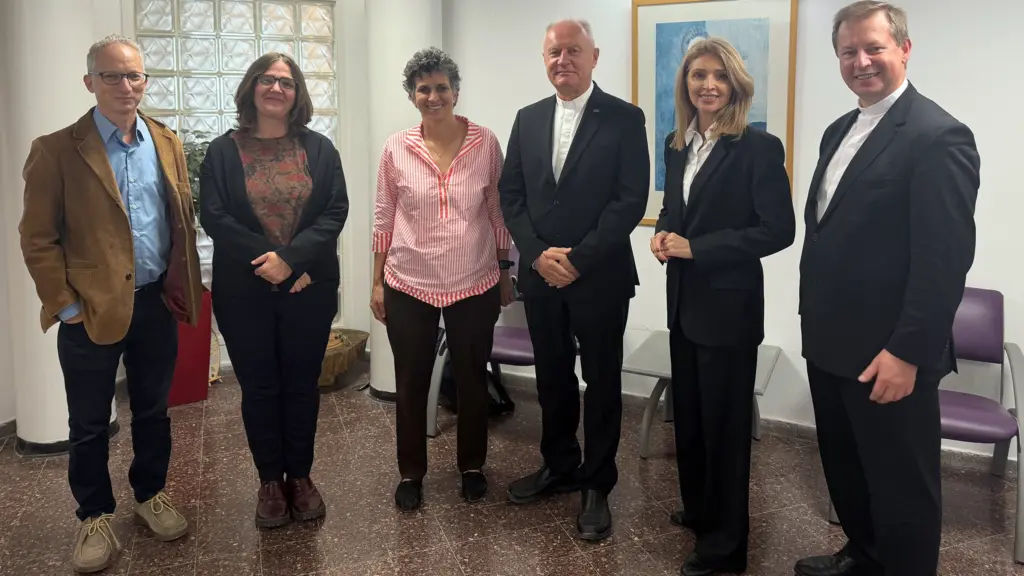
The talks between the Rector of KUL and Prof. Guy Harpaz, Vice President for International Relations at the Hebrew University, focused, among other things, on academic exchange under the Erasmus+ program. The potential of both universities makes it possible to consider joint research extending far beyond biblical studies and theology, including law, psychology, social sciences, human rights, ethics, and social communication and media sciences.
The KUL delegation also met with Prof. Elisheva Baumgarten, Dean of the Faculty of Humanities and a researcher of Jewish history in medieval Europe; Prof. Karma Ben-Johanan, a specialist in Jewish-Christian relations; and Dr. Adar Cohen, Director of the Teacher Training Department at the Seymour Fox School of Education at the Hebrew University of Jerusalem.
Jerusalem Open to Students
The opportunity to gain academic experience in the Holy Land is also offered by the Jerusalem campus of the American University of Notre Dame. The center, which conducts interdisciplinary research at the intersection of theology, history, and politics, has facilities capable of hosting and accommodating students.
During a meeting with the campus director, Dr. Daniel Schwake, discussions covered student exchange within the Erasmus+ program, joint ventures involving the KUL Heschel Center, and education in diplomacy as well as intercultural and interreligious dialogue.
“It is extremely significant how positively KUL is received in Jerusalem’s academic circles. Our recognition and our achievements are appreciated here,” emphasizes the Rector of KUL.
The Bible at Its Source
Learning biblical languages, specialized archaeological courses, and access to valuable library collections are the opportunities brought by cooperation with three more institutions.
The Franciscan Biblical Studium (Studium Biblicum Franciscanum) allows for deepening the knowledge of biblical languages and the archaeology of the Holy Land. The KUL delegation met there with the Dean, Fr. Matteo Munari OFM, as well as Fr. Prof. Piotr Blajer OFM and Fr. Prof. Alessandro Cavicchia OFM. Meanwhile, the École Biblique et Archéologique Française (French Biblical and Archaeological School), run by the Dominicans, is famous for its rich academic library and research on the Qumran manuscripts. The delegation’s interlocutors were the Deputy Director of the school, Fr. Prof. Anthony Giambrone OP, and Fr. Prof. Łukasz Popko OP.
Students will also be able to take advantage of the opportunities offered by the Pontifical Biblical Institute in Jerusalem. The center offers a study program corresponding to the curriculum of the Pontifical Biblical Institute in Rome (Biblicum), as well as joint studies and accommodation with other students of the Institute. The KUL delegation met with the Director of the Institute, Fr. Prof. Pino Di Luccio SJ.
Science, Dialogue, Diplomacy, and Lectures in a Detention Center
An important place in the talks was occupied by the activities of the KUL Heschel Center and the KUL Center for Diplomacy Research. The Rector was accompanied during the visit by Vice-Rector Prof. Beata Piskorska and the Director of the Heschel Center, Rev. Dr. Paweł Rytel-Andrianik.
Jerusalem academics showed interest in cooperation opportunities with the Heschel Center, including through lectures, webinars, and visits to Lublin.
The visit’s program also included a meeting with Rabbi David Rosen, long-time Director of Interreligious Affairs for the American Jewish Committee (AJC) and a member of the Honorary Committee of the KUL Heschel Center.
Representatives of the university in Jerusalem expressed interest in the KUL Center for Studies at the Lublin Detention Center, which has had 63 graduates since 2013 and currently has over 40 inmate students.
“Our universities can be and are a good example of the fact that science builds bridges between countries and cultures. Science is able to erase divisions and differences and create a space to build a better tomorrow,” emphasizes Rev. Prof. Mirosław Kalinowski.
The Rector of KUL makes no secret of his optimism following the talks in Jerusalem. As he points out, given the academic potential of the Lublin university and the strength of Jerusalem’s academic community, “both sides will certainly gain a lot.”