
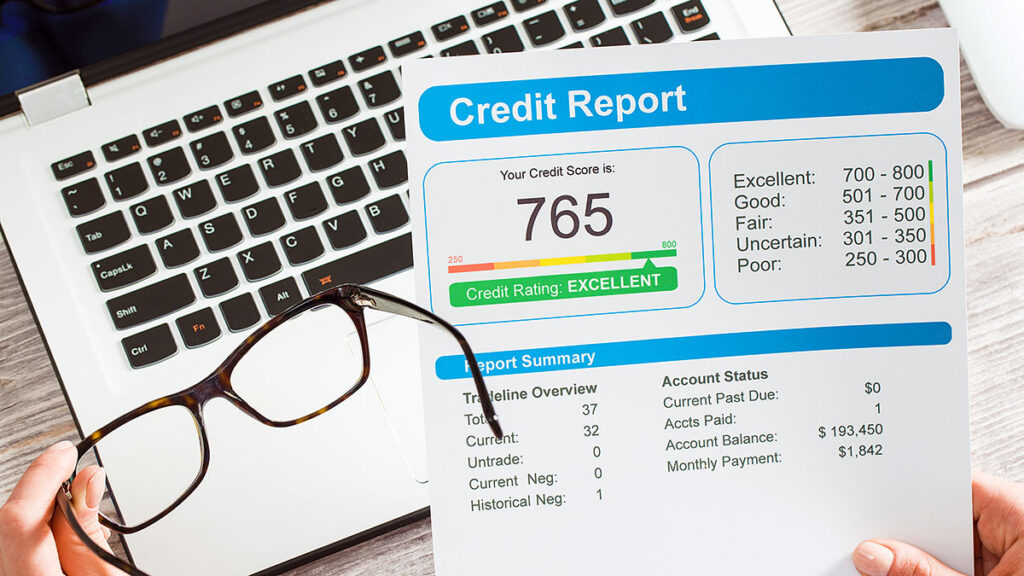
Check Your Credit Report
Lenders review your credit report to determine whether you qualify for a loan and at what rate. By law, you are entitled to one free credit report a year from each credit bureau – Equifax, Experian and TransUnion – and the bureaus have permanently expanded this option: you can now get a free report from each of them as often as every week. This lets you monitor the information in your file regularly. The most convenient way is to use the website www.annualcreditreport.com.
Fix Any Errors
Once you get your credit report, see whether it contains any errors that could hurt your credit. Here is what to watch for: debts you paid off that are listed as unpaid; information that is out of date or does not belong to you. Pay attention to closed accounts – check whether they are listed as closed by the creditor when in fact you closed them.
If you find an error in your credit report, contact the credit bureau as soon as possible to dispute it and have it corrected. For peace of mind, consider signing up for a credit monitoring service.
Check your credit file at least six months before applying for a mortgage, so that you have time to fix any errors.
Know Your Score
Your credit score is calculated based on your credit file. The credit score is the basic tool used to assess a customer’s creditworthiness. In the States, the most commonly used system is called FICO, after the Fair Isaac Corporation. FICO determines not only whether you will get a loan, but also what interest rate you will pay on it. If your FICO score is above 750 points, you are in an elite club and can sleep soundly. Raising it further means little. If you have 620 or less, you are in serious trouble.
Many banks and card issuers show customers their credit score for free in their smartphone apps. For example, Capital One offers a free service called CreditWise. CreditWise shows your credit score and the factors that affect it: the number of credit cards, total available credit, the number of inquiries about your credit, and so on.
Improve Your Credit
Since your credit score weighs heavily on your mortgage interest rate, it is worth working to improve it.
- Pay your bills on time. Your payment history accounts for 35 percent of your FICO score.
- Use less than half of the credit available to you, because excessive debt can lower your score by as much as 30 percent.
- Keep your old credit cards, because the length of your credit history accounts for 15 percent of your score. If you want fewer cards, close the newest ones.
- A variety of credit and loan accounts makes up 10 percent of your score. If you have, for example, a car loan and a few credit cards – very good.
- New loans or credit cards can hurt you. Opening new store credit cards, for example during holiday shopping season, lowers your credit power by as much as 10 percent.
Lower Your Debt-to-Income Ratio
Banks care about your debt-to-income ratio (DTI for short). Expressed as a percentage, DTI is calculated by dividing your total recurring monthly debt payments by your gross monthly income.
Banks expect a 28/36 ratio. The first number, also called the front-end ratio or housing expense ratio, expresses the percentage of your income that can be spent on housing. Most lenders believe that your monthly housing payments (mortgage payment, property taxes and homeowners insurance) should not exceed 28 percent of your gross income.
The second number is called the back-end ratio or overall debt ratio. It is calculated by adding up your monthly housing costs and payments on other loans and dividing the result by your gross monthly income. Banks want this ratio not to exceed 36 percent.
If you will have a financial reserve left after buying the house, you have a good credit score and other income not shown on the application, the FHA may allow a 40/50 ratio.
To lower your debt-to-income ratio, you need to reduce your debts (buy less) and/or increase your income. Try to find a “side gig” or work overtime. A spouse who takes care of the children can go back to work. Easier said than done, but it is worth trying, not only to show adequate income on your tax return, but also to build up some savings.
A Large Down Payment
A bank will not give you a loan if you have no money for a down payment. The days of widespread “zero down” loans are long gone – today you can buy a house with no down payment only through special programs, such as a VA loan for veterans. Banks most like to see a down payment of 20 percent of the home’s price. FHA-insured loans require a down payment of at least 3.5 percent (with a credit score of at least 580). If your down payment on a regular (conventional) loan is below 20 percent, you will have to pay for Private Mortgage Insurance (PMI). The rates depend on your credit score, the size of your down payment and other factors; most often they are paid monthly along with your mortgage payment. Ask your lender to calculate how much PMI will cost you.
Given high home prices, you will probably have to save even more than 20 percent to be able to handle the monthly payments. To find out what kind of house you can afford and what interest rate you can get, use the homebuyer’s guide on the website of the federal Consumer Financial Protection Bureau: www.consumerfinance.gov/owning-a-home.
Look for Bargains
Numerous websites, such as Zillow, Realtor, Trulia and Redfin, can help you find a house or apartment.
To find an affordable home, some people move to cheaper areas or choose prefabricated homes or fixer-uppers. Note: don’t consider a run-down area, because the greatest potential lies in neglected houses in a good neighborhood. You can also look at houses that banks are selling in foreclosure.
It is worth reducing the costs of the purchase. Buying a house directly from the owner (by owner) will let you save on the real estate agent’s commission. It also doesn’t hurt to look into FHA loans and first-time homebuyer programs, which a HUD-certified housing counselor can advise you on. You can find one on this website: www.consumerfinance.gov/find-a-housing-counselor.
Buying your first home is not easy, but it is good to know that there are ways to increase your chances of getting a loan, especially if you start your efforts early.
Elżbieta Baumgartner is the author of many self-help books, including “Jak kupić dom i nie przepłacić” (“How to Buy a House Without Overpaying”), “Podręcznik właściciela domu” (“The Homeowner’s Handbook”) and “Otwieram biznes” (“Starting a Business”). They are also available as e-books directly from the publisher: Poradnik Sukces, www.PoradnikSukces.com, tel. 1-718-224-3492.
Updated October 2026.