What happened in Antalya
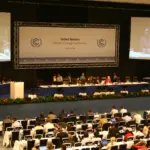
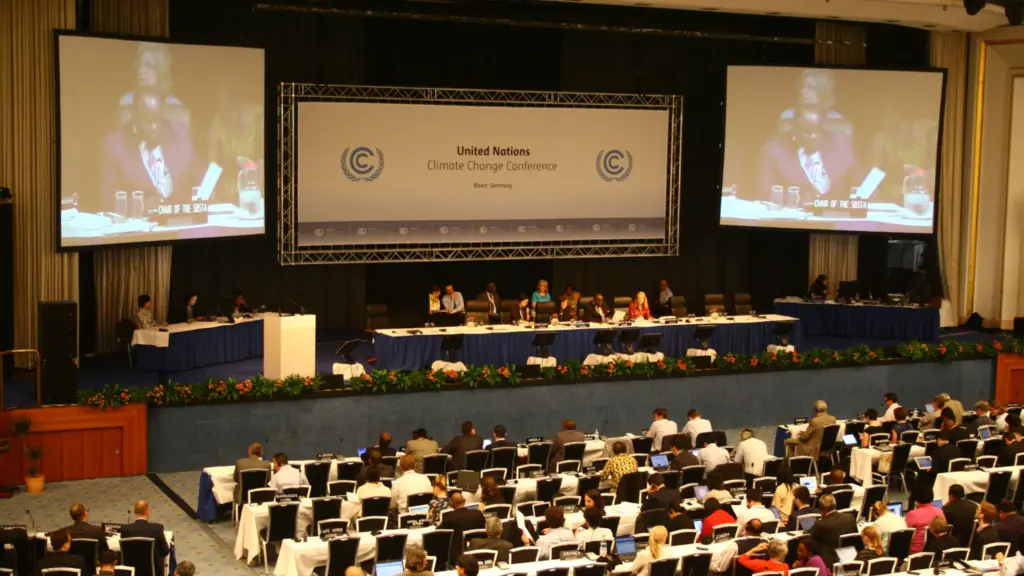
According to UN News, the talks ran for two weeks and then went two days into overtime. COP31 President Murat Kurum, Türkiye’s environment minister, acknowledged the impasse, saying: “I understand that there is no agreement on this text. For that reason, these decisions have not been adopted.” The UN said Antalya became the longest-running UN climate summit on record.
Türkiye and Australia served as COP31 co-presidents. According to the UN, several compromise drafts they circulated acknowledged that global warming is now on course to exceed the 1.5°C threshold and called for expanded carbon-removal technologies. Critics, the UN reported, argued that the text weakened previous commitments.
Where the parties stood
The European Union formally objected to the summit’s main draft decision. According to the UN account, the EU said the text failed to “meet the moment” and that it could not accept a draft that omitted any reference to fossil fuels or a transition away from them, calling that omission “unconscionable.” Poland negotiated as part of the EU’s common position, the Polish business news site WNP.pl reported.
Panama rejected the outcome, and the Marshall Islands withheld its support. Pakistan urged delegates to keep working toward consensus. Speaking for the African Group, Ghana pointed to shortcomings in areas including climate finance but said the group would not stand in the way of consensus. Speaking for the League of Arab States, Saudi Arabia defended references to carbon capture and storage (CCS) and rejected suggestions that the technology constituted greenwashing.
UN Secretary-General António Guterres said in a statement that he was “deeply disappointed” that governments had failed to reach consensus. “There may be no consensus in the negotiating room. There is no ambiguity in the science,” he said. He warned that the world is now on course to exceed the 1.5°C limit and said fossil fuels remain the primary driver of global warming. Guterres noted that governments agreed at COP28 in Dubai to transition away from fossil fuels.
Simon Stiell, Executive Secretary of the UN Framework Convention on Climate Change (UNFCCC), told the closing plenary: “The world cannot afford a repeat of this moment.” He pointed to an agreement on a just transition and initiatives under the COP31 Action Agenda as areas of progress.
The United States and the UN climate process
On January 20, 2025, President Donald Trump signed an executive order directing the U.S. Ambassador to the United Nations to submit formal notice of U.S. withdrawal from the Paris Agreement. A presidential memorandum dated January 7, 2026, lists the UN Framework Convention on Climate Change and the Intergovernmental Panel on Climate Change (IPCC) among the bodies the United States is to withdraw from. According to the White House, the memorandum covers 66 organizations that no longer serve American interests.
What comes next
The next conference, COP32, will be held in Addis Ababa, Ethiopia. According to the UN, governments there will face many of the questions left unanswered in Antalya, from the transition away from fossil fuels to climate finance for developing countries. WNP.pl noted that the lack of a final decision does not void earlier agreements: the Paris Agreement and decisions adopted in Dubai, Baku and Belém remain in force.
Key points
- COP31 in Antalya ended on November 22, 2026, without adopting its main political decisions.
- The central dispute was over language on fossil fuels.
- The EU formally objected; Panama rejected the outcome, and the Marshall Islands withheld support.
- A January 7, 2026, presidential memorandum provides for U.S. withdrawal from the UN Framework Convention on Climate Change.
- The next summit, COP32, will take place in Addis Ababa.
Sources: UN News, Nov. 22, 2026, Executive order of Jan. 20, 2025 (whitehouse.gov), Presidential memorandum of Jan. 7, 2026 (whitehouse.gov), White House fact sheet of Jan. 7, 2026, WNP.pl, Nov. 23, 2026.
Download the PolishPages app:
App Store
Google Play