Fausta Speranza, Artur Hanula
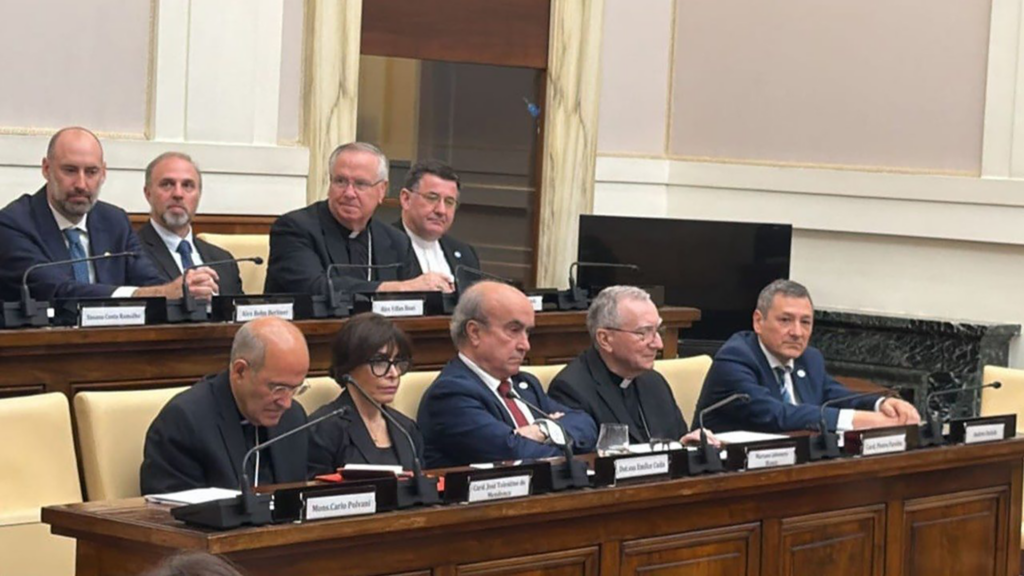
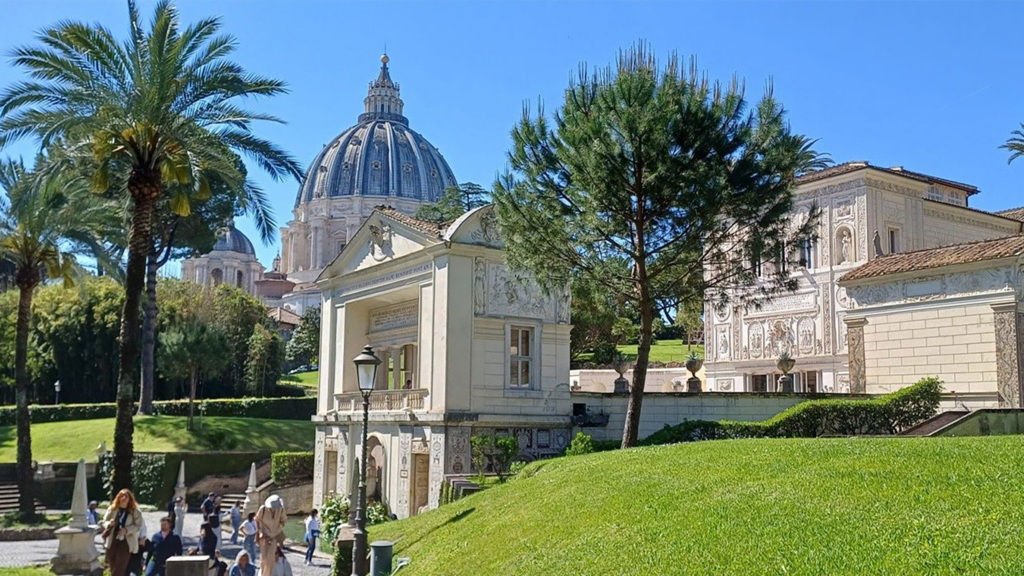
As reported by Vatican News, Cardinal Parolin pointed to education, which “is at the crossroads of many conflicting tendencies”; to the “crisis of meaning” in “a society that offers young people all means but no purpose”; and to the “enormous responsibility” for “decisions” and “policies” that “will have effects felt for generations”. The Vatican Secretary of State delivered his speech during the conference “Maps of Hope for a Regional Educational Program: Mental Health, Digital Technologies and Education”, taking place today and tomorrow at the Casina Pio IV in the Vatican Gardens.
The meeting brings together ministers from Ibero-American countries, as well as experts, scientists, and representatives of international organizations. Participants are reflecting on the main contemporary challenges facing education. Cardinal Parolin described this meeting as “particularly relevant and timely”, recalling the “increasingly widespread” awareness in the international community that “education is not one of many points on the political agenda, but a pillar of integral human development, peaceful coexistence, and social justice”.
A More Human Future
With particular reference to the Ibero-American region, the Cardinal noted that “the region’s educational systems, despite having achieved significant progress in terms of accessibility and reach in recent decades, today face qualitative challenges that require new solutions: integral formation of the person, development of socio-emotional competencies, protection of the most vulnerable, and responsible integration of digital technologies”. According to the hierarch, these are “challenges that cannot be met through sectoral or fragmented actions, but which require structured, multidimensional, and long-term cooperation”.
Cardinal Parolin recalled that the Holy See recognizes education as “one of the highest forms of charity” and one of the “most effective tools for human dignity and the common good”. Hence the Secretary of State’s appeal to “chart concrete, realistic, and common paths that lead to a more just and more human future”.
Global Compact on Education
The Vatican Secretary of State referred to the Global Compact on Education, which Pope Francis announced several years ago, and which aims to unite people of good will in actions for education capable of building fraternity, peace, and justice. This perspective was also highlighted in the apostolic letter “Drawing New Maps of Hope”, signed by Leo XIV on October 27, 2025.
As Cardinal Parolin emphasized, Holy Father Leo recalled that education is not a secondary activity, but constitutes the very fabric of the Church’s mission in the world; the Pope invited to build a global “educational constellation” in which every institution, every community, every educational entity, like a star in the firmament, shines with its own light and at the same time contributes to charting a common course. In this regard, Cardinal Parolin explained that there are three “new priorities that enrich the paths of the Global Compact on Education: care for inner life, the human face of digitalization, and education for peace”.
Crisis among young people
The issue of mental health deserves special attention – emphasized Cardinal Parolin. He admitted that “the data speak for themselves and are in many respects alarming” and that “in many cases these disorders remain undiagnosed and are not adequately treated”. At the heart of the problem are young people, among whom levels of anxiety, depression, and psychological suffering have increased after the pandemic.
Faced with the temptation to “reduce the problem to a clinical issue and hand it over exclusively to the healthcare system”, Cardinal Pietro Parolin recalled that the Church has always taught that the human person constitutes an indissoluble unity of body, mind, and spirit, and then described as “mutilated” an educational vision that omits any of these dimensions. He pointed to the need to offer young people not only skills and knowledge, but also tools to understand themselves, cope with their own emotions, build meaningful relationships, and give meaning to their own existence. In this context, the Secretary of State emphasized the great importance of school and family.
Human before algorithm
Added to this is the issue of the relationship between education and digital technologies. As the Cardinal recalled, this is a topic that Pope Leo XIV addresses with deep awareness, calling for the promotion of a “digital humanity” that places the human before the algorithm and harmonizes various forms of intelligence: technical, emotional, social, spiritual, and ecological.
In this context, it is also important to seek a deeper meaning of existence. It is precisely the conviction that the mental health crisis among young people is not merely a clinical crisis, but a “crisis of meaning”, that can help to better understand possible horizons of hope. Leo XIV encourages drawing maps of hope, which involves charting concrete, realistic, and common paths that lead to a more just and human future. The ultimate goal is always to serve the common good.
At the same time, as Cardinal Parolin noted, it is not about imposing ready-made answers, but about “accompanying young people in discovering the questions within them, in confronting the great traditions of human thought and spirituality, in developing that capacity for reflection and discernment that is the foundation of all authentic freedom”.
Investment and Cooperation
Aware of the “enormous responsibility” and at the same time the “extraordinary privilege” that politics entails, Cardinal Parolin asked the ministers to “convey in their capitals, parliaments, and councils of ministers the awareness that the mental health of young people constitutes a crisis situation requiring structural solutions”.