Vatican News / Izabela Hryciuk – Vatican
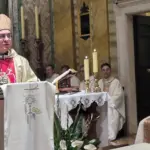
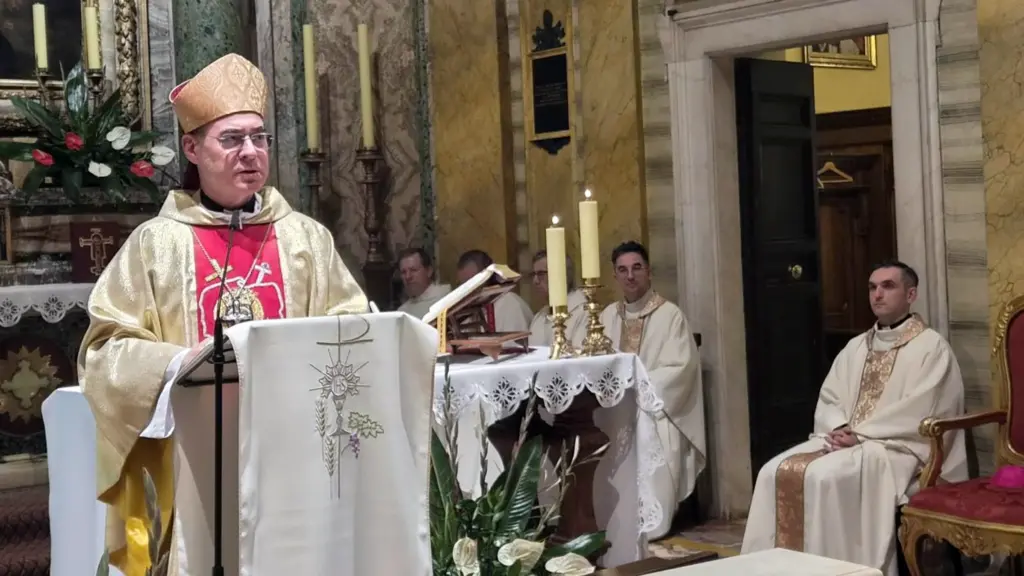
The Secretary General of the Polish Bishops’ Conference (KEP) emphasized that during the Eucharist, we thank God for our Homeland and for all those who, both in the past and today, contribute to preserving its freedom and independence.
He added that our thanksgiving prayer is part of the November tradition. He noted that “prayer over the graves of our loved ones is also connected with thanksgiving, with thanking God for those people we knew.”
Strong bond with the Homeland
In his homily, Bishop Marczak referred to the poem entitled “Regret” by Fr. Jan Twardowski, which touches on the theme of passing away and memory of the deceased, expressing sadness over insufficient love, self-absorption, and missed opportunities that can no longer be recovered. He noted that we very often appreciate the value and beauty of our loved ones only after they have gone.
He added that the same can be true of the Homeland, the significance of which is particularly realized by those who have been deprived of the opportunity to live in it due to emigration, exile, or the loss of statehood. “I think that someone who lives outside of Poland—just like most of us, probably—experiences their connection with the Homeland in a very special way,” he stressed.
The Secretary General of KEP noted that both memory of the deceased and of the Homeland is extremely important. However, he pointed out that for believers, life extends beyond what can be measured or described, and its essence goes further than human imaginations and definitions. “Life is not contained solely in what we are able to define by dates,” he observed. In this context, he referred to one of Horace’s odes, in which the author notes that a person leaves behind a lasting trace thanks to which they are not entirely forgotten.
A community of people and hearts
Bishop Marczak recalled words from the Catechism of the Catholic Church: “It is the duty of citizens to contribute along with the civil authorities to the good of society in a spirit of truth, justice, solidarity, and freedom. The love and service of one’s country follow from the duty of gratitude and the order of charity. Submission to legitimate authorities and service of the common good require citizens to fulfill their roles in the life of the political community.”
“It is love that makes a person ready to lay down their life for others. It is not only memory and longing for the Homeland, but love,” he stressed. He added at the same time that “the Homeland is a community of people and hearts, for which people in the past and today are ready to give their own lives.”
He also recalled the words of John Paul II, who said: “Poland is a special mother. Her history has not been easy, especially over the past centuries. She is a mother who has suffered much and continues to suffer anew. Therefore, she has the right to a special love.”
Readiness to do good and avoid disputes
Referring to the reading from St. Paul’s Letter, he noted that it calls each of us to respect authorities, be ready to do good, avoid disputes, and show kindness and gentleness to everyone. In this context, he asked what it means for Poles to submit to governing authorities.
He noted that according to the Constitution of the Republic of Poland of 1997, Poland is a democratic republic with a parliamentary-cabinet system. He added that in Poland, power is divided into legislative, executive, and judicial branches, and none of them is more important than the others. He observed that the political disputes accompanying them place citizens, including believers, before a difficult question about obedience to the authorities. Responsibility for these conflicts rests with politicians, from whom cooperation and care for the common good are expected. He added that in the prayer of the faithful, praying for politicians, we will pray for all those exercising power: the president, the prime minister, the parliament, courts, and tribunals. “Power can strongly awaken the piety of Poles, who must pray very fervently so that all authorities live in harmony with one another,” Bishop Marczak emphasized.
Fervent prayer for the Homeland
The Secretary General of the Episcopate pointed out that the current political situation should prompt Poles to offer fervent prayer for harmony among those in power. He emphasized that St. Paul also warns against hatred, envy, and mutual hostility, reminding us of the need to live in harmony and mutual respect. “This is a warning for all of us,” he added.
He also pointed out that many friends from outside Poland express gratitude for its freedom. “And may it not be that foreigners will give thanks for a free Poland, while we (…) will be unable to praise the Lord together and thank Him for this freedom,” he noted.
Patriotic evening
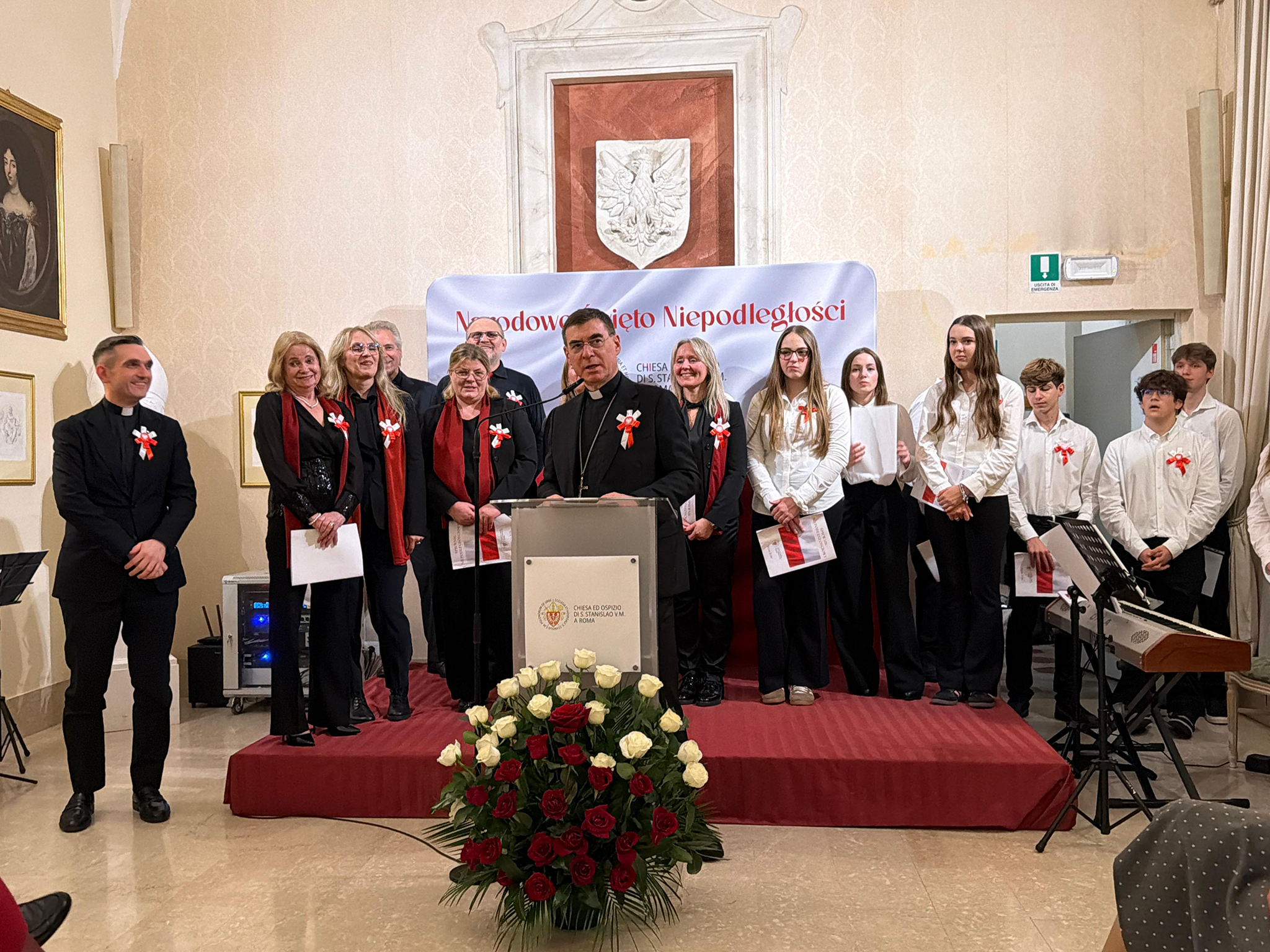
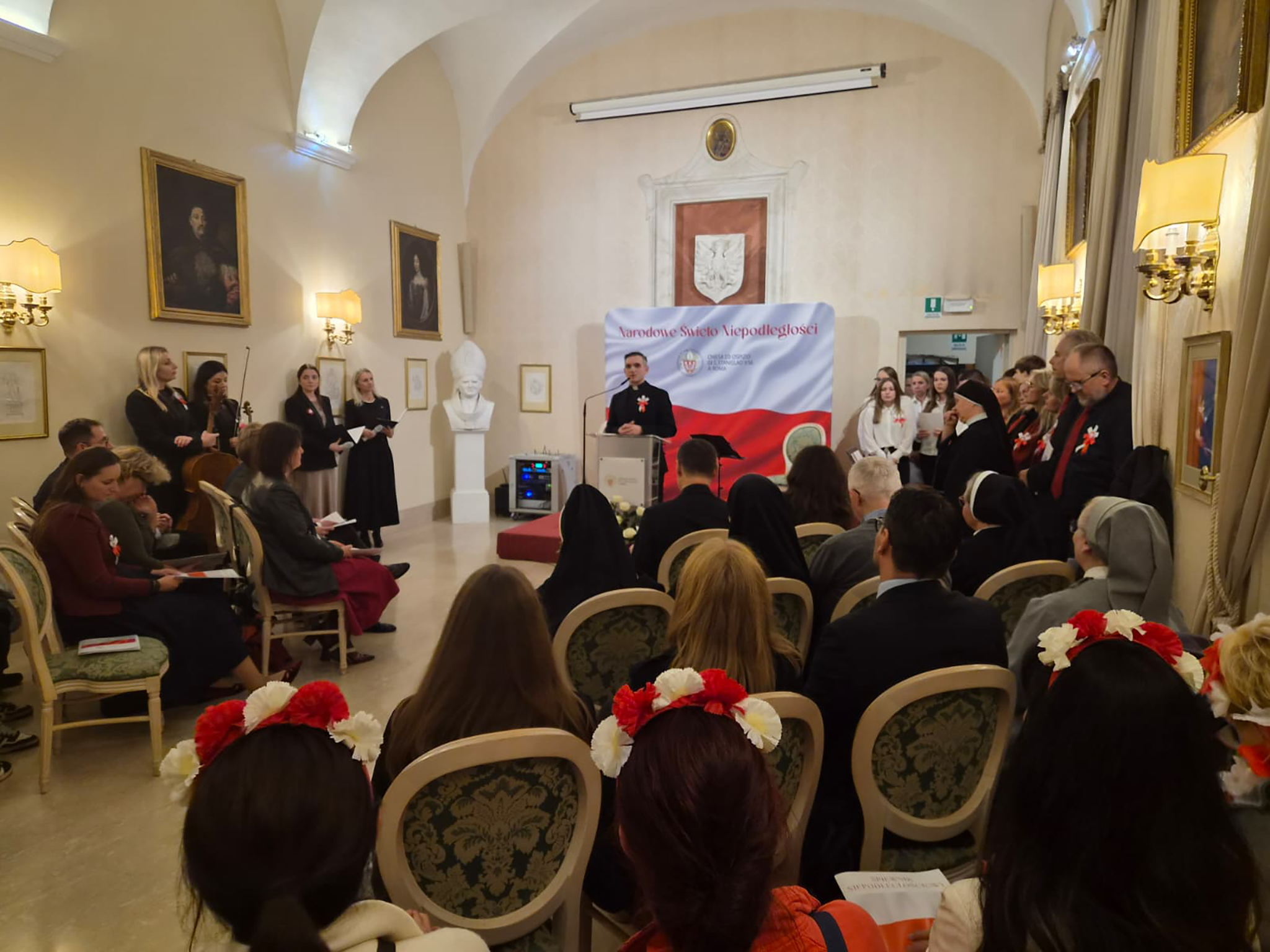
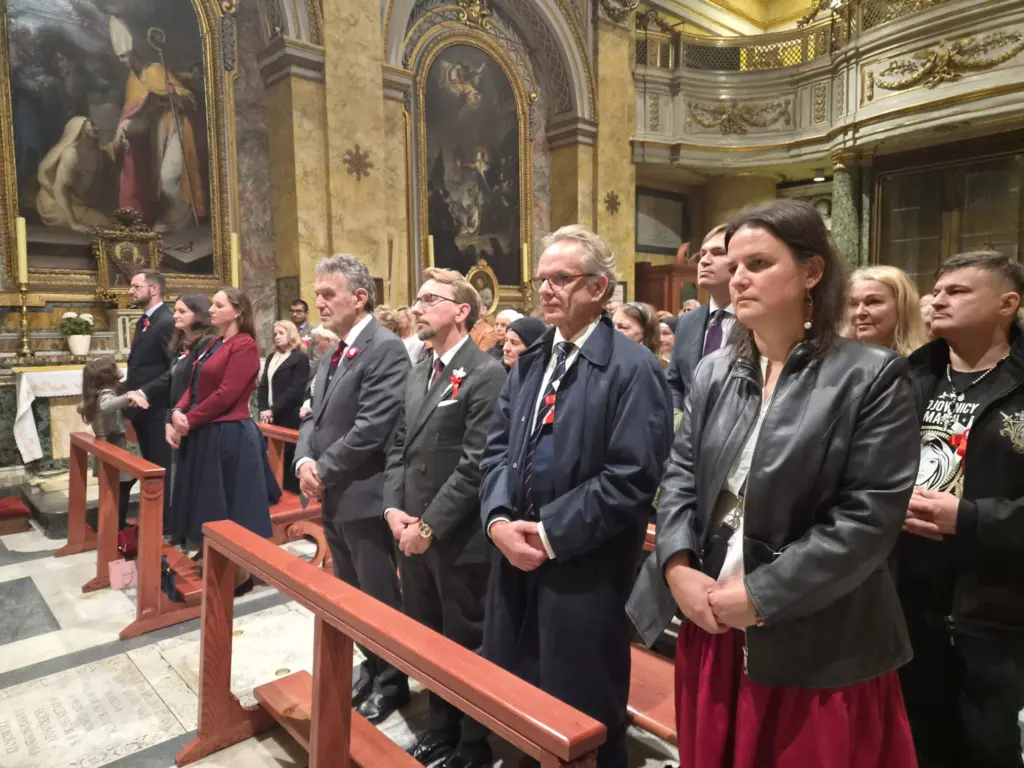
After Holy Mass, a patriotic evening took place, during which independence and patriotic songs were sung together, and poetry was recited. Fr. Tomasz Jarosz, administrator of the church and hospice of St. Stanislaus, Bishop and Martyr, in Rome, welcomed everyone present, expressing immense gratitude for their attendance.
Ewelina Brudnicka, Chargé d’Affaires of the Embassy of the Republic of Poland to the Holy See, extended cordial wishes to everyone, emphasizing the importance of community, unity, and pride in Polish identity. “I would like to wish us all a sense of community, unity, pride in being Polish, and a large dose of optimism when looking at the future of Poland,” she stressed.
Bartosz Skwarczyński, Consul General of the Republic of Poland in Rome, referring to Bishop Marczak’s homily, wished that we may be able to live according to the guidelines of St. Paul. He also recalled the words of Ignacy Jan Paderewski, who said: “Let everyone extinguish disputes in their heart, let them ignite love for the Homeland. Only in harmony and unity lie our strength and our freedom,” he emphasized. He also wished for daily unity and a deep, broad love for all brothers.
The organizers of the celebration were the Church and Hospice of St. Stanislaus, Bishop and Martyr, in Rome.