
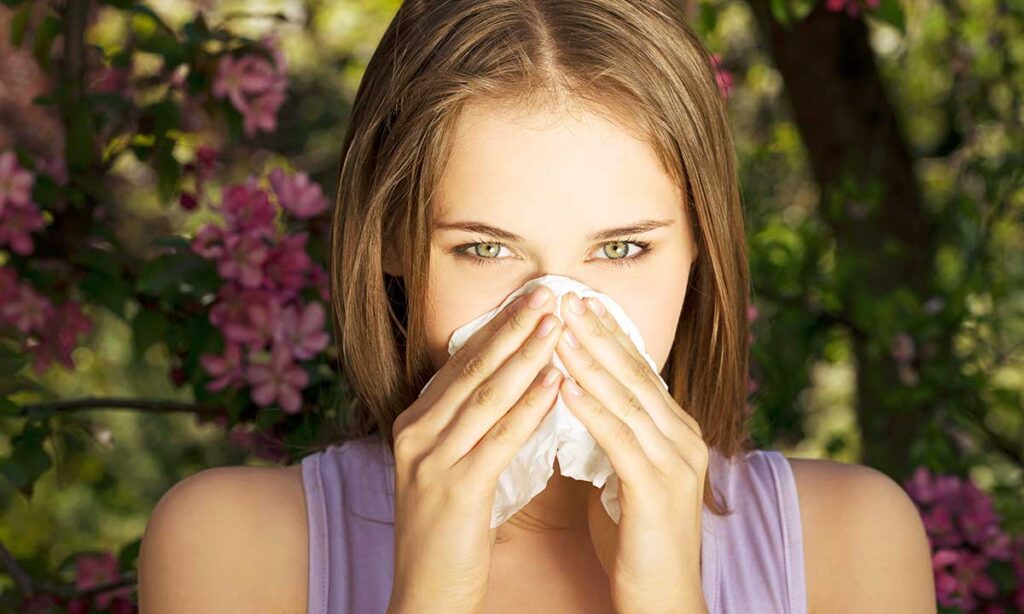
We speak of an allergy when a substance, which is not harmful in itself, triggers a response from our immune system leading to the occurrence of disease symptoms. Atopy is an inherited predisposition of the body to such a reaction. Its basis is the production of antibodies – immunoglobulins E – in response to contact with substances commonly present in the environment, called allergens. The reaction of an allergen and immunoglobulins E leads to the occurrence of disease symptoms. This predisposition is hereditary, thus allergic diseases often run in families.
Allergens can enter our body with inhaled air; we then speak of inhalant allergens. These include: plant pollen grains, house dust mites, animal dander, and mold fungi. Allergens can also be insects (bites), chemicals (costume jewelry, zippers, chemical substances present in cleaning products, rubber products), and sometimes food ingredients (cow’s milk, chicken eggs, fish, and nuts). They become the cause of allergic diseases such as allergic rhinitis, bronchial asthma, food allergy, and contact dermatitis.
In spring, plant pollens pose a particular threat to allergy sufferers. Some of them are light, so they are easily carried by the wind. In our latitude – that is, in the northeastern states of the USA – spring allergies are caused by tree pollens. The common name for this phenomenon is hay fever. The greatest intensity of allergic problems is observed in April and May. Birch, maple, and oak are trees that particularly bother allergy sufferers. Patients often ask how to protect themselves from hay fever. Wind carries pollen up to 50 miles. So even if we get rid of a tree that stands right next to the house, the problem will remain. Particles of life will fly in from a neighbor. As long as the pollination period lasts, the causative agent affects the allergic person. A little later in June, grass pollens appear, which can also be a cause of allergic diseases. In the autumn months, weed pollens can, in turn, be bothersome.
Patients most often complain of itchy and red conjunctiva, inflammation of the nasal mucosa (hay fever), and sore throat. However, not every runny nose is an allergy. A runny nose can also be caused by viruses, air pollution, cleaning products, or cigarette smoke. If the patient is unsure what is the actual cause of their concern, they should definitely contact a doctor and get allergy tests done.
The first rule in allergies is to avoid exposure to the allergen (not always possible). How to isolate yourself from pollen? Do not sit in the park, do not go for walks, wash your face frequently, rinse off in the shower and wash your hair before sleeping. Windows in the apartment should be closed, and HEPA air filters are useful. Taking symptom-reducing medications is also helpful. Commonly known antihistamines include Claritin, Zyrtec, or Allegra. Among herbal preparations, it is worth trying Quercetin (a compound present in fruits and vegetables, such as apples, blueberries, strawberries, raspberries, tomatoes, onions, green tea, red wine, and also as a supplement), nettle leaves (tea), or the natural preparation available in Europe, SINUPRET. Rinsing the nose with saline also significantly reduces allergic symptoms. It is worth mentioning immunotherapy, treatment using subcutaneous injections – in gradually increasing doses – of the allergen causing the allergy. Desensitization serves to teach the body tolerance to allergens. Allergen doses are processed by our immune system, and over time, hypersensitivity to pollen disappears.
Dr. Zaleska sees patients in offices in NY and NJ
And provides specialized treatment for adults and children
Most modern diagnostics:
- respiratory system diseases, asthma, chronic cough, runny nose, ear and sinus infections
- immune system disorders
- skin diseases
- food allergies, drug allergies
We perform:
- detailed allergy tests
- lung function tests
- effective desensitization for allergies to plant pollen, dust, and animals
Insurances honored.