Vatican News / Eugenio Muralli, Piotr Kowalczuk
Master of Satire and Literary Caricature
Daniela Marcheschi emphasizes that Carlo Collodi (the literary pseudonym of Carlo Lorenzini) was one of the pioneers of modern literary caricature. His ironic perspective on reality grew, among other things, out of the humoristic tradition. The writer combined social and political satire with literary fantasy, creating a distinctive language full of irony and unexpected twists.
Pinocchio – A Book Not Only for Children
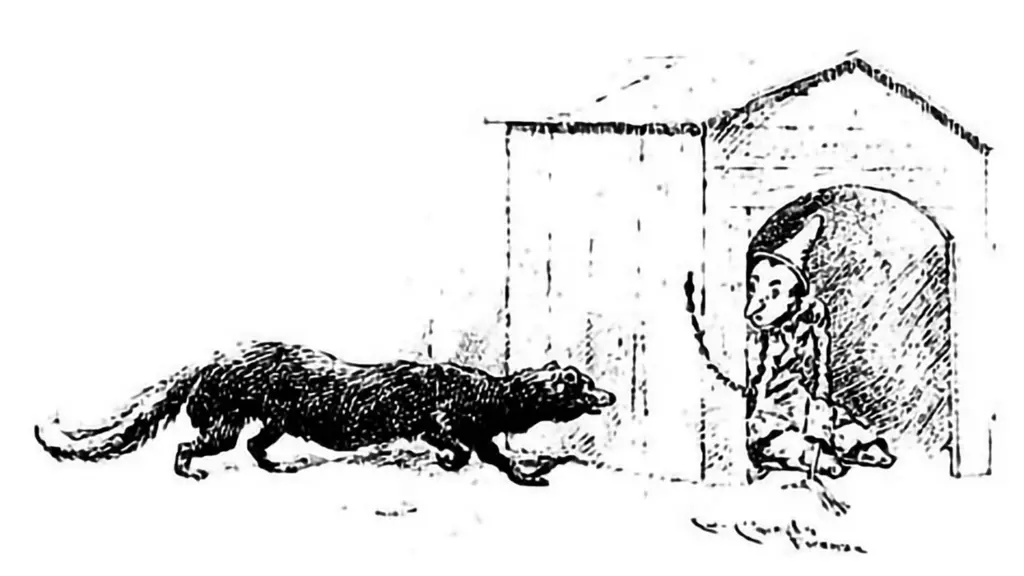
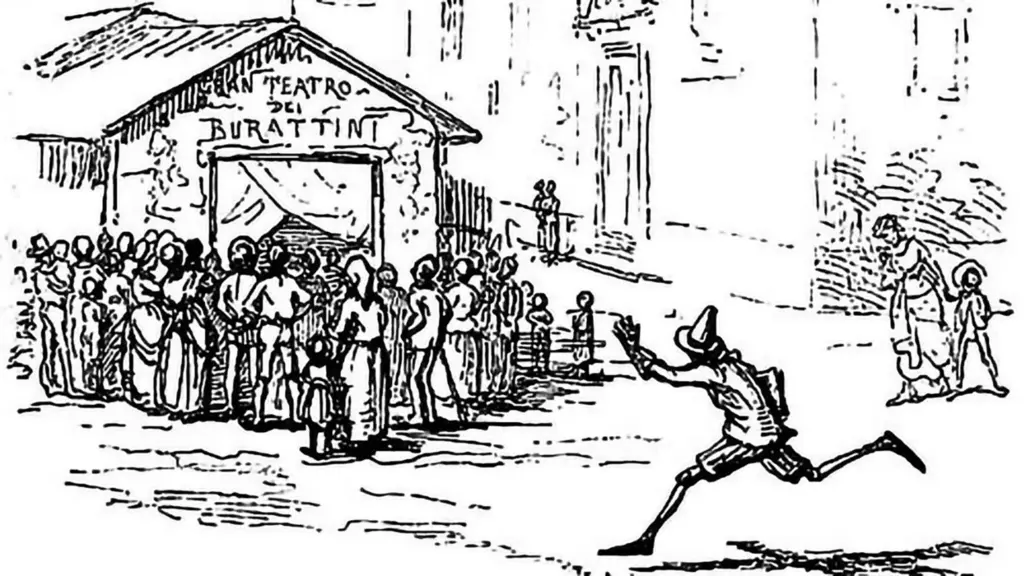
Published in 1883, “The Adventures of Pinocchio” quickly gained recognition. Many contemporary critics saw it primarily as a pedagogical tale encouraging children to be obedient and morally upright. “Not everyone shared this interpretation,” says the researcher, “as early reviewers pointed out the unique character of the book, which combines fairy tales, satire, the grotesque, and critical social observation.”
She explains that the story of the wooden puppet’s adventures conceals a depiction of a society in which good and evil do not always appear in obvious forms. The researcher notes that Collodi also addresses such problems as poverty, the exploitation of children, and the indifference of adults. “Collodi is not a cynic. He wants to talk about the condition of man and society,” Marcheschi emphasizes.
The Danger of Complacency
According to the researcher, the finale of the novel is particularly telling. Pinocchio, now a boy, looks with satisfaction at his new life and remembers his former self as a puppet: “How ridiculous I was when I was a little puppet! And how happy I am now that I have become a good boy!”
But as Daniela Marcheschi points out, this seemingly happy scene contains irony. The protagonist achieves stability, but at the same time he is threatened by complacency. “For Collodi, development cannot stop. True education concerns both children and adults, and man should constantly work on himself. Stagnation cannot exist. Civic and spiritual development must last forever,” the researcher emphasizes.
Impressive Erudition
The writer studied, among other places, at the seminary in Colle Val d’Elsa and at the Piarist school in Florence. However, his true university became the Florentine bookstore and printing house Piatti, which was a meeting place for the intellectuals of the time.
“He was an extremely versatile reader. He knew the Bible and ancient literature, reaching for Virgil, Ovid, Cicero, and Livy. He also read Shakespeare, Milton, Swift, and Sterne, and among French authors he particularly appreciated Balzac, Molière, Rabelais, and Montaigne. He was captivated by Cervantes,” says Daniela Marcheschi.
Dante
The researcher emphasizes that a special place in Collodi’s library was occupied by Dante: “He repeatedly referred to the ‘Divine Comedy,’ treating its author as an exceptional figure in the history of Italian culture.” Marcheschi points out that it is precisely this fascination with Dante and classic Italian literature that allows us to see Collodi as a full-fledged participant in the intellectual life of his era.
Pinocchio Didn’t Come Out of Nowhere
As the Carlo Collodi National Foundation recalls, 689 translations of “The Adventures of Pinocchio” into 201 languages and dialects have been identified so far. This is one of the most important positions of Italian literature in global readership circulation.
“The international fame of the wooden puppet,” Daniela Marcheschi concludes, “should not, however, overshadow the achievements of its creator. Collodi was not only the author of a children’s masterpiece. He was an educated intellectual, a courageous satirist, and a penetrating commentator of his times. Only by getting to know his entire body of work can one understand how rich a literary and social background lies behind the story of Pinocchio.”