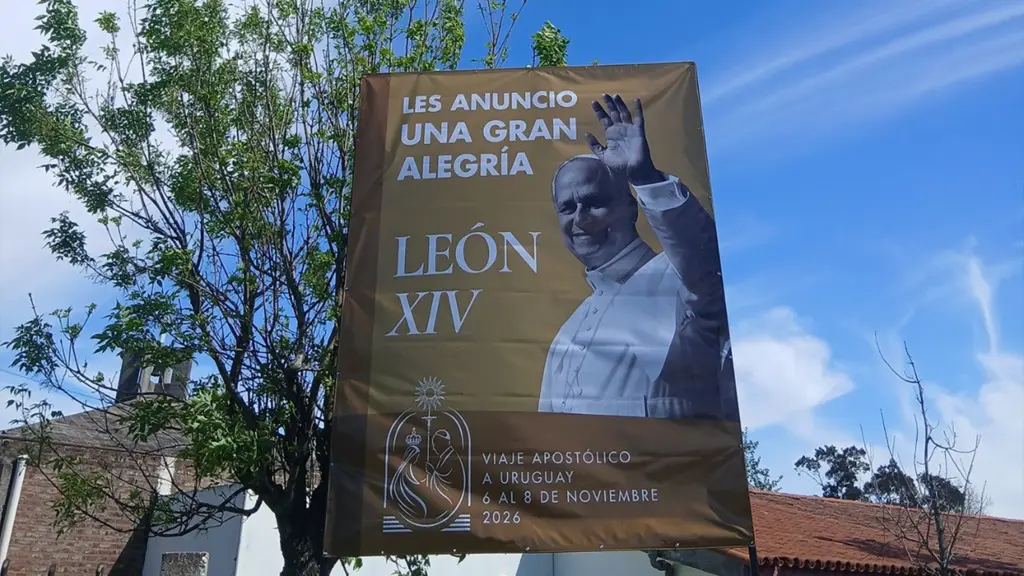
Vatican News / Sebastián Sansón Ferrari – envoy to Montevideo
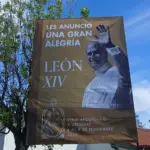
Paysandú is preparing for an exceptional event: the arrival of Leo XIV, who on Saturday, November 7, will preside over a votive Mass in the Paris-London Park in honor of Blessed Jacinto Vera, the first bishop of Uruguay. This will be the first celebration of the Eucharist presided over by the Pope in Latin America.
A gift from the Holy Father
In an interview with Vatican Radio, Bishop Arturo Fajardo, ordinary of the Diocese of Salto—which encompasses the departments of Artigas, Salto, Paysandú, and Río Negro—expressed joy and great anticipation regarding the visit, which he considers both a gift and a responsibility for the entire country.
“This is a gift that the Holy Father is offering to our country,” said the prelate, emphasizing that Uruguay will be the first American nation visited by Leo XIV, and the first Holy Mass of his journey will take place right in Paysandú. In this context, he expressed the desire that this event “awaken a new evangelizing zeal” and contribute to the rediscovery and revival of the gift of faith.
Jacinto Vera – a legacy relevant even today
The Holy Mass presided over by Leo XIV will be a votive Mass in honor of Blessed Jacinto Vera and will feature special readings and prayers. The Pope’s liturgical vestments will also incorporate elements from the episcopal coat of arms of Uruguay’s first bishop, whose spirituality was distinguished by a deep Marian devotion.
His episcopal motto was: “Jacinto will triumph through Mary.” The Bishop of Salto explained that during the celebration, there will be signs evoking his memory and his bond with the Mother of God, particularly venerated under the title of Our Lady of Sorrows.
For Bishop Fajardo, Jacinto Vera remains an extremely relevant figure, not only because of his evangelizing work, but also for his commitment to establishing peace in the country during civil wars, his pursuit of national unity, and his defense of the rights of the Church.
His testimony can serve as a special inspiration in times marked by social division and polarization.
International and communitarian dimension
The choice of Paysandú as the site of the first papal Mass on the continent also has a regional dimension. The city, situated on the banks of the Uruguay River, maintains close ties with the Argentine province of Entre Ríos and serves as a meeting place for residents of both riverbanks.
“This will certainly facilitate the arrival of Argentines from the coastal region for the Holy Mass presided over by the Pope,” he explained. He also noted that the presence of the faithful from Brazil is expected, especially from the Diocese of Uruguaiana and other neighboring ecclesiastical administrative units.
The celebration in Paysandú will become a gathering place for communities from Uruguay and neighboring countries, in a region where family, cultural, and religious ties have long fostered mutual contacts and the exchange of experiences.
A city with a historical and religious identity
The bishop emphasized that Paysandú is a city of deep popular piety, whose basilica holds a unique place in the hearts of its residents. The locals are eagerly awaiting the arrival of Leo XIV.
“The anticipation is immense. Ever since the possibility of the Pope’s arrival began to be discussed, everyone has enthusiastically taken up this initiative and declared their readiness to help prepare the logistical background, and above all, their hearts and prayers to welcome the Successor of Peter, who comes to strengthen us in the faith,” the bishop reported.
Over 400 volunteers in the diocese
Preparing for the apostolic journey presents a major challenge for the Diocese of Salto, which covers about a quarter of Uruguay’s territory. Its area includes four departmental capitals and numerous rural localities, with scattered communities and vast distances between individual centers.
“It is a very vast diocese, the largest in the country, covering a quarter of the national territory. However, it contains vast rural areas, with a very scattered population, numerous chapels, and pastoral centers separated by significant distances,” the bishop explained.
In this context, the mobilization of volunteers is one of the pillars of the preparations. As the prelate reported, more than 3,000 volunteers are involved throughout Uruguay, with over 400 in the Diocese of Salto alone.
Opening hearts and renewing the evangelizing mission
Concluding the interview, Bishop Fajardo pointed out three appeals that he considers crucial for understanding the significance of this visit: “Open our hearts to one another, strengthen our communion as brothers and sisters, and renew our commitment to proclaiming the Gospel of joy.”
According to the prelate, these words constitute almost a pastoral program for the Church in Uruguay. He also recalled memories related to the visit of St. John Paul II to Uruguay in 1987 and 1988 and his historic call: “Open wide the doors to Christ, do not be afraid!”
“Grow in communion as a Church and renew our evangelizing zeal,” Bishop Fajardo concluded, pointing to the most important fruits he expects from this visit.