What exactly has changed
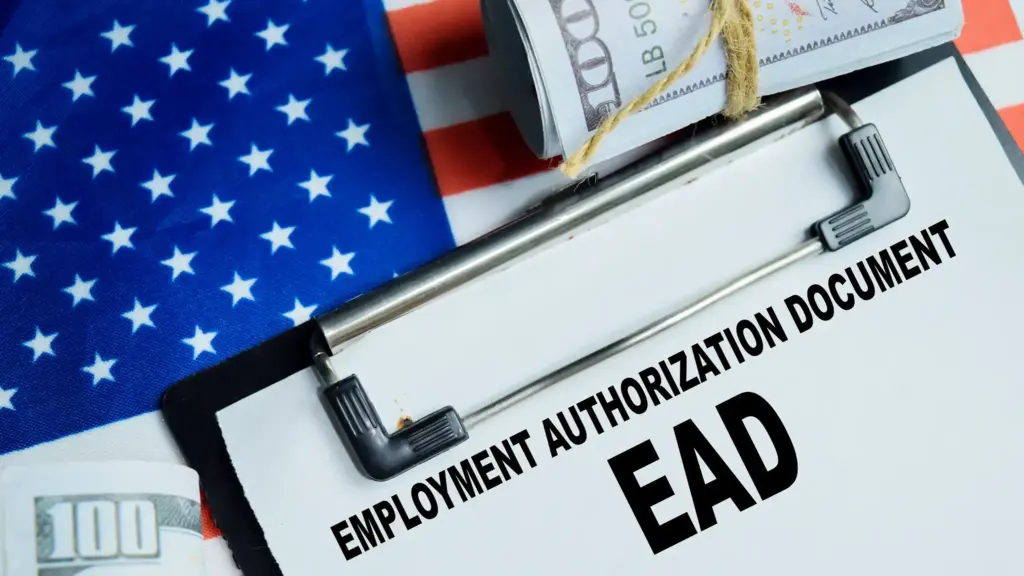
The Department of Homeland Security (DHS) has published a final rule in the Federal Register titled “Removal of Automatic Extensions for Certain Employment Authorization Documents” (91 FR 65306, document 2026-20955). It is effective as of its publication date, October 14, 2026.
The rule adopts without change an interim final rule from October 30, 2025. It adds paragraph 8 CFR 274a.13(e) to the regulations: an employment authorization renewal application filed on or after October 30, 2025, no longer automatically extends either the card’s validity or work authorization. The previous extension of up to 540 days now applies only to applications filed before that date.
Who is affected in practice
The issue affects individuals who file an EAD renewal application (Form I-765) and relied on the USCIS receipt notice to work until a decision was reached. Now, if the card expires and no decision has been issued, continuing to work based on the receipt is no longer possible.
The situation remains unchanged for individuals who obtain work authorization by virtue of their status itself (under 8 CFR 274a.12(a)) — their authorization expires with their status, not with the date on the card. The rule also does not affect extensions provided by statute or a Federal Register notice, including documents for individuals covered under TPS. Cards that were automatically extended before October 30, 2025, remain unchanged.
Rationale and scope
DHS explains the change based on security considerations and the need to complete background checks and eligibility verifications before issuing new work authorization. In its impact analysis, the agency estimates that between 20,000 and 33,000 work cards could expire over an 18-month period starting in May 2027. DHS estimates employer costs associated with employee turnover at approximately $312.1 million and lost productivity at approximately $138.1 million. These are agency estimates, not data on actual outcomes.
What to do right now
- Check your card’s expiration date and calculate how much time is left before it expires — do not rely on the “buffer” of an automatic extension anymore.
- File your renewal application as early as possible. Check the Form I-765 instructions on the USCIS website to see how far in advance you can file for your specific category.
- Employers: once a card expires, re-verification of work authorization (Form I-9) is required. An expired card combined with a renewal application receipt notice is no longer sufficient as proof for renewals covered by this rule.
- Agree on a contingency plan with your employer for any potential employment gap before your card expires, rather than after the fact.
- F-1 Students: extensions related to OPT/STEM OPT and the “cap-gap” are governed by separate F-1 status regulations — consult your school’s DSO.
What we still do not know
There is currently no public data on how many employees actually lost their work authorization after October 30, 2025, nor on the average processing times for Form I-765 applications across various categories. USCIS publishes current processing times using the “Check Case Processing Times” tool.
Original source: Federal Register, document 2026-20955. This article is for informational purposes only and does not constitute legal advice — the consequences in your specific case depend on an individual analysis.
If your work card expires in the coming months, consult with a Polish immigration attorney from the Polish Pages directory before submitting your renewal application.