Stefano Leszczynski – Envoy to Moscow
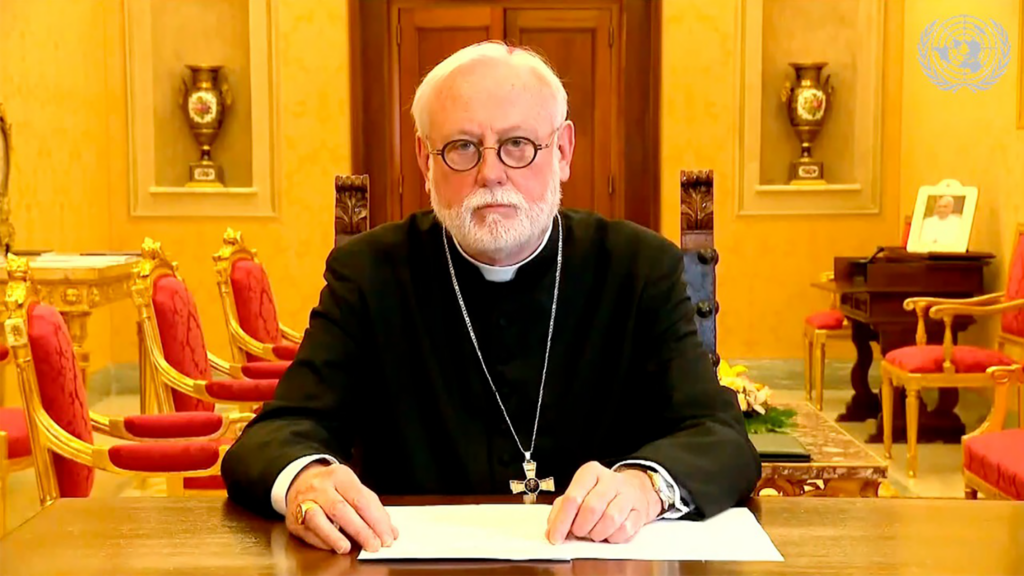
Early on Friday afternoon, the sun was shining over Moscow as the official responsible for the diplomacy of the Holy See boarded a plane to return to Rome via Istanbul, arriving in the Vatican late at night. It was a long and rather complicated journey. The suspension of direct flights between Russia and European Union countries limits the options for reaching Moscow and forces the few remaining scheduled flights to take a long route around Europe. The route from Istanbul leads through the Balkans, along the borders of Ukraine, and then through Belarusian airspace. In total, the flights and transfers take at least twelve hours. Before 2022, the journey took about four hours.
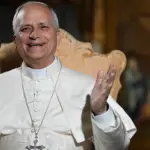
“It was a long journey,” admits Archbishop Paul Richard Gallagher, “but this fact also takes on a symbolic dimension. Before 2022, Moscow could be reached in a few hours; today, the journey has become longer. This trip demonstrates the commitment to dialogue that guides the Holy See. We have been conducting this dialogue for years, both through the Embassy of the Russian Federation to the Holy See and through the work of Apostolic Nuncio Giovanni d’Aniello in Moscow. This underlines the commitment and importance we attached to this journey, undertaken on behalf of the Holy See and with the Pope’s blessing.”
The Russian authorities clearly recognized the Archbishop’s visit to Moscow. This was evident during official talks with Foreign Minister Sergey Lavrov and advisor Yury Ushakov. A significant portion of attention was devoted to the ongoing war with Ukraine. The Archbishop repeatedly stressed that the only way to end hostilities is a return to diplomacy.
Yes, it is a difficult dialogue because the longer the war lasts, the harder it will be to rebuild relations: there are many victims, many open wounds. However, we know very well that in history all conflicts, all wars end with negotiations and an agreement, after which the rebuilding of relations between the former parties to the conflict begins. In this sense, diplomacy offers hope for a possible solution.
This is precisely what we, as the Church, have the duty and responsibility to proclaim. We went to Moscow to speak about peace, to encourage people who are anxious because of the war, and to say: have the courage to enter the path of peace, have hope, and believe that a better day will come. I think that was the fundamental message of our mission.
After the bilateral meeting, Minister Lavrov said in an interview that during the talks the Archbishop confined himself rather to a general appeal for the earliest possible end to the conflict.
Yes, that is true. That is precisely our line, which we have always maintained. The Holy See does not enter into the details of negotiations or propose technical solutions, as this is the direct responsibility of the parties waging the war. Instead, the Holy See recalls this responsibility and calls for good will to truly begin dialogue. It thus addresses the Russian Federation, Ukraine, and other countries alike, appealing that no efforts be spared to create spaces for dialogue.
In view of the suffering of the civilian population caused by the war, the Archbishop pointed to the need to strengthen humanitarian efforts, also with a view to Cardinal Matteo Zuppi’s trip to the Russian Federation. What are the priorities?
This dimension is of fundamental importance, and the Holy See is already making its contribution in this area, which has so far been met with great appreciation. Also, before my departure, the Holy Father told me: we must insist on the humanitarian dimension. And that is exactly what we did.
We hope that Cardinal Zuppi’s peace mission will continue and that he will soon be able to travel to Moscow again, also to be a witness to what the local Church and Catholic communities are doing.
The Holy See has offered its assistance to reopen the path of dialogue and negotiation. How was this proposal received and how could it be implemented?
We have made such an offer in the past, but so far it has not been implemented. It does not appear that there is a desire for the direct involvement of our diplomatic structures. However, the gesture itself was appreciated – it shows that we are not washing our hands of the matter.
The message is clear: in today’s world, no one can solve problems alone. Both Russia and Ukraine need the international community, they need their alliances. By offering our good offices, we are telling both sides that the Holy See is ready to help in any possible way. They only need to ask, and we will place all our resources at their disposal. We admit that they are modest, but it is a gesture made in good faith.
The Archbishop also had the opportunity to meet with representatives of the diplomatic corps in Moscow. Everyone pointed out the ability of the Holy See’s diplomacy to conduct dialogue simultaneously with Ukraine and Russia. In the current situation, this is a rarity.
Yes. The meetings we held in Moscow with representatives of various diplomatic missions serve to reinforce the Holy See’s initiative to keep the path of dialogue open. We are convinced that this is the right way to go and that isolating people or countries, frankly speaking, does not help.
This is our position. Of course, every country has the full right to decide its strategy independently. By coming to Moscow and doing what others are not doing at the moment, we encourage reflection on whether current strategies are producing results that lead to the resolution of this tragedy.
Among the topics raised during the conversation with Minister Lavrov was also the situation of Christians in various parts of the world. What are the priorities here?
We have had an open channel of contact with Minister Sergey Lavrov for years, and it does not concern solely the war in Ukraine. Russia is very attached to its Orthodox Christian tradition, and we share a concern for Christians who encounter difficulties in various parts of the world.
There are countries where, from a technical point of view, one cannot speak of persecution, but there is insecurity, discrimination, prejudice, and marginalization. Russia is also interested in these problems. This is an area where we are trying to renew our shared commitment.
During the mission, the Archbishop also had the opportunity to meet with the Catholic community in Russia and encouraged it to be a builder of peace. What should the involvement of the Catholic Church consist of?
During the meeting with religious, consecrated persons, and clergy, I told them that they are already builders of peace. They are such in their daily lives, every time they build small bridges.
They have an impact on society, they are neighbors, they run the Church’s charitable works, they are present through our educational institutions and healthcare facilities. This is a tangible expression of the Church’s commitment to reconciliation and peace. It is infinitely more eloquent than any words.
The Archbishop also met with high-ranking representatives of the Moscow Patriarchate, in particular with Metropolitan Anthony of Volokolamsk, Chairman of the Department for External Church Relations.
There are very cordial, fraternal relations between Metropolitan Anthony and the Holy See. He frequently meets with the Holy Father, the Secretary of State Cardinal Pietro Parolin, and with me.
Our meeting did not concern ecumenical dialogue in the strict sense, as that falls within the competence of the Dicastery for Promoting Christian Unity. However, we felt it appropriate to meet and touch upon various issues, also related to the current situation. It was a very edifying meeting that showed how much we have in common. On some issues, differing positions remain, but at the same time we try to encourage one another to walk the path of the Gospel.
Returning to the Church’s activity in Russia – the Catholic Church’s commitment to charitable work is very important.
That is obvious. Wherever the Church is, there must always be charity and solidarity with those in greatest need. It seems to me that the Catholic Church has always followed this path here.
I was very impressed by the testimonies I heard during the meeting with consecrated persons. Despite the very limited resources of these communities – they are also very small in number in such a huge country – they do everything they can with great perseverance. I did not hear anyone complain about their situation. On the contrary, I perceived the joy stemming from the service they perform here today in Russia.
On the final day of his trip to Moscow, the Archbishop presided over a solemn Holy Mass at the Cathedral of the Immaculate Conception. Many people participated in the Eucharist, including numerous young people, and the event also aroused great media interest. What made the greatest impression on the Archbishop?
That is true, very many people participated in the Mass. One could feel the true intensity of the religious experience. This is edifying, because one might have a superficial idea of small groups of Catholics scattered across this huge city. However, when I saw them gathered in this beautiful cathedral, bearing witness to the vitality of their faith, it made a huge impression on me.
It was also a true manifestation of attachment, above all, to the Holy Father. You can see that the bonds of love, the bonds with the Successor of Peter, are very strong here. This is truly a cause for great joy.
Official missions are always a time of great focus and intense work. After such journeys, however, a personal and emotional dimension also remains. What does the Archbishop personally take back to Rome with him?
One feels a certain sadness when leaving such a community. Our message is: we are not leaving you alone. We are returning to Rome to speak with those who sent us, but we remain very close to you.
I think this is precisely what needs to be done. In these very difficult years for this region of the world, the universal Church should consider how to support these communities even more strongly, giving encouragement to their pastors and faithful and sustaining spiritual bonds.
When I visit any part of the world, I later return home, but the people and communities I have met always remain in my prayers.
I can say the same about the diplomatic dimension of this mission. I always entrust the desires for peace and justice to prayer – this time as well – because ultimately peace is a gift of God. It is up to us to prepare ourselves to receive it.