Abp Antonio Guido Filipazzi
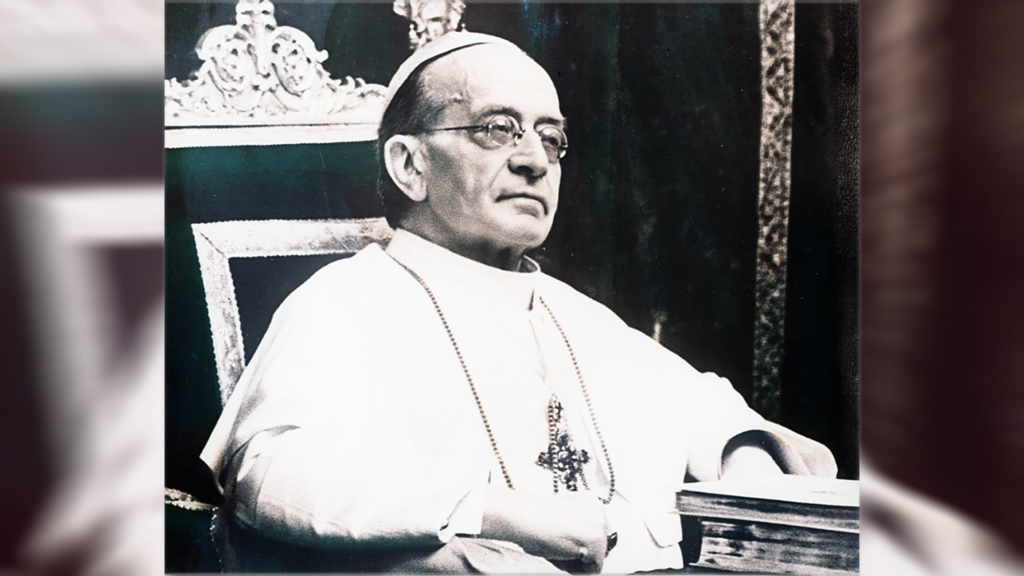
When Achille Ratti arrived in Warsaw on May 29, 1918, Poland was not yet an independent state. The country was still divided and under the control of occupying military authorities. Pope Benedict XV sent Monsignor Ratti as Apostolic Visitor to experience firsthand the situation of the Church and the Catholic population, and to represent the concern of the Apostolic See to the Polish nation.
The day after his arrival, on the Solemnity of Corpus Christi, the prelate was able to witness the faith of the Poles firsthand by participating in a solemn procession through the streets of Warsaw.
After a few weeks, Ratti desired to visit the heart of Marian devotion in Poland by traveling to Częstochowa.
“The first visit will be to Our Lady of Częstochowa”
On July 4, 1918, writing to Archbishop Bonaventura Cerretti, Secretary of the Congregation for Extraordinary Ecclesiastical Affairs, the Apostolic Visitor informed him: “The first visit will be to Our Lady of Częstochowa, and on the way back I will stop in Kielce.” Thus, he made the decision to make a pilgrimage to Częstochowa even before receiving the necessary permits to travel through territories under foreign occupation.
On July 14, after obtaining freedom of movement throughout the country from the occupying authorities, Ratti noted in his Diary: “Thus, the first use of freedom of movement and the first visit outside Warsaw will be a visit to the ‘Queen of Poland’.”
That same evening, at 10:27 PM, he departed from the Warsaw railway station.
Arrival at Jasna Góra
The Apostolic Visitor arrived in Częstochowa on July 15 at four in the morning. Waiting for him at the station was the Prior of the Pauline Fathers – and future Superior General of the Order – Father Wacław Markiewicz.
In his Diary, he recorded his first impressions of the Jasna Góra shrine. After passing through the vast courtyards and long buildings intended for pilgrims, Ratti entered the complex, which still retained the character of a fortress. From his room window, he could see the “large square in front of the shrine” and the open-air altar.
Before the Black Madonna
That same morning, at 7:30 AM, Monsignor Ratti celebrated Holy Mass in the Chapel of the Miraculous Image, with the “numerous and devout participation of the faithful and religious, with great spiritual consolation.”
The following day, he celebrated the Eucharist again at the altar of Our Lady. In a report sent on July 20 to Cardinal Secretary of State Pietro Gasparri, Ratti recalled: “Twice I celebrated Mass in the Chapel of the Blessed Virgin herself, with great spiritual consolation and great edification.”
When he became Pope, he wished to preserve the memory of these two Eucharistic celebrations held before the image of Mary. He ordered that the chapel in the Apostolic Palace in Castel Gandolfo be dedicated to Our Lady venerated in Częstochowa. Her image, painted by Jan Henryk Rosen and presented to Pius XI by the Polish bishops, was placed above the altar.
“The first appearance outside Warsaw (…) was to be before the Blessed Virgin”
A few days later, in a report addressed to Cardinal Gasparri, Ratti gave these events a spiritual significance. After describing Częstochowa as “the most famous among Polish sanctuaries, which has become a sacred national symbol,” he wrote: “Thus, just as the first public appearance of the Apostolic Visitor in Warsaw was carrying the Blessed Sacrament through its crowded streets, so his first appearance outside the capital, within the Kingdom, was to be before the Blessed Virgin, the ‘Queen’ of Poland.”
With these significant words, Ratti pointed to the connection between two important moments marking the beginning of his mission in Poland: the procession with the Blessed Sacrament in Warsaw and the meeting with the Black Madonna, the Queen of Poland, outside Warsaw.
Therefore, the visit to Jasna Góra was not merely a stop on an official journey during which Ratti was to learn about the ecclesiastical life of Częstochowa and then Kielce. Jasna Góra was the place he chose himself for his first encounter with the religious life of Poland outside the capital.
Jasna Góra during the war
The visit took place while World War I was still ongoing. Ecclesiastically, Jasna Góra belonged at that time to the Diocese of Włocławek. Militarily, the shrine along with the monastery and its immediate surroundings formed an enclave controlled by Austro-Hungarian troops, while Częstochowa and the surrounding areas were under German occupation. The journey therefore required permits from both occupying authorities.
Regarding the situation of the sanctuary, Monsignor Ratti wrote in his report to Cardinal Gasparri: “The war prevents the great pilgrimages that once constantly flowed here in unbelievably large numbers; however, at any time one can encounter moving manifestations of faith and piety here.”
The Visitor’s Diary confirms this impression. Describing the first Eucharist in the Chapel of the Miraculous Image, Ratti mentioned the “numerous and devout participation of the faithful and religious.”
The large crowds of pilgrims had thus decreased due to the war, but prayer had not ceased.
Custodians of the Shrine
During his visit, Monsignor Ratti also had the opportunity to meet the community of Pauline Fathers, the custodians of Jasna Góra and pastors to the pilgrims arriving there.
On the first day of his stay in Częstochowa, accompanied by Father Markiewicz, he visited the Way of the Cross by Weloński, the basilica which was then under renovation, the sacristy, the treasury, and the library.
In the aforementioned report to Cardinal Gasparri, he summarized his impressions as follows: “I was able to observe more closely and calmly the life and work of these Pauline Fathers, who provide spiritual care for the shrine and the faithful who come here.” The community consisted of about twelve religious, in addition to novices and aspirants. It was led by the aforementioned Father Markiewicz, whom Ratti described as “an outstanding religious and a true man of God.” Of the entire community, he wrote: “I got the impression that this is a religious family with an excellent spirit and full of zeal.”
The “Queen” of Poland
During his visit, Monsignor Ratti came to know Jasna Góra in its concrete reality: the Chapel of Our Lady, the pilgrims, and the Pauline community.
In this way, he fulfilled what he had previously recorded in his Diary: his “first visit outside Warsaw” was to lead to the “Queen of Poland.”