
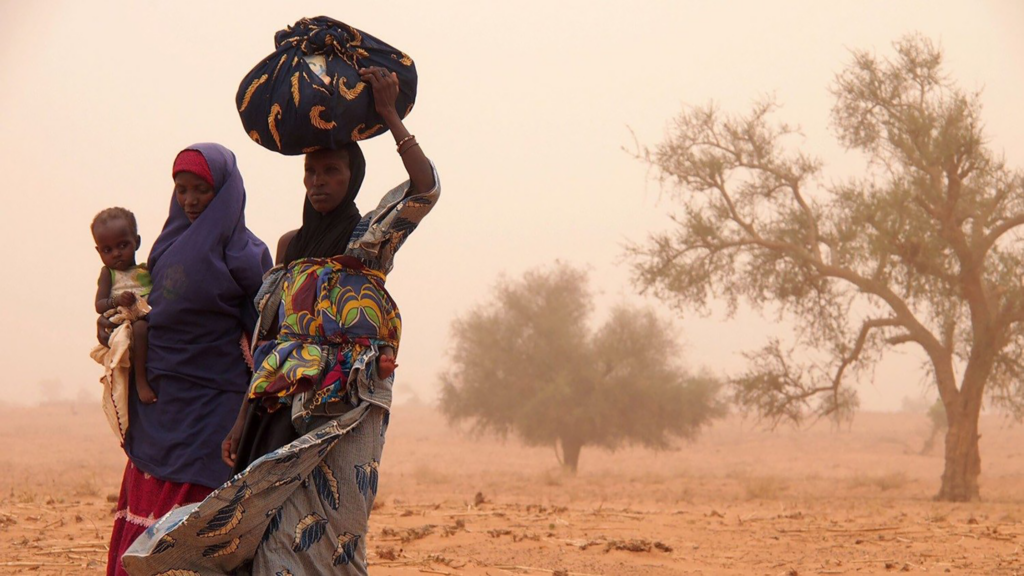
Deborah Castellano Lubov, Tomasz Zielenkiewicz
The report “The State of Food Security and Nutrition in the World”, jointly prepared by five UN agencies, estimated that in 2025 hunger affected approximately 645 million people, which accounts for 7.8 percent of the global population.
The report, prepared by the Food and Agriculture Organization (FAO), the World Food Programme (WFP), the World Health Organization (WHO), the United Nations Children’s Fund (UNICEF), and the International Fund for Agricultural Development (IFAD), was presented at the FAO headquarters in Rome.
Fewer hungry people, but the problem remains
The figure of 645 million indicated in the report represents a decrease in the scale of global hunger by 14 million people compared to 2024 and by 43 million compared to the peak level of 2022. It was also noted that food security has significantly improved, especially in South America and South Asia.
However, UN agencies warn that these numbers remain concerning and urgent action is necessary. In an interview with Reuters, FAO Chief Economist Máximo Torero stated that disruptions in shipping through the Strait of Hormuz, a crucial transport route for energy commodities and agricultural inputs, are among the most serious causes for concern. They drive up the prices of fuels, fertilizers, and transport, increasing food production costs worldwide. An additional threat may also be the El Niño phenomenon, which involves the persistence of above-average sea surface temperatures in the equatorial Pacific. It disrupts agricultural production in regions particularly vulnerable to the effects of climate change.
During the presentation of the report, FAO Director-General Dr. Qu Dongyu said that the results show that decisive policy actions can yield results.
Africa still most affected by hunger
According to the document, 309 million people in Africa still suffer from malnutrition, and rapid population growth could cause an increase in the absolute number of starving people in the coming years.
The percentage of people suffering from hunger on the continent fell from 20.3 percent in 2024 to 20 percent in 2025. This was the first halt to the upward trend since 2017. Nevertheless, UN agencies emphasize that every fifth inhabitant of Africa is still starving.
The report predicts that in 2030, about 520 million people may still face hunger, which means the world is not on track to eliminate this problem. The document also shows that child malnutrition remains high, anemia among women is worsening, and adult obesity continues to rise steadily.
Investments and support for agriculture needed
During the presentation of the report, UN experts stressed the need to keep food, energy, and agricultural input markets open, avoid export restrictions, and strengthen social protection programs for the most vulnerable groups.
The UN also calls on governments and development partners to ensure farmers have access to fertilizers, high-quality seeds, water, credit, and other necessary inputs before it is too late to make planting decisions.
UN agencies are also calling for long-term investments in agri-food systems, especially in irrigation, warehouses, cold chains, transport infrastructure, early warning systems, and crisis prevention activities.
(The author is an employee of Polskie Radio S.A. in liquidation)