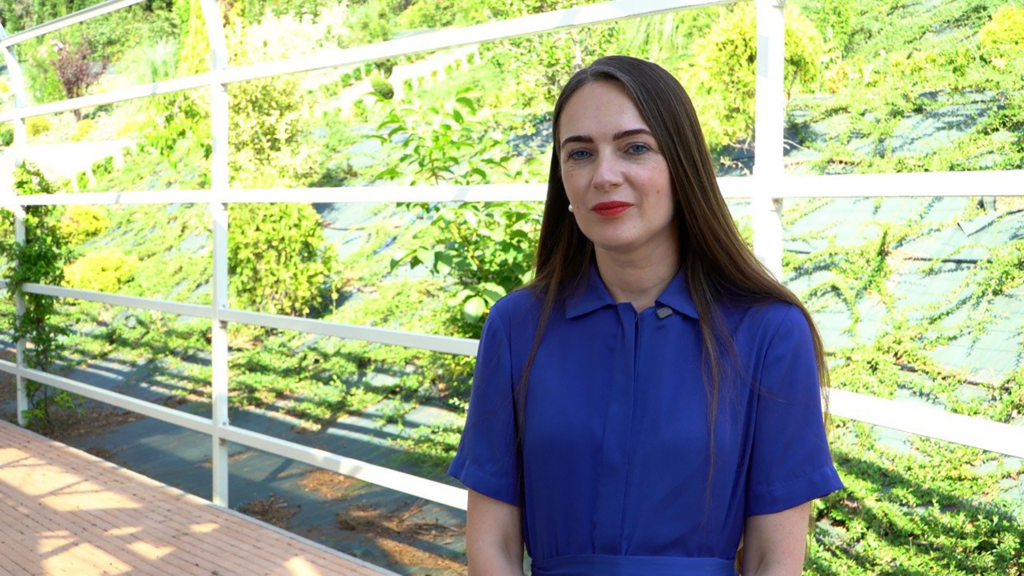
Isabella H. de Carvalho
In the face of wars and conflicts that continue to devastate many countries around the world, Oleksandra Matviichuk, head of the Center for Civil Liberties – an organization working for human rights and democracy in Ukraine, honored with the Nobel Peace Prize in 2022 – emphasizes the need to reform intergovernmental organizations and to place humanity at the center of technological development.
Can we still rely on the law?
“We live in very turbulent times, in which the world order based on the United Nations Charter and international law has collapsed,” she noted. She added that one of the most important questions of the modern world is how to protect people and their rights in the 21st century – can we still rely on the law, or does only brutal force matter now?
“We must evaluate the role of technology through the prism of whether it helps answer these fundamental questions.”
Redefine the role of humanity
According to Matviichuk, to slow down the use of artificial intelligence in armed conflicts and the arms race, we must first rethink what it means to be human. “We have talked too much about technologies and too little about humanity,” she stressed.
Therefore, she welcomes Leo XIV’s encyclical Magnifica humanitas, dedicated to the protection of human dignity in the age of artificial intelligence. “Now, when we do not yet have legal or ethical answers, and humanity needs clear guidance,” she said. – “I am very grateful to His Holiness for dedicating so much attention to the role of artificial intelligence and new technologies – both today and in the future.”
We cannot protect people
According to Matviichuk, it is essential to create appropriate regulations for new technologies before it is too late. She also emphasized that a thorough reform of the United Nations system is necessary for effective peacebuilding worldwide.
However, she is skeptical about the current situation. “We cannot protect people from mass violence, authoritarianism, and wars. This is evident not only in Ukraine, Sudan, Myanmar, Nicaragua, Venezuela, or the Gaza Strip. It has become obvious to people all over the world, regardless of where they live,” Matviichuk told Vatican News.