Fr. Łukasz Bankowski – Vatican
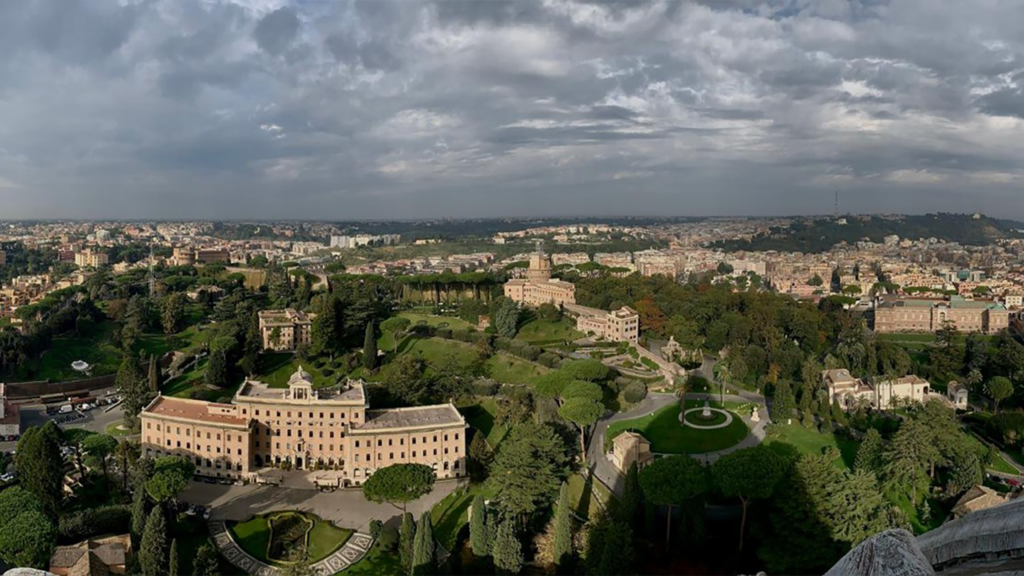
“Most pilgrims visiting the Vatican primarily associate it with St. Peter’s Basilica. Just beyond it lie the Vatican Gardens, where many Polish traces can also be found. Each of them tells a fragment of history: about St. John Paul II, about the faith of Poles, and about the bond connecting Poland with the Holy See,” says Dagmara Kühne.
Traces of St. John Paul II
One of the first places associated with the Polish Pope is St. John’s Tower. It was there that Karol Wojtyła resided after his election to the See of Peter, before the papal apartment in the Apostolic Palace was completed.
“Few people know that it was here that the Polish Pope spent the first weeks of his pontificate. Only later did he move to the Apostolic Palace,” explains the guide.
Near the Vatican helipad stands a bronze statue of Our Lady of Częstochowa, offered to St. John Paul II by the Pauline Fathers.
“It was from here that almost all of John Paul II’s Italian pilgrimages began and ended. The statue commemorates his deep entrustment to the Mother of God,” emphasizes Dagmara Kühne.
The granite sculpture of Giewont, donated by the city of Zakopane on the occasion of the 100th anniversary of the cross being placed on the mountain’s summit, and the monument standing next to it, offered on the occasion of the 25th anniversary of the pontificate, also refer to the pontificate of the Polish Pope. Inside it are: a stone from the summit of Giewont, a salt crystal from Wieliczka, coal from the Piast mine, and amber from the Baltic Sea. “This is a symbol of John Paul II’s spiritual bond with his Homeland.”
A monument depicting the last Fatima apparition, inscribed with the date May 13, 1981 – the day of the assassination attempt on the Pope – also recalls the events that marked his pontificate. Nearby, a fragment of the Berlin Wall can be seen, symbolizing peaceful changes in Europe and St. John Paul II’s contribution to the regaining of freedom by the nations of Central and Eastern Europe.
Between the Rose Garden and the English Garden is the Mater Ecclesiae monastery. It was established on the initiative of St. John Paul II as a place of constant prayer for the Successor of St. Peter. Pope Benedict XVI lived in this monastery until his death.
Signs of remembrance of Poland
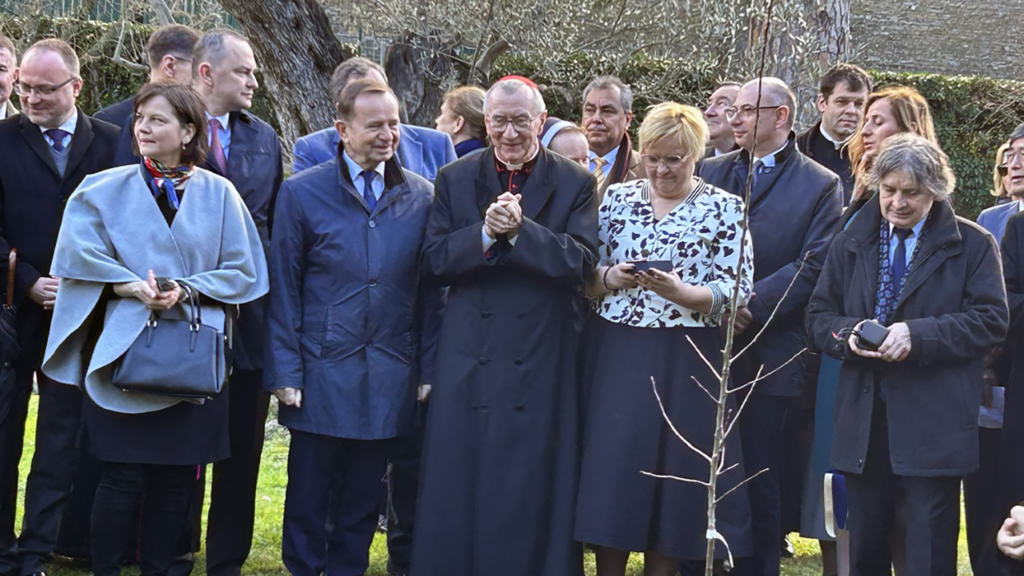
However, Polish traces in the Vatican Gardens do not refer exclusively to the pontificate of St. John Paul II. Polish pedunculate oaks also grow in the Gardens, planted in 2019 as a gift from the President of the Republic of Poland, Andrzej Duda, to Pope Francis on the occasion of the 100th anniversary of the resumption of diplomatic relations between the Holy See and Poland. “This is a living symbol of the relations that have connected both states for over a century,” explains the guide.
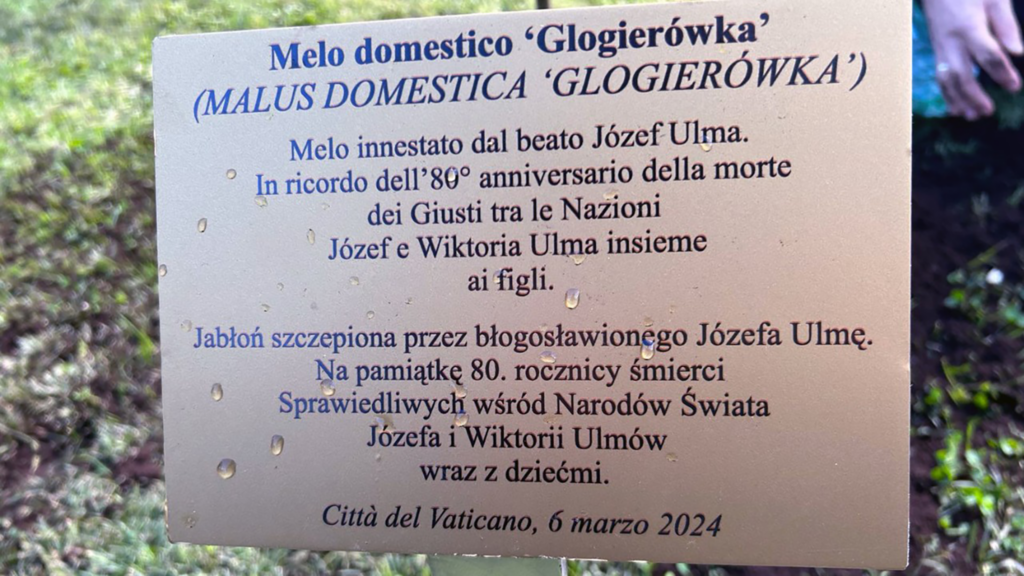
In the same garden, an apple tree dedicated to the Blessed Ulma Family from Markowa also grows. It commemorates the testimony of a Polish family who gave their lives to save Jews during World War II. “This apple tree was grafted by Blessed Józef Ulma,” emphasizes Dagmara Kühne.
Right next to it, on October 22, 2024, on the liturgical memorial of St. John Paul II, “Jan Paweł II” variety tulips were planted. The creamy-white flowers were bred by Polish horticulturist Bogdan Królik and previously adorned the Vatican during the beatification and canonization of the Polish Pope.
The newest Polish accent
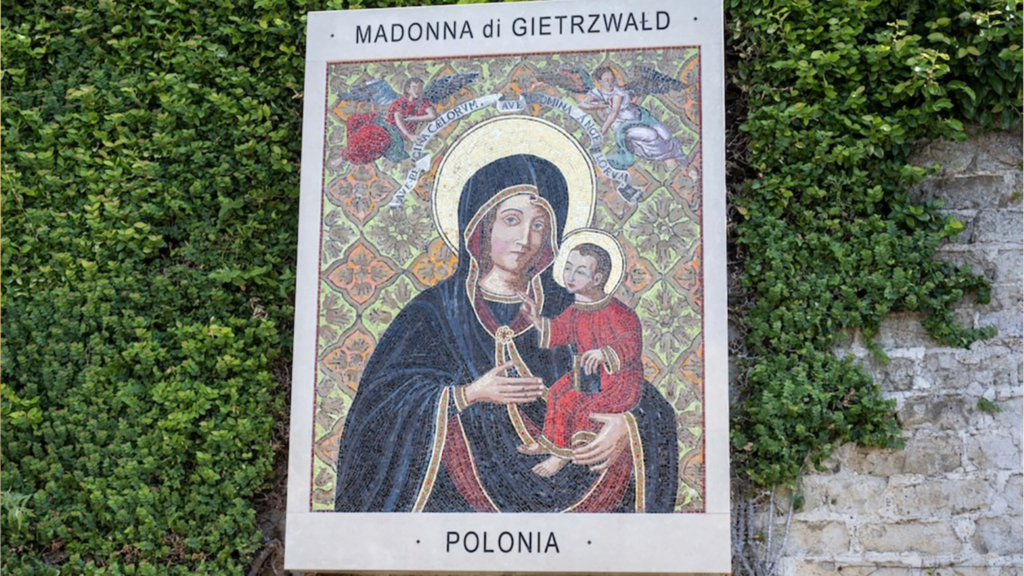
The youngest Polish trace in the Vatican Gardens is the mosaic of Our Lady of Gietrzwałd, unveiled in June 2026. It refers to the only Marian apparitions on Polish soil recognized by the Church and inaugurated the celebrations of the 150th anniversary of the events in Gietrzwałd.
“Many pilgrims are surprised by how many Polish signs can be found during a walk through the Vatican Gardens. These are not random souvenirs. Each of these places tells a story of faith, memory, and the bond that has connected Poland with the Holy See for generations,” concludes Dagmara Kühne in an interview with the Polish section of Vatican News.